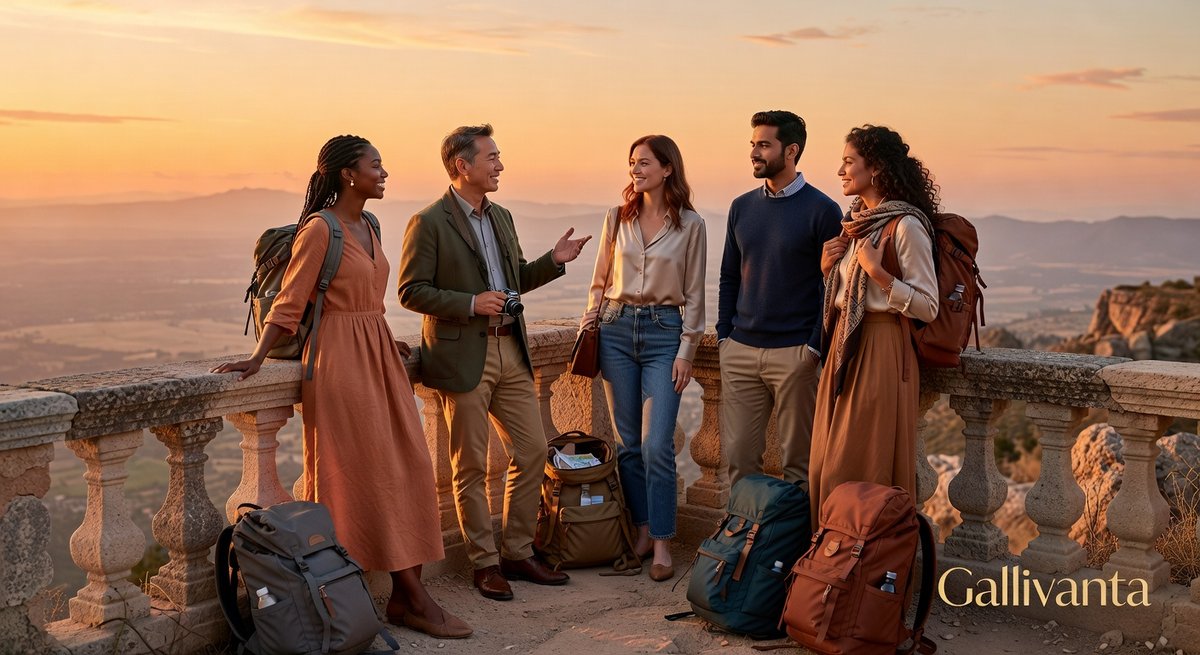
The Freedom of Solo Travel – With a Safety Net
Discover the freedom of solo travel with the safety of a community. Join Gallivanta today.
Join the Community – It's Free
✓ Free to join ✓ No credit card required ✓ Join 50,000+ travelers
If you are comparing group tours for solo travelers, you are probably trying to solve two problems at once: you want the ease and safety of a planned trip, and you still want enough social chemistry for the journey to feel alive. That is exactly where the right tour style shines. The best group tour does not trap you in a bus with strangers for ten hours a day. It gives you structure, shared moments, local access, and just enough breathing room to flirt with the city, the itinerary, and maybe the person who also ordered the spicy street food.
This guide is for solo travelers, solo female travelers, digital nomads taking a real break, and couples who still like social travel. It is built around the Gallivanta idea: adventure first, sparks welcome. Use it to choose the kind of group trip that gives you connection without surrendering your independence.
- → Quick verdict: the best group tours for solo travelers
- → How I evaluated group tours for solo travelers
- → Small-group adventure tours
- → Women-focused small group trips
- → Food and wine group tours
- → Walking and city discovery tours
- → Sailing and island-hopping tours
- → Wellness and retreat-style tours
- → Festival and event-based tours
- → Digital nomad and workation trips
- → Volunteer and impact travel tours
- → Safety tips before booking
- → How Gallivanta fits between tours and dating apps
- → FAQ
Quick verdict: the best group tours for solo travelers
The best group tours for solo travelers in 2026 are small-group adventure trips, food-focused city tours, women-focused itineraries, sailing trips, retreat-style journeys, and event-based travel. Choose based on your energy level, social goals, budget, and how much independence you want each day.
If you want the easiest starting point, pick a small-group tour with 8 to 16 travelers, locally guided activities, clear cancellation terms, and at least 30 percent unscheduled time. That mix creates enough structure to feel safe and enough looseness to meet people naturally. If you are hoping for romantic sparks, prioritize tours where conversation happens without effort: meals, walks, workshops, trains, boats, and shared challenges.
Before you book, decide what kind of connection you actually want. A hiking trip creates a very different social rhythm than a wine weekend. A wellness retreat may feel intimate, but not necessarily playful. A festival tour can be electric, but it can also be chaotic if you hate crowds. Your best match is not the fanciest itinerary. It is the one that fits your social battery.
How I evaluated group tours for solo travelers
I evaluated these tour types using six Gallivanta criteria: social ease, safety structure, independence, local depth, value for money, and spark potential. I weighted safety and independence heavily because solo travelers should never have to choose between feeling protected and feeling free.
I also looked at broader travel signals. The U.S. State Department recommends checking destination advisories before international travel, which matters when a tour crosses borders or includes remote areas. The CDC travel health hub is also useful for vaccines, food safety, and health alerts before you commit to a trip. Industry research from the Adventure Travel Trade Association points to continued demand for experience-rich travel, which supports what many solo travelers already know: people want stories, not just sightseeing.
My first-hand rule is simple: if I would not feel comfortable joining the first dinner alone, I do not recommend the tour style for solo travelers. I have walked into enough hostels, rooftop bars, food markets, and day trips solo to know that the first five minutes matter. A good group tour lowers that social friction immediately.
The scoring framework
– Social ease: Does the format make conversation natural? – Safety structure: Are guides, transport, timing, and emergency plans clear? – Independence: Do travelers get free time without being abandoned? – Local depth: Does the trip go beyond obvious tourist stops? – Value: Are inclusions transparent, or is the base price misleading? – Spark potential: Are there moments where chemistry can grow without pressure?
1. Small-group adventure tours
Small-group adventure tours are the best all-around pick for solo travelers who want movement, conversation, and a little adrenaline. Think hiking in Portugal, kayaking in Croatia, desert camping in Morocco, volcano trails in Costa Rica, or rail-and-hike trips through Switzerland. The magic is not only the activity. It is the shared effort.
When people climb a hill together, get rained on together, or laugh through a messy cooking stop after a long trail day, connection happens faster. You do not need a perfect opener. The moment gives you one. That is why adventure trips often work better than generic sightseeing tours for travelers who are shy at first.
Look for itineraries with moderate activity ratings, small groups under 16, and at least one rest or free-choice block every two days. If the schedule is too packed, everyone becomes tired and transactional. If it is too loose, the trip can lose momentum. The sweet spot is guided adventure by day, flexible social time by evening.
I like this format because it creates earned confidence. On my own trips, I have found that a shared trail or long bus ride can do what dating apps often cannot: reveal patience, humor, curiosity, and how someone treats others when plans shift. That matters if you are open to sparks while traveling.
Best for: active solo travelers, social introverts, first-time group travelers, and anyone who wants a story-rich trip.
Watch out for: inflated single supplements, unclear fitness levels, and itineraries that hide too many optional activity costs.
2. Women-focused small group trips
Women-focused group tours can be excellent for solo female travelers who want connection, practical safety, and a space where the social tone feels easier from day one. These trips often include female guides, women-owned local businesses, wellness elements, cultural workshops, and accommodations chosen with safety in mind.
This is not only about comfort. It is about removing unnecessary friction. A good women-focused tour lets travelers ask direct questions about transportation, nightlife, clothing norms, harassment, and neighborhood safety without feeling dramatic. That makes the trip more relaxed, especially in destinations where local context matters.
These tours are also strong for friendship. A traveler who is not looking for romance may still want the joy of shared dinners, day trips, photos, and inside jokes. If romance is on the table, Gallivanta can support that before or after the tour by helping you connect with travelers nearby through the solo travel dating experience.
Women-focused trips are especially useful for first-time solo travelers, travelers coming out of a breakup, and anyone who wants a softer landing in a new region. The best versions still leave room for adventure. Avoid tours that turn empowerment into vague marketing and never explain the actual itinerary, guide credentials, or emergency process.
Best for: solo female travelers, cautious first-timers, and travelers who value community as much as scenery.
Watch out for: vague safety claims, oversized groups, and itineraries that feel more like staged photo content than real travel.
3. Food and wine group tours
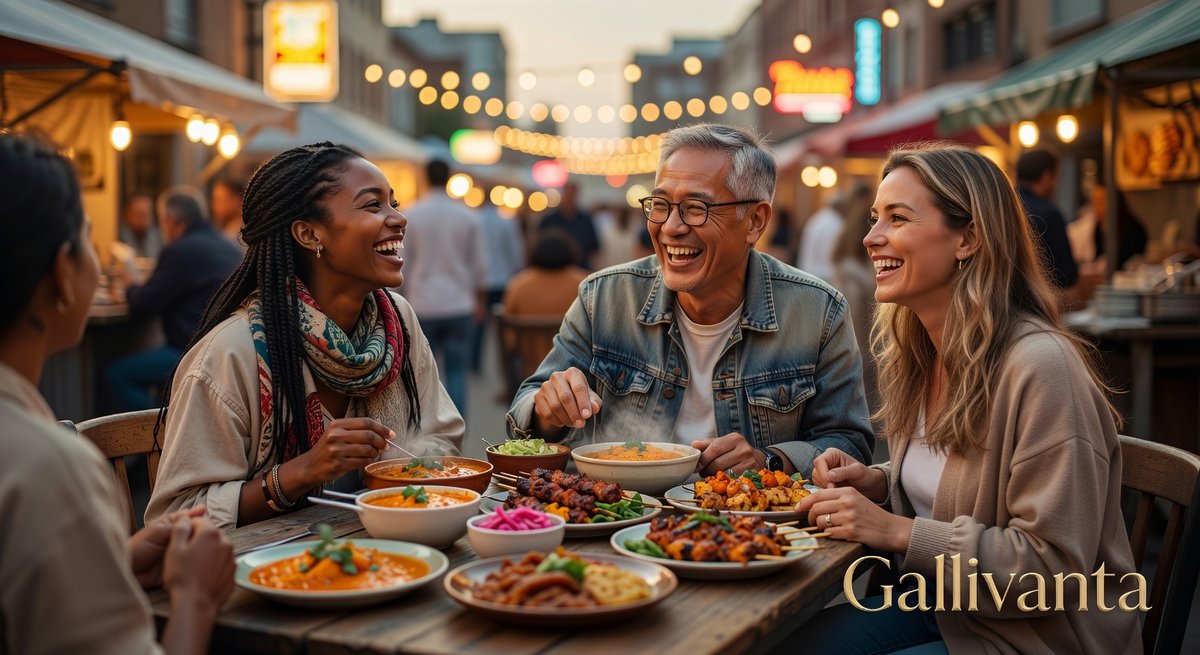
Food and wine trips are the most underrated group tours for solo travelers because meals make socializing automatic. You are not standing around trying to invent a conversation. You are comparing pasta, arguing gently about the best taco, learning to roll dumplings, or asking what everyone ordered.
This format is especially strong in cities like Mexico City, Lisbon, Bangkok, Barcelona, Rome, New Orleans, and Tokyo. A food tour can be one evening, one full day, or a week-long culinary itinerary. For solo travelers, even a three-hour walking food tour can change the entire mood of a trip because it gives you instant companions and local context.
If you want sparks, choose interactive food experiences over passive tasting rooms. Cooking classes, market walks, tapas crawls, coffee workshops, and street food trails create better conversation than silent restaurant hopping. Wine trips can be romantic, but they are better when transportation is handled and the group size is controlled.
I have always trusted food as the fastest bridge between strangers. A shared table softens people. It gives everyone permission to be curious, playful, and a little more open than they would be in a hotel lobby. That is exactly the Gallivanta zone.
Best for: food lovers, relaxed romantics, city travelers, and people who prefer conversation over strenuous activity.
Watch out for: alcohol-heavy itineraries with weak safety planning, hidden tasting fees, and tours that do not accommodate dietary needs clearly.
4. Walking and city discovery tours
Walking tours are the lowest-commitment option, and that makes them perfect for solo travelers who want connection without committing to a full group vacation. A great city walking tour can help you meet people on your first day, understand neighborhoods, and collect recommendations for the rest of the trip.
Use walking tours as a social starter. Book one early in your stay, preferably a small-group history, architecture, street art, market, ghost, literary, or neighborhood tour. Afterward, ask if anyone wants coffee, a drink, or another stop nearby. That is not awkward. It is the natural next step.
This pairs beautifully with Gallivanta articles like how to meet people while traveling solo and solo travel conversation starters. The tour provides the setting. Your curiosity creates the connection.
Walking tours are also budget-friendly. Many cities offer tip-based tours, though you should still check guide quality, reviews, group size, and meeting points. If the group is 40 people following an umbrella through a packed square, your chance of real conversation drops fast.
Best for: solo city breaks, budget travelers, introverts warming up, and anyone arriving in a new city alone.
Watch out for: huge groups, poor pacing, hard-sell shopping stops, and tours that end far from safe transport.
5. Sailing and island-hopping tours

Sailing trips are high-spark by design. Boats create closeness, shared routines, sunset moments, and just enough novelty to make strangers feel like a temporary crew. For solo travelers, island-hopping tours in Greece, Croatia, Thailand, the Caribbean, or the Philippines can be unforgettable.
The key is choosing the right boat culture. Some sailing tours are quiet, scenic, and mature. Others are floating parties. Neither is wrong, but booking the wrong vibe can ruin the trip. Read reviews for clues like sleep quality, age range, alcohol tone, cabin privacy, bathroom setup, and how much time is spent on land.
Sailing can be amazing for couples too, especially couples who want social energy around them rather than a fully private resort bubble. For solo travelers, it offers repeated low-pressure contact. You see the same people at breakfast, during swims, at dinner, and on deck. That repetition lets chemistry build naturally.
Still, boats require extra safety judgment. Know the cancellation terms, weather policy, emergency procedures, and cabin arrangements. If you are prone to seasickness, be honest with yourself. Romance is harder when you are gripping a rail and negotiating with your stomach.
Best for: social travelers, island lovers, sunset chasers, and people who like a lively but contained group.
Watch out for: party-heavy operators, unclear room shares, weak weather policies, and itineraries with too little shore time.
6. Wellness and retreat-style tours
Wellness tours are ideal if your goal is reconnection, not constant stimulation. Yoga retreats, surf-and-wellness weeks, hiking retreats, meditation weekends, spa escapes, and creative reset trips can give solo travelers a supportive group without the intensity of a traditional tour.
The social rhythm is different here. People are often more reflective, open, and intentional. Conversation may start around morning practice, journaling, beach walks, or shared vegetarian dinners rather than nightlife. If that sounds peaceful, this can be a strong fit. If you want banter and late-night sparks, choose carefully.
Retreats can also be emotionally charged. People arrive with life transitions, burnout, heartbreak, or big decisions. That can create meaningful connection, but it also calls for boundaries. Let the trip be healing first. Let attraction be a bonus, not the assignment.
I like retreats when they are honest about schedule and skill level. A good wellness trip tells you exactly what is included, how much free time you have, whether beginners are welcome, and what the accommodation setup looks like. Beware of vague transformation language with no practical details.
Best for: burned-out travelers, solo female travelers, mindful couples, and anyone craving calm connection.
Watch out for: inflated promises, unclear facilitator credentials, pressure to share personal details, and hidden add-on costs.
Loving Trips Like These? Don't Explore Them Alone.
Real Gallivanta members are planning trips like these right now. Join the community and turn your solo travel dreams into shared adventures.
Join Gallivanta Free7. Festival and event-based tours
Event-based tours are built around a shared reason to gather: Carnival, Oktoberfest, music festivals, Pride events, Formula 1 weekends, Christmas markets, cherry blossom season, or major cultural celebrations. For social solo travelers, that shared excitement can be electric.
These trips work because everyone arrives already interested in the same thing. You do not need to explain why you are there. You can start with the parade, the lineup, the market stall, the costume, the race, or the late-night plan. That makes connection faster and more playful.
The tradeoff is intensity. Crowds, alcohol, late nights, surge pricing, and packed transport can create risk. Choose operators with clear meeting points, emergency contact systems, accommodation standards, and realistic schedules. If the itinerary reads like nonstop chaos, it probably is.
For travelers open to meeting people before an event, Gallivanta can help bridge the gap through the meet travelers page. Matching with people who are heading to the same city or event can turn a crowded weekend into something more intentional.
Best for: extroverts, music lovers, culture seekers, and travelers who want big energy.
Watch out for: weak safety planning, overpriced packages, poor accommodation locations, and groups built only around partying.
8. Digital nomad and workation trips
Digital nomad group trips are designed for travelers who want community without pausing life completely. They often combine coworking access, apartment-style accommodation, local events, weekend excursions, and a built-in group of remote workers. Popular regions include Portugal, Mexico, Colombia, Bali, Thailand, and parts of Eastern Europe.
This format is not the same as a vacation tour. People still work. That can be a benefit if you want a realistic travel rhythm instead of seven days of forced fun. You may meet someone over coffee before calls, at a coworking table, during a Saturday hike, or at a casual group dinner.
For solo travelers who are tired of swiping in cities where they know nobody, this can be powerful. Gallivanta is built for exactly that overlap between movement, independence, and attraction. If you are planning longer stays, read digital nomad dating and consider how the travel dating app experience can help you meet people with similar routes.
The main risk is community mismatch. Some workation groups skew very young and nightlife-heavy. Others feel more entrepreneurial and calm. Read reviews for age range, work expectations, social programming, and whether the host actually solves problems.
Best for: remote workers, slow travelers, founders, freelancers, and solo travelers staying 2 to 8 weeks.
Watch out for: poor Wi-Fi, vague housing standards, expensive community fees, and groups that confuse networking with friendship.
9. Volunteer and impact travel tours
Volunteer and impact travel can be meaningful when done ethically, but it deserves the most careful evaluation. The best versions are community-led, transparent about where money goes, and honest about what short-term travelers can and cannot contribute. The worst versions turn local communities into props for traveler emotion.
For solo travelers, impact trips can create deep bonds because people share values and purpose. You might work on conservation support, trail maintenance, language exchange, community tourism, or citizen science-style projects. The connection can feel more grounded than a party tour because the group is focused on something beyond itself.
Before booking, ask hard questions. Who designed the project? Is the local partner named? Are travelers taking roles that should be paid local jobs? What training is required? What happens after the group leaves? Ethical impact travel is not about feeling like a hero for a week. It is about supporting work that already belongs to the community.
If the operator cannot answer those questions, skip it. There are plenty of ways to travel with purpose without participating in extractive volunteer tourism.
Best for: values-led travelers, conservation-minded travelers, and people who want substance over spectacle.
Watch out for: orphanage volunteering, vague donation claims, savior language, and projects with no local accountability.
Safety tips before booking

Safety is not the opposite of spontaneity. It is what lets spontaneity feel good. Before booking any group tours for solo travelers, run this checklist.
Verify the operator
Check recent reviews across more than one platform, not only testimonials on the operator website. Look for comments about guides, communication, cancellations, lodging, transport, and how problems were handled. The U.S. Travel Association research hub is useful for understanding broader travel trends, but your actual booking decision should still come down to operator quality and itinerary clarity.
Check destination advisories and health guidance
Use the U.S. State Department international travel page for destination advisories and the CDC Travelers’ Health hub for vaccines, outbreaks, and health guidance. These are not romance killers. They are grown-up travel basics.
Read the room-share policy
If you are booking as a solo traveler, confirm whether the price includes a shared room, private room, or single supplement. Ask how roommates are assigned, whether same-gender sharing is standard, and what happens if no roommate is available.
Protect your exit options
Know the cancellation policy, emergency contact number, and nearest airport or train station. Save offline copies of your passport, insurance, booking confirmation, and important contacts. I also like keeping enough local cash or card access to leave independently if the vibe is wrong.
Keep first-night plans simple
The first night of a group trip is not the time to disappear with someone you just met. Enjoy the chemistry, but keep your location visible, tell someone your plan, and give yourself a clean exit. Good sparks do not require bad judgment.
For a deeper safety layer, read solo travel safety tips for women before you book.
How Gallivanta fits between tours and dating apps
Traditional dating apps are built around where you are right now. Tours are built around where you are going with a group. Gallivanta sits in the more interesting middle: people who travel, people who want connection, and people who understand that location can be temporary but chemistry does not have to be shallow.
A group tour can introduce you to people in one itinerary. Gallivanta can help you meet travelers before, during, or after the trip, especially if you want more agency than waiting to see who ends up on your bus. That matters for solo travelers who want connection but do not want to gamble their entire social life on one tour group.
Use Gallivanta before a trip to see who else is heading your way. Use it during a trip to meet travelers outside your group. Use it after a trip if you discover that your favorite part of travel is not only the destination. It is the people who make you want to stay for one more drink, one more walk, one more sunrise.
If you are choosing between a tour and independent travel, read how to find a travel partner. If you are still deciding whether solo travel dating fits your style, start with meeting people while traveling solo.
How to choose your best match
Here is the clean decision path.
If you want safety and friendship first, choose a women-focused small group trip or a retreat-style tour. If you want active bonding, choose a small-group adventure itinerary. If you want relaxed chemistry, choose food and wine. If you want instant social momentum on a budget, book a walking tour on day one. If you want big flirt energy, look at sailing or event-based trips. If you work remotely, choose a workation. If you want values-based connection, research impact travel carefully.
Budget matters too. A $35 walking tour and a $3,500 group adventure are not solving the same problem. One gives you a social spark in a city. The other shapes an entire trip. Both can be valuable if you know what you are buying.
The best sign of a good tour is not a glossy photo. It is specificity. Specific guide credentials. Specific accommodation names or standards. Specific transport details. Specific group sizes. Specific safety process. Specific cancellation terms. Vague romance is cute in a caption. It is not cute in a booking policy.
FAQ
Are group tours for solo travelers worth it?
Yes, group tours can be worth it for solo travelers who want structure, safety, and built-in social opportunities. They are especially helpful for first-time solo trips, remote destinations, activity-heavy itineraries, and travelers who want connection without planning every detail alone.
What are the best group tours for solo travelers who want to meet people?
The best options are small-group adventure tours, food tours, walking tours, sailing trips, festival tours, and digital nomad workations. These formats make conversation natural because travelers share meals, movement, activities, or a common reason for being there.
Are group tours good for solo female travelers?
They can be excellent when the operator is reputable, group size is reasonable, lodging is safe, and emergency planning is clear. Women-focused trips can add extra comfort, but the most important factors are transparency, guide quality, transport safety, and room-share policies.
How do I avoid awkwardness on a group tour?
Arrive early to the first meetup, learn two or three names quickly, ask simple trip-based questions, and say yes to the first shared meal if it feels safe. You do not need to impress anyone. Curiosity beats performance every time.
Can you meet romantic partners on group tours?
Yes, but it should be treated as a possibility, not the whole mission. Group tours create repeated low-pressure contact, which can help chemistry grow naturally. Keep boundaries clean, respect the group dynamic, and do not make the trip uncomfortable if feelings are not mutual.
Should I use Gallivanta before or after a group tour?
Both. Use Gallivanta before a trip to connect with travelers heading to the same destination, during the trip to meet people beyond your tour group, and after the trip to keep your travel-dating momentum alive.
Final word
The best group tour is not the one with the prettiest itinerary. It is the one that makes you feel safe enough to be open, free enough to wander, and social enough to leave with stories you could not have created alone. Choose the format that matches your energy. Protect your independence. Let connection happen where it feels natural.
Adventure first. Sparks welcome.
Ready to Meet Your Next Travel Date?
You've got the destination, the vibe, and the courage to go solo. Now all you need is someone who gets it. Join Gallivanta and meet fellow travelers who believe the best chapters start with a one-way ticket.
Join Gallivanta Free
✓ Fact-checked • ✓ Safety reviewed • Updated May 6, 2026