The Freedom of Solo Travel, with a Safety Net
Discover the freedom of solo travel with the safety of a community. Join Gallivanta today.
✓ Free to join ✓ No credit card required ✓ Join 50,000+ travelers
The best solo trips for women are not a ranked list of cities. They are trips you can enter on your own passport, move through without depending on a stranger, sleep the first night in a place you already booked, and leave on a route you chose before you flew. A photograph can make a street look easy. It cannot tell you the advisory, the visa rule, or the emergency number.
I write solo female travel guides for people who are choosing the trip itself, not a slogan. Solo trips for women fail in a specific way: the city was famous, and the plan was not. This page is the plan. It is how I choose a shape, then a country, then a date.
Published and reviewed: October 27, 2026
Read this beside the longer habit guide on solo female travel, the solo travel safety guide for women, and the first solo trip planning guide if this is your first time out alone. If you want a destination comparison rather than a trip design, use the safest solo travel destinations page. I am not going to invent a second ranking here.
Keep four things separate. Facts are what a government or an official operator page said, with the link under the sentence. Examples are illustrative composites for teaching. They are not my diary and not reports about a real guest. Assumptions are risk tolerances that change with your passport, your health, your budget, and the week you travel. Advice is a planning method. It is not a promise that a trip will be safe, and it is not legal, medical, or consular advice.
- → Start with the trip shape
- → Separate a solo trip from a tour
- → Read the advisory before the photo
- → Use the October 27 snapshot as a filter
- → Pick one of four trip shapes
- → Book the boring parts before you fly
- → Fix documents, money, and health
- → Plan nights, drinks, and the law
- → Decide who gets the plan
- → Walk through three composites
- → Narrow to one trip
- → Review sources and boundaries
- → Read the FAQ
What the best solo trips for women have in common
When someone asks me for the best solo trips for women, they usually have a city in mind already. I ask a different question first. Can you run this week if the pretty part goes wrong? That is the shape. The city is the setting.
I use four checks before I get attached to a photo. You can name the passport you will travel on, and you can open that country’s entry rule on an official page rather than a blog recap. You can name how you will leave the airport and how you will move the next day without accepting a ride from someone you just met. You can name the address of the first night. You can name the emergency number you will actually call, and a person at home who already has the dates.
Those checks are my method. The reason they exist is on the public record. The UK Foreign, Commonwealth and Development Office says that if you travel by yourself, or independent of a group or organised tour, you can face additional challenges, including a higher chance of being targeted for crime. Its solo and independent travel guidance, updated on June 12, 2025, is written for that gap. It is not a list of dream cities. It is a list of things that fail on night one.
The same office’s advice for women travelling abroad adds the part a general checklist often skips. It says all travellers face risks abroad, and that in some countries or cultures, women traveling alone or in female-only groups can face extra risks and obstacles. The page was last updated on September 8, 2026. I treat that sentence as the reason solo trips for women need their own pass, not as a reason to stay home.
A trip can be short and still be one of the better ones. A first weekend with one flight, a booked room, and a simple return often teaches more than a three-country dash you cannot unwind. If you are building that first version, the how to plan your first solo trip guide is the sequence. This page is the filter you run before you pick the sequence.
A solo trip and a tour are different products
I keep two words apart on purpose. A solo trip means you book the beds and the tickets, and you can change the day without a group vote. A tour means someone else holds the timetable, the guide, and usually the coach. Both can be right. They are not the same search.
The FCDO page uses the same split. It defines solo travel as traveling by yourself, and independent travel as travel independent of a group or organised tour. It then says those choices can bring additional challenges, and it tells you to plan for them. It does not say a woman must book a tour to be allowed to go. It says the independent version needs a plan the tour might otherwise carry for you.
Choose the tour when you want that help: a guide who knows the day, other travelers in the vehicle, and a fixed departure. Choose the independent trip when you want to change the museum, the meal, or the bedtime without negotiating. If what you actually want is the departure with other people, read solo tours for women and judge those trips on their own terms. Do not book a tour because a comment section told you that traveling alone is forbidden. Do not refuse a tour because you think asking for a guide is a failure.
There is a third option that is neither. One trusted person, not a bus. That is a partner problem, not a destination problem. I keep it on how to find a travel partner so this page does not pretend a second person appears because the city is famous.
Illustrative scenario A, the tour that was framed as permission: A woman is told she is reckless for wanting four days in a city by herself, and that the only responsible choice is a packaged departure. She has not opened an advisory. The lecture arrives before the facts. In the composite, she opens the advisory and the FCDO solo page, then decides. A tour is available if she wants company. It is not a hall pass she has to buy to deserve the trip.
Read the official page before you fall in love with a photo
I do not use a private safety score. I use the pages a government already publishes, and I write down the date I read them, because those pages move.
For U.S. citizens, the page is the U.S. Department of State Travel Advisories list. I read it on October 27, 2026. The State Department says a Travel Advisory describes risks and recommended precautions for U.S. citizens, not for foreign nationals. If your passport is not American, this list is context, not your entry rule and not your consular service. Start with your own foreign ministry. British readers have FCDO foreign travel advice, which says it covers entry requirements, safety and security, health risks, and legal differences, and which listed 226 countries or territories when I opened it.
The State Department uses four levels. I am paraphrasing the definitions printed on that list, not grading countries myself.
- Level 1, Exercise normal precautions. The lowest advisory level for safety and security risks. There is some risk in any international travel, and conditions in other countries may differ from those in the United States.
- Level 2, Exercise increased caution. Be aware of increased risks to safety and security. The advisory describes the specific risks.
- Level 3, Reconsider travel. Reconsider travel because of serious risks to safety and security. The advisory describes those risks.
- Level 4, Do not travel. The highest level, for life-threatening risks. The U.S. government may have very limited ability to help, or none, including in an emergency. The advice is not to travel, or to leave as soon as it is safe to do so.
The same page says Levels 1 and 2 are reviewed every 12 months, and Levels 3 and 4 at least every 6 months, and that an advisory is also updated when conditions change substantially, including when the U.S. government changes staffing because of security. It says conditions in any destination may change at any time. That sentence is why I will not print a “best of 2026” winner and walk away. Recheck the row on the day you pay.
Each row can also carry risk indicators. The page defines them. Crime (C) means an increased risk that U.S. citizens could be victims of violent or organized crime, and that local police may not be able to help. Terrorism (T), unrest (U), health (H), natural disaster (N), a time-limited event (E), kidnapping or hostage-taking (K), wrongful detention (D), and other (O) each have their own definition on that page. A Level 1 row with an indicator is not the same fact as a Level 1 row with a blank indicator cell. A blank cell on the list is also not the country page. The list says each destination advisory identifies the specific risks that are present, and it tells you to select the destination for the advisory and for tips from the U.S. embassy. I stopped at the list. You should open the country page before you book.
USAGov, last updated March 26, 2026, points readers at those State Department advisories and explains the Smart Traveler Enrollment Program. STEP is a free State Department service. When you enroll and register a trip, you get emails with news, alerts, and travel advisories about that place. USAGov says the local embassy can also give you instructions in an emergency, help family and friends contact you, and speed the process of reporting a lost passport and getting a temporary one. Registration asks for your name, date of birth, passport number, and an emergency contact. STEP is for U.S. citizens and nationals. I do not tell a reader with another passport to pretend it is their system.
A snapshot I used on October 27, 2026, not a ranking
The table below is the country-level row I saw on the State Department list that day. It is a filter I can show you, not a medal table and not a women’s safety index. Issue dates are the Date Issued column on that list. Levels change. If you are reading this later, the row may already be wrong. Open the list again.
| Destination | Level on the list | Risk indicators shown | Date issued |
|---|---|---|---|
| Canada | Level 1: Exercise normal precautions | None shown on the list row | 06/05/2026 |
| Czechia | Level 1: Exercise normal precautions | None shown on the list row | 01/08/2026 |
| Iceland | Level 1: Exercise normal precautions | None shown on the list row | 05/05/2026 |
| Japan | Level 1: Exercise normal precautions | None shown on the list row | 05/15/2025 |
| New Zealand | Level 1: Exercise normal precautions | None shown on the list row | 04/29/2026 |
| Portugal | Level 1: Exercise normal precautions | None shown on the list row | 12/23/2025 |
| Singapore | Level 1: Exercise normal precautions | None shown on the list row | 03/09/2026 |
| Slovenia | Level 1: Exercise normal precautions | None shown on the list row | 05/15/2026 |
| South Korea | Level 1: Exercise normal precautions | None shown on the list row | 05/28/2025 |
| Switzerland | Level 1: Exercise normal precautions | None shown on the list row | 08/14/2026 |
| Taiwan | Level 1: Exercise normal precautions | None shown on the list row | 11/25/2025 |
| Thailand | Level 1: Exercise normal precautions | Unrest (U) | 07/07/2026 |
| Vietnam | Level 1: Exercise normal precautions | None shown on the list row | 06/24/2026 |
| France | Level 2: Exercise increased caution | Unrest (U), Terrorism (T) | 10/21/2026 |
| Italy | Level 2: Exercise increased caution | Terrorism (T) | 09/10/2026 |
| Spain | Level 2: Exercise increased caution | Unrest (U), Terrorism (T) | 08/01/2026 |
I included France, Italy, and Spain so a Level 2 row is not treated as a secret ban. The list tells you to exercise increased caution and it names the indicators. People take solo trips for women in those countries every season. The honest step is to read the country page, not to pretend the row said Level 1. I included Thailand because its Level 1 row also showed unrest. A blank indicator cell and a filled one are different facts. Neither one is a neighborhood briefing.
Level 1 still means there is some risk. The State Department says that in the Level 1 definition itself. I will not translate “exercise normal precautions” into “nothing happens to women here.” That translation is how a snapshot becomes a myth.
Four trip shapes I would actually build
These are planning shapes, not awards. Each one borrows a habit from an official page, then uses a country from the snapshot only as an illustration. Your passport may not match the assumptions in a U.S. or British page. Check entry, insurance, and health for the document you carry.
A short city break with the first night already booked
This is the shape I suggest when you want streets, food, and a museum, and you want to be back on a known flight. Portugal, Czechia, and Slovenia were Level 1 on the October 27 list, with no indicator in the list row and with the issue dates in the table. That is the only claim I am making about them. I am not claiming a crime rate, a “safest neighborhood,” or a best month.
The habit that makes the shape work is on the FCDO solo page: book accommodation before you travel, in particular the first night, because you are most vulnerable when you first arrive, tired, in a place you do not know. Know the address in case the transfer does not show up. Know another place you could sleep if the first one is not what you expected. If you walk, the same page says to avoid poorly lit areas, particularly at night. Use official, licensed, reputable taxis rather than a ride you did not choose. Avoid hitchhiking.
I would rather shorten the city break than “solve” a late night by getting into a car with someone who offered. That is my rule. The licensed-taxi and hitchhiking lines are the FCDO’s.

A rail trip where the ticket is yours
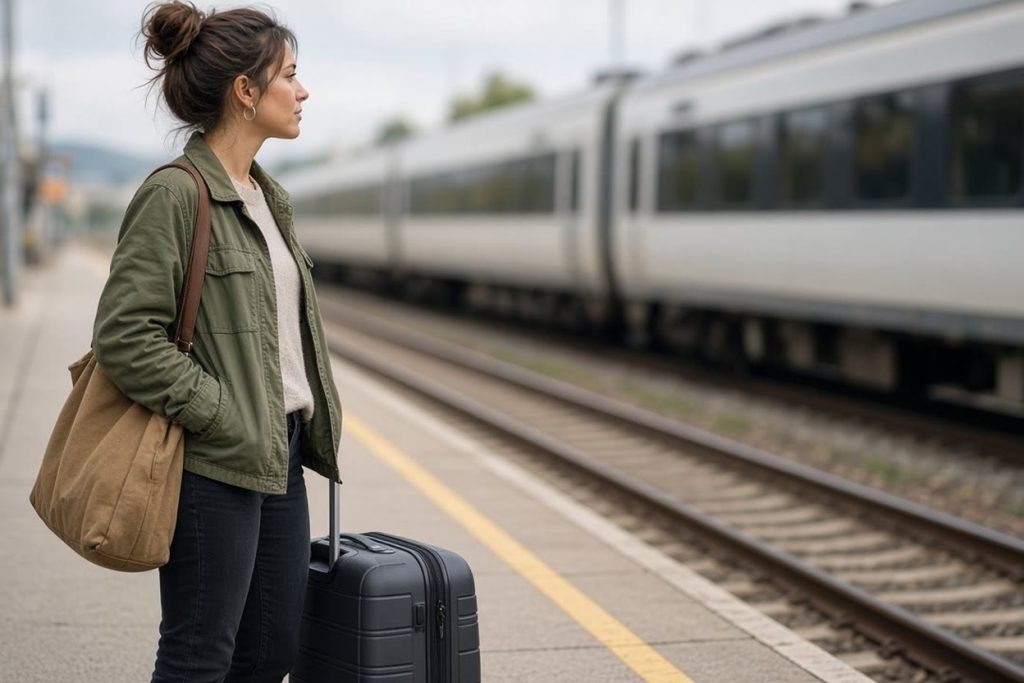
A rail trip fits when you want more than one city and you do not want a car. The FCDO solo guidance says to consider traveling in busy carriages. I treat that as the design constraint: book a seat, sit where other passengers are, and do not treat an empty last carriage as a personality test. Keep valuables close. The same page says to avoid carrying large amounts of money or wearing excess jewelry.
Japan is the illustration, not the crown. On October 27, 2026 its list row was Level 1, issued May 15, 2025, with no indicator shown in that row. The Japan National Tourism Organization says Japan Railways has a network of trains through the country, including shinkansen bullet trains, subways, and local railways, and that some taxis take cards while not all of them do. I am not repeating the tourism board’s praise about punctuality. I did not measure it. What I will use is narrower: there is an official rail network to read before you go, and you should not assume every taxi takes your card. Buy the ticket from the operator or from a seller you can identify. Carry a backup way to pay.
A rail trip still needs the first-night rule. Changing cities does not cancel the hour you are tired and new.
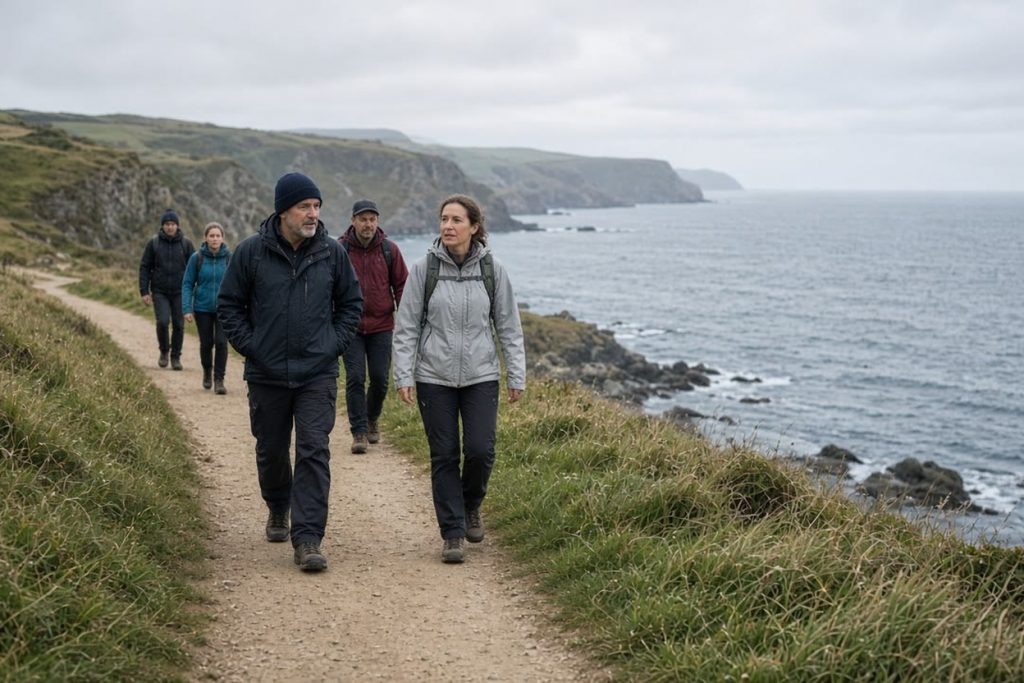
One base outdoors, with a plan someone else can act on
I like this shape when the point is a landscape and the mistake is improvising the road. Iceland is the illustration. Its list row on October 27, 2026 was Level 1, issued May 5, 2026, with no indicator on that row. Weather is a separate fact from the advisory level.
Safetravel says it is the official source for safe travel in Iceland and that it is run by ICE-SAR, the Icelandic Association for Search and Rescue. The page says the weather and road conditions in Iceland are different from what you are used to and can change fast. It says one of the most important steps is to share a travel plan with a trusted person who can act on it. For emergencies it says call 112. For health issues it lists a 24/7 number, 00354 5131700. I would not build an Iceland trip that depends on driving a road I have not checked the day I drive it. That is my assumption sitting on top of their warning, not a statistic about crashes.
The same logic travels. If the trip is a hike or a long drive anywhere, the person at home needs the route and the time you will next speak. A pretty trail is not a plan.
A small-group departure when you want the day held for you
Sometimes the best version of the week is the one you do not operate. You want the guide, the shared vehicle, and a fixed set of days. That is a tour. It can still be a trip you take without a partner of your own. The risks do not drop to zero because a logo is on the ticket. You still read the advisory for every country on the route, you still keep your own passport, and you still want a way to leave early if you need to.
Use solo tours for women when that is the product you are comparing. Ask who holds the passport, what the group does if one person is ill, and how you would exit a day that feels wrong. Those questions are mine. The FCDO line underneath them is the one about additional challenges when you are without a group: if you did not want those challenges, say so before you book the independent version and then resent it.
Asia is where this choice comes up constantly, because the map is large and the photos are louder than the footnotes. Singapore, South Korea, Taiwan, and Vietnam were Level 1 on the October 27 list with no indicator in the row. Thailand was Level 1 with unrest shown. That is not a “best of Asia” article. For places, read best places for solo female travel in Asia, then come back here and run the shape test on the one place you are actually considering. A region roundup is not a booking.
Book the boring parts before you fly
The interesting part of solo trips for women is the day you are there. The part that keeps the day yours is dull, and it belongs in the calendar before the flight is nonrefundable.
Loving Trips Like These? Don't Explore Them Alone.
Real Gallivanta members are planning trips like these right now. Join the community and turn your solo travel dreams into shared adventures.
Join Gallivanta FreeThe FCDO foreign travel checklist, last updated June 5, 2026, is written to help British people prepare. Several of its lines are useful even when you then confirm them with your own government. It says to get appropriate travel insurance as soon as you book, and to check that the policy covers the places, the length of the trip, and activities such as adventure sports. It says to tell the insurer about medical conditions, including conditions that are being investigated and are not yet diagnosed. Insurance you buy after something hurts is a different product. I do not shop it for you. I do tell you to read the activity exclusion before an outdoor shape.
The checklist says to sign your passport and complete the emergency contacts page, to make sure the passport meets the entry rules of the country (it gives the example that a passport may need to be valid for a set period after the trip ends), to get the correct visa, and to carry an extra photo ID that is not the passport. It does not give one validity rule for every country. I will not invent “six months” as a universal law. Look up the country you are entering.
On the solo page, leave an itinerary with someone at home and agree how often you will be in contact. You may also leave photocopies of the passport and the insurance policy. Have a way to reach money quickly if the main card or the phone fails. The checklist makes the phone failure concrete: you can lose the phone and then be unable to finish a payment that wants a second factor. Write down the backup before you are standing at a ticket machine.
Accommodation standards are part of the booking, not a vibe. The solo page says to check fire safety, including smoke alarms and fire exits, and it warns that badly fitted water heaters or cookers, or poor ventilation, can kill because of carbon monoxide. It points to UK Health Security Agency and NHS guidance for that risk. The checklist also says windows and balconies should be securable so people do not fall. I cannot inspect your room from a blog. I can tell you to ask before you pay a nonrefundable rate, and to leave if the answers are shrugs.
The solo page’s door habits are simple enough to pack. Do not leave a key where someone can note the room number. Close windows, especially on the ground floor or a balcony. Lock the door when you are inside. Use the spy hole or chain if the door has one, before you open it, especially if you were not expecting anyone. If you feel uncomfortable or in danger, being safe matters more than being polite, and you can contact local police. I repeat that line because travelers are trained to be easy guests. Easy is not the goal at the door.
Documents, money, and health are part of the trip
Health is a timetable. The FCDO checklist says to check healthcare advice for every country on the route, to check vaccines and health precautions at least 8 weeks before you travel, and to check the rules for taking your medicine abroad. Eight weeks is their figure, not a number I chose. If your departure is sooner than that, you still call a travel clinic. You do not skip the question because the flight is close.
For British travelers going to an EU country or to Switzerland, the same checklist says to apply for a new Global Health Insurance Card if a GHIC or EHIC has expired. It also says an EHIC or GHIC may not cover all health costs and never covers repatriation. It is not a substitute for travel insurance. I am not going to tell a non-British reader to apply for a British card. I am going to tell every reader that a health card and an evacuation benefit are different objects. Read your policy for the word repatriation before you buy the outdoor shape.
If you are pregnant or you have a condition that needs specialist care, the FCDO women travelers page says to check whether the country can provide that care and to carry insurance for unexpected medical evacuation or local treatment. It says many pregnant women travel without issues, and also that you may face extra health risk and that the right care may not be available. It points to the National Travel Health Network and Centre for pregnancy. In some countries, it says, pregnancy or birth outside marriage may fall outside medical insurance, and heavily restricted abortion may be denied even when it would be life-saving. Those are legal and medical facts that change by country. This article cannot settle them. The women travelers page can point you at the current note, and a clinician can point you at your body.
Money stays boring on purpose. The solo page says to make sure you can access funds in an emergency. I split cash and cards so one lost wallet is not the whole trip, and I keep the emergency card separate from the daily card. The amount is your assumption. I will not print a dollar figure. A figure I invented would be worse than none.
U.S. citizens can add STEP, described above, so the embassy has a trip to attach an alert to. British nationals who need urgent help use a different door. The FCDO women travelers page says it can help British nationals in emergencies, for example if you have been injured or assaulted or if you are arrested, and that it prioritizes people who are vulnerable. Abroad, contact the nearest British embassy, high commission, or consulate. In the UK, the page lists +44 (0)20 7008 5000 and says the lines are open 24 hours. Write the number that matches your passport. A U.S. reader calling a British duty line, or the reverse, is a delay.
Nights, drinks, and laws are part of the shape
The FCDO women travelers page says violence against women and girls is a risk in many countries, and that the form it takes depends on local context, laws, history, and culture. It says rape and sexual assault are risks to women worldwide, and that local services and attitudes vary widely. It tells you to read the FCDO’s own advice on what to do if you have been raped or sexually assaulted abroad, which includes country notes. I am not going to compress that into a slogan. If it happens, local emergency services come first, then the consular page for your nationality.
On drinks, the same page says drugs have been used in rape, that you will not normally be able to tell if someone has added them, and that they also work in non-alcoholic drinks such as coffee and tea. It says they are normally colorless and tasteless and can leave you unconscious. Its instructions are direct: do not leave a drink unattended, do not accept a drink from a stranger, get help if you feel strange, sick, or drunk after a small amount, and contact emergency services if you feel in danger. The foreign travel checklist adds a related warning about spiked and contaminated drinks, including methanol poisoning, and points to Travel Aware and the country advice. I treat a bought drink I did not watch, and a poured drink I did not pour, as the same problem.
Laws are not a mood. The women travelers page says to research laws and authorities’ attitudes on gender equality, especially crimes and violence against women. It also says that in some countries a married woman may need her husband’s permission for herself or her children to leave, and that a husband may be able to place a stop order so authorities stop you or your children at departure. If that sentence could apply to your family, read the page before you book, and get advice that is actually legal advice. A travel article is the wrong instrument.
The same page covers female genital mutilation, forced marriage, domestic abuse, risks to children, and job offers that have been used as a front for trafficking. It says domestic abuse includes controlling, threatening, or violent behavior from a partner, ex-partner, or family member, and that if you feel unsafe you should contact local emergency services or the nearest British embassy, high commission, or consulate. Job scams, it says, can target anyone, and criminal groups have sometimes targeted women with offers in call centers, hosting, childcare, domestic work, and other jobs that look legitimate. Passports have been taken. If a “solo trip” is actually a job that sounded too good, stop and use the FCDO victim-of-crime guidance rather than a packing list.
Meeting someone while you are there is a different plan from the flight. If that is part of your week, read how to date safely as a solo female traveler before you move a conversation into a private room. The trip shape still applies: you leave on your own route, and a new person does not get the hotel name as a courtesy.
Decide who is allowed to hold the plan
The FCDO solo page wants an itinerary with someone at home, a contact rhythm, and photocopies of the passport and the policy. Safetravel wants a plan in the hands of a person who can act. STEP, for U.S. citizens, is a way for the embassy to reach you or your emergency contact. Those are three different audiences. They do not all get the same packet.
The person at home can have dates, flight numbers, the first-night address, the next check-in time, and what you want them to do if you miss it. A new acquaintance does not need the address to recommend a cafe. A group chat of people you just met does not need your live location. I keep app suggestions on solo travel apps for women so this article does not freeze a product list that will go stale. An app does not replace the human who agreed to notice if you go quiet.
Emergency numbers are local. In the European Union, 112 is the single European emergency number. The European Union says you can dial it free of charge from fixed and mobile phones everywhere in the EU, and that it connects you to police, ambulance, and the fire brigade. It also says some EU countries still keep a national number alongside 112. Iceland is not in that EU sentence. Iceland’s own Safetravel page tells you to call 112 there. Save the number for the country you are standing in. Do not save one number and call it a world system.
If you miss the check-in, the person at home follows the rule you wrote. They do not need to post your photo publicly as a first step. Public posts can wait until you have asked for them. Silence is a signal you defined, not a puzzle for strangers.
Three composites, labeled as composites
Illustrative scenario B, the photo that skipped the list: She has a saved photo of a waterfront and a fare that will not last the weekend. She has not opened an advisory. In the composite she opens the State Department list before she pays. The row is not Level 1. She does not argue with the photo. She either reads the country page and decides with the real level in view, or she moves the dates. The picture stays in the camera roll. It does not get to outrank the page.
Illustrative scenario C, the arrival with no address: A host messages that they will meet her at the curb and that she does not need the property name. The FCDO solo page says to know the address in case the transfer does not come, and to book the first night before you travel. In the composite she already has a booked first night and the address written outside the chat. She can be friendly in the arrivals hall and still sleep in the place she chose. The missing address was the request. The welcome was optional.
None of these three scenes, including scenario A above, is a report about a Gallivanta reader. If your situation is already an emergency, stop reading and contact local emergency services, then your consulate.
If you want the week-by-week planning sequence rather than the trip-shape filter, read solo travel for women. That page is the order of operations. This page is the filter you run before you pick the city.
How I narrow it to one trip
I keep a short written test. If a line fails, I change the trip instead of collecting more photos.
- I can name the shape in one sentence: city break, rail, one outdoor base, or a group departure.
- I have opened the current advisory for my passport’s government, and the State Department list if I am a U.S. citizen, on the day I pay. I have opened the country page, not only the list row.
- The first night is booked, the address is written down, and I know one backup if that room is wrong.
- I know how I will leave the airport and how I will move the next afternoon without hitchhiking or an unmarked car.
- Insurance is bound to the dates and the activities, and I know whether repatriation is covered.
- Someone at home has the itinerary and the check-in rhythm. If I am a U.S. citizen, STEP is a candidate. If I am British, I know the FCDO number and the local mission.
- The emergency number for that country is saved before I land. For an EU country I save 112 and I still check whether a national number sits beside it. For Iceland I save 112 because Safetravel says so.
- If the week includes meeting someone new, that plan stays public and separate from the room key.
If two trips pass, I take the one with the simpler exit. The best solo trips for women are often the slightly smaller ones. You can add a city on the next trip. You cannot add a missing first night after the airport closes.
More of this cluster sits in the solo female travel category. The day-to-day habits stay on solo female travel. Come back to that pillar when you want the broader checklist. Stay on this page when you are choosing the trip.
When a trip includes meeting someone new, keep the scam and personal-safety pages open beside the advisory. The U.S. Department of State scams guidance covers common travel fraud patterns. The U.S. Federal Trade Commission romance scam page says never to send money to someone you have not met in person, and that scammers often invent a plane ticket or emergency. RAINN tips for safer dating cover public first meets and sharing your plan with someone you trust. Those pages are not a destination ranking. They are the primary sources I keep next to any meetup that is not already a public museum hour.
If you want the product side of how solo travelers find people without handing over a home address on day one, read how Gallivanta helps travelers meet. Privacy details for the app sit on the Gallivanta privacy page. Neither link is a signup pitch for this article. The booking still starts with the advisory.
Sources, facts, and review boundaries
This is a planning article for adult travelers choosing a solo trip. It is not a safety certification, a visa ruling, medical advice, or a guarantee. Advisory levels, visas, insurance terms, and emergency numbers change. The State Department says conditions may change at any time, and that its advisories are about risks to U.S. citizens, not foreign nationals. Verify the country page, your own government’s advice, and the operator you will actually use before you pay.
I checked the U.S. Department of State Travel Advisories list on October 27, 2026, and the table quotes the rows I saw that day. I did not open every underlying country page. A list row is not a neighborhood briefing. I also read the USAGov STEP page (last updated March 26, 2026), the FCDO pages linked below, the Japan National Tourism Organization getting-around page, Safetravel.is, and the European Union page on 112. I did not invent survey results, crime rates, prices, or rankings.
The photographs in this package are original images made for this article. They are not stock photos. They do not document a real reader’s trip or a real tour group.
How this blog separates reporting, composites, and product mentions is on the editorial standards page and the why trust us page. The scenes marked illustrative are composites. They are not testimonials.
Primary pages used for the factual claims above:
- U.S. Department of State: Travel Advisories
- USAGov: See travel advisories and register in STEP
- FCDO: Advice for women travelling abroad
- FCDO: Solo and independent travel
- FCDO: Foreign travel checklist
- FCDO: Foreign travel advice
- Safetravel, run by ICE-SAR: safe travel in Iceland
- Japan National Tourism Organization: getting around
- European Union: 112, the single European emergency number
- U.S. Department of State: scams guidance
- FTC: What to know about romance scams
- RAINN: Tips for safer dating, online and in person
If you are in immediate danger, contact local emergency services before you contact a blog, an embassy switchboard, or a person at home.
Editorial review date: October 27, 2026.
FAQ: best solo trips for women
What makes a trip one of the best solo trips for women?
It is a trip you can enter, move through, and leave on a plan you wrote before you flew. That means a current official advisory you have actually read, a first night already booked, a way to get around that does not depend on a stranger, and the emergency number for that country. A famous photo is not the test. The U.S. Department of State says conditions in any destination may change at any time, so recheck before you pay.
Does a Level 1 advisory mean the country is safe for women?
No. Level 1 means exercise normal precautions. The State Department says this is the lowest advisory level and that there is some risk in any international travel. The advisory describes risks for U.S. citizens. It is not a women’s safety ranking. Read the country page, and read your own government’s advice. British travelers can start with the FCDO pages linked above.
Is a solo trip the same thing as a group tour?
No. The FCDO describes solo travel as traveling by yourself and independent travel as travel without a group or organised tour, and it says those choices can bring additional challenges. A group departure is a different product. Compare it on its own if you want a guide and other travelers, and do not treat a tour as permission to travel.
What should I arrange before I fly?
The FCDO solo guidance says to book accommodation before you travel, especially the first night, to leave an itinerary with someone at home, to agree how often you will check in, and to make sure you can reach money if you need it quickly. The foreign travel checklist says to buy insurance when you book and to check your passport, visa, and health advice, including vaccines and precautions at least 8 weeks before travel.
Which emergency number should I save?
Save the number for the country you will be in. In the European Union, you can dial 112 free of charge from fixed and mobile phones. Some EU countries also keep a national number beside 112. Iceland’s Safetravel page also says to call 112, which is a separate instruction for Iceland, not proof that one number works worldwide.
What if my passport is not American or British?
Use your own government’s travel advice for entry rules, health, and consular help. The State Department says its advisories describe risks for U.S. citizens, not foreign nationals. The FCDO assistance details on its women travelers page are for British nationals. The planning habits on both sites are still worth reading. They do not replace your own foreign ministry.
Ready to Meet Your Next Travel Date?
You've got the destination, the vibe, and the courage to go solo. Now all you need is someone who gets it. Join Gallivanta and meet fellow travelers who believe the best chapters start with a one-way ticket.
Join Gallivanta FreeSources linked in the article | Reviewed October 27, 2026