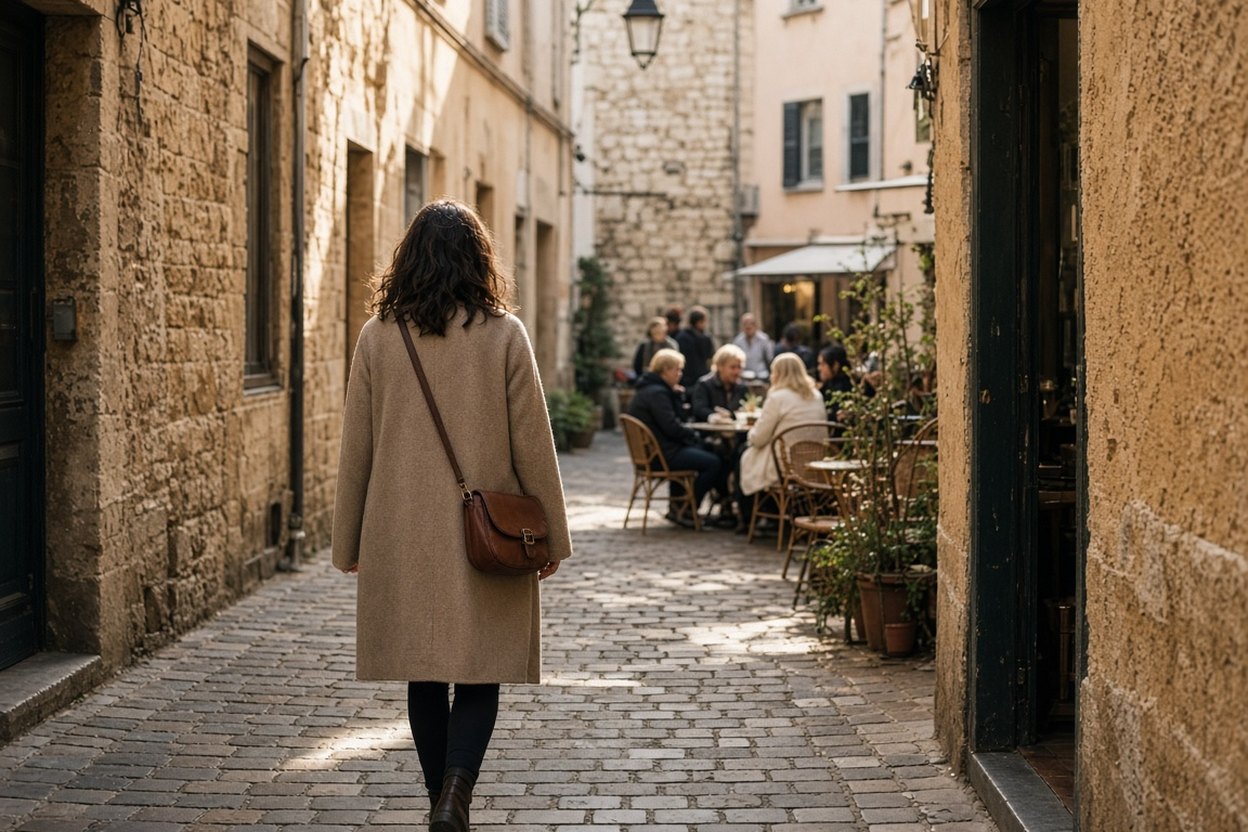
Your Next Adventure Could Change Everything
Join thousands of adventurous women who've discovered that the best travel stories often include a plot twist.
Start Your Adventure. Join Free
✓ Free to join ✓ No credit card required ✓ Join 50,000+ travelers
Solo date ideas for women are short public meetups you can leave on your own: a staffed cafe, a museum or gallery with other visitors, a market aisle, or a daylight walk that already has an end. They are not a list of romantic things to do by yourself, and they are not a private plan in someone else’s car, boat, or room.
I am Rico Roger. I founded Gallivanta, and I write the destination and safety guides on this blog. Some readers arrive here after searching “solo date ideas female” and find a page about eating alone or taking yourself to a museum. That page is useful. It is a different job. This page is the job of meeting another person while you are traveling, without handing over the room, the ride, or the drink.
Published and reviewed: November 2, 2026
Read this beside dating safely as a solo female traveler, the first travel date guide, the meeting-point guide, the daylight window plan, and the alcohol boundary plan. If you wanted an afternoon on your own, use romantic things to do alone. I am not going to fold that list into this one.
Keep four things separate. Facts are what a government page or RAINN said, with the link in the sentence. I checked those pages for this draft on November 2, 2026. Examples are illustrative composites for teaching. They are not my diary, not transcripts of the travelers I speak with when I edit a guide, and not reports about a real guest. Assumptions are risk tolerances that change with your passport, your health, the city, and the hour. Advice is the filter I use when I edit a first meetup for a woman traveling on her own. Advice is not a guarantee of safety, not legal advice, not medical advice, and not a substitute for your own foreign ministry or for local emergency services.
- → Separate a meetup from an afternoon alone
- → Read the women and solo pages first
- → Run the shape test
- → Use a staffed cafe
- → Use a museum, gallery, or bookshop
- → Use a market, not a private dinner
- → Keep a walk in daylight, with an end
- → Leave the private ideas off the list
- → Watch the drink, including coffee
- → Arrive and leave on your own
- → Split what a trusted person may know
- → Tighten the plan when the risk is higher
- → Recognize idea red flags
- → Use short scripts
- → Run the checklist
- → Review sources and boundaries
- → Read the FAQ
A solo date idea and an afternoon alone are different products
I keep two searches apart on purpose. One search wants a way to enjoy a city without a companion: a bakery, a gallery, a long lunch, a book. The other search wants a first hour with a person you have not stood next to yet, while you are the one who booked the room and the one who will walk back to it. The words overlap. The risk does not.
The alone list can be generous. You can change the museum, stay for a second coffee, and tell no one but yourself. A meetup cannot borrow that looseness. Another person is now in the plan, and that person may want your hotel, your number, a ride, or a drink you did not order. RAINN’s tips for safer dating, updated May 31, 2026, say nothing you do can prevent another person’s predatory actions or guarantee your safety. The same page says you may be able to reduce risk. That is the ceiling of this article. A pretty idea is not a clearance.
I also keep the product question in its lane. If you want a comparison of apps, use best travel dating apps and judge it on its own. This page will not crown an app. An introduction can show that someone else is in the city. It cannot choose the cafe, the end time, or the route back.
The wider habit set for the trip itself lives on solo female travel and on solo travel for women. Those pages are the planning order before you fly. This page starts after you already have a city and a person, and you need an idea that still lets you leave. More guides in the cluster sit in the Solo Female Travel guides.
Read the official pages before you fall in love with the idea
Before I would agree to any of the ideas below, I open the advice for the passport that is actually in the bag. The FCDO advice for women traveling abroad was last updated on September 8, 2026, with new information about domestic abuse. It says all travelers face risks abroad, and that in some countries or cultures, women traveling alone or in female-only groups can face extra risks and obstacles. It tells you to research the local culture and whether women traveling there have received unwanted attention or difficulties because of their gender. It points you to the safety and security section of the country advice, to its solo travel advice, and to its advice for LGBT+ travelers.
The same page says violence towards women and girls is a risk in many countries, and that the form depends on local context, laws, history, and culture. It says that if you are traveling by yourself, or you plan to spend time alone, you should read the solo guidance. A cafe idea does not suspend that sentence. If the country page is the reason you would reconsider the trip, it is also the reason you reconsider the meetup.
The FCDO solo and independent travel guidance, updated on June 12, 2025, says all travel comes with risk, and that if you travel by yourself, or independent of a group or organized tour, you can face additional challenges. Later it says solo and independent travel may bring an increased risk of being a victim of crime or other risks to personal safety, particularly somewhere unfamiliar. It also says you may face other risks because of your identity, and it points readers to the women page, the LGBT+ foreign travel advice, and its disability and travel page. I link the LGBT+ page because the women guidance lists it as a page to check. I am not summarizing it from memory.
Canada’s advice for women travelers asks you to read the travel advice and advisories for the destination, including laws, religions, and customs that may affect women, and to check the safety and security section for women’s safety in particular. It says to sign up for the free and confidential Registration of Canadians Abroad service. It says norms for clothing vary by law and custom, and that not following them could put your safety at risk. It says consular officials often receive calls from friends or relatives who have not heard from someone abroad, so plan the contact before you go out. The same page points 2SLGBTQI+ travelers, including trans women, to a separate Government of Canada page. If that is your situation, I want you on that page as well as this one.
Your passport country is the government that can usually help you. I link British and Canadian pages because they publish detailed English guidance I could read on this date. If you are not British or Canadian, use your own foreign ministry. I will not borrow another country’s emergency number and pretend it is yours. If you are a U.S. citizen, open the travel page your own government publishes for the country, including its guidance for women travelers, and enroll in the service that government actually runs.
Illustrative scenario A, the viewpoint that replaced the country page: A traveler is offered a cliff path at sunset because a photo made it look like the obvious first hour. She has not opened the safety section for that country. In the composite, the idea waits. The country page is the decision. The viewpoint can still exist on a different day, in daylight, if the page and the shape test both allow it. The photo was not the plan.
Every idea has to pass the same shape test
I do not collect date ideas by how they photograph. I collect them by whether you can arrive alone, sit among other people, pay for yourself, and leave without a negotiation. RAINN says to meet in a well-lit, busy area such as a coffee shop, a restaurant, or a park, and to avoid private or isolated locations for the first few dates. It also says never to invite someone to your home, or go to theirs, until you have built trust. The FCDO says that if you are walking alone, avoid poorly lit areas, particularly at night. Those two pages do not say the same thing about a park. I keep the RAINN park only when it is busy and still in daylight, and I drop it when the way back is a dark path. The conflict is the point. When the pages disagree, I use the stricter line for that hour.
| Passes | Stays off the first hour |
|---|---|
| A staffed cafe, bakery, or food-hall table with other people | A hotel bar, a room, or a lobby that leads to your elevator |
| A museum, gallery, or bookshop you can leave at a door | A boat, a hike, a closed venue, or a drive |
| A market aisle or a daylight walk with a named end | A dark park, an empty viewpoint, or “trust me, I know a place” |
| Your own ticket, your own drink, and your own way home | Their car, their apartment, or a drink you did not watch |
RAINN also says there is no rush to meet in person, and that pressure to meet quickly is a red flag. A city that you leave on Thursday is not a reason to skip the shape test on Tuesday night. My advice: if the only version of the idea happens after dark, in a place you cannot name, or in a vehicle you do not control, the idea can wait or it can die. The travel dating safety overview is the wider frame. This table is the idea filter inside it.
Length matters as much as the place. The first travel date guide already treats a first meeting as short enough to end. I keep these ideas inside about 45 to 90 minutes, with the end said out loud when the start is said. A good conversation can add one more public stop. It does not get to erase the end.
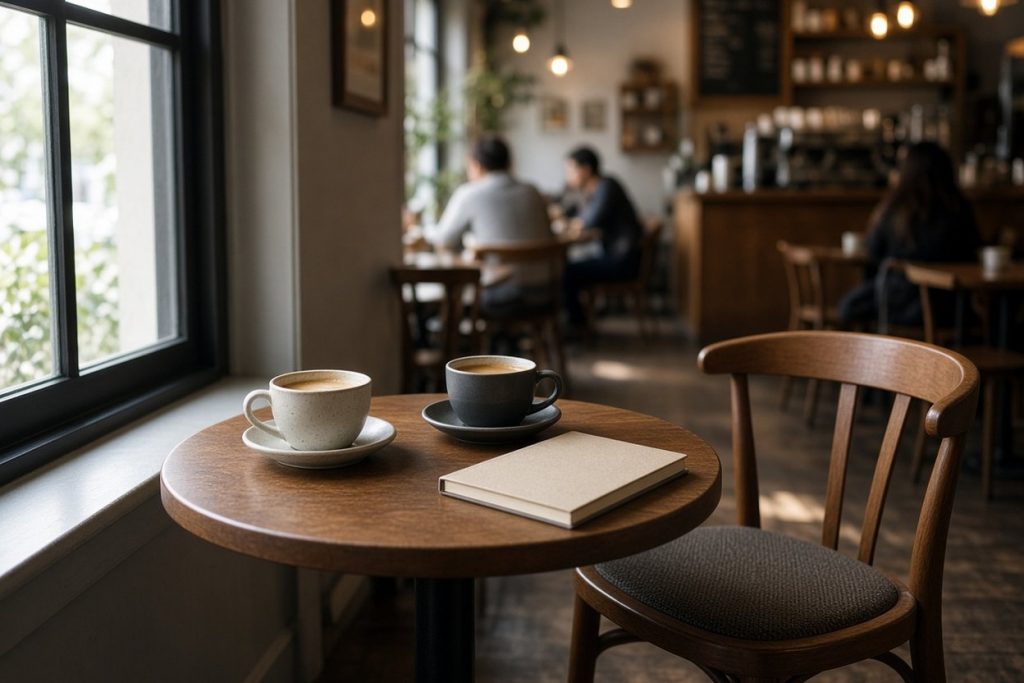
A staffed cafe is the idea I start with
A cafe works because the job is small. You can see other people. You can pay for one cup. You can stand up. RAINN names a coffee shop as the kind of well-lit, busy place to meet, and it says many bartenders and servers will help you make a fast exit if you feel unsafe. It also says to have some cash so you can pay and leave immediately. I treat cash as part of the idea, not as a personality trait. If the card machine is the only way to close the bill, you can still leave the cup and sort the payment with staff. You do not owe a walk around the block while the machine thinks.
Choose the cafe before you leave your room, not from a pin the other person drops while you are already outside. The meeting-point guide is how I judge whether a pin is fair: staff, light, other people, and a way out that is yours. The public-first plan is the version for arrival day, when you are tired and still holding a bag. A first cafe on arrival day should be even shorter. The FCDO says you are at your most vulnerable when you first arrive, tired and unsure of your surroundings.
What you order is part of the boundary, not the romance. Buy it yourself. Watch it. The drink section below is the rule, including for coffee. If the cafe is inside the building where you sleep, it fails even if the coffee is good. Where you sleep stays on the accommodation privacy plan.
City lists can help you find a public room. They cannot replace the test. If you are already in Barcelona, the Barcelona date-spot guide is a menu of public ideas. If you are in Prague, use the Prague date-spot guide the same way. If you are in Lisbon, use the Lisbon date spots page. Run this shape test on whatever name you pick. A famous street is still a street.
Illustrative scenario B, the cafe that moved to a flat: A traveler agrees to a station cafe. On the way, the other person says the cafe is closed and that their place is two minutes away, with better coffee. In the composite, the hour ends at the station. A closed cafe is a reason to rename a public pin, or to stop. It is not a reason to enter a home. RAINN’s line about not going to someone’s home until you have built trust is the reason. The coffee was optional.
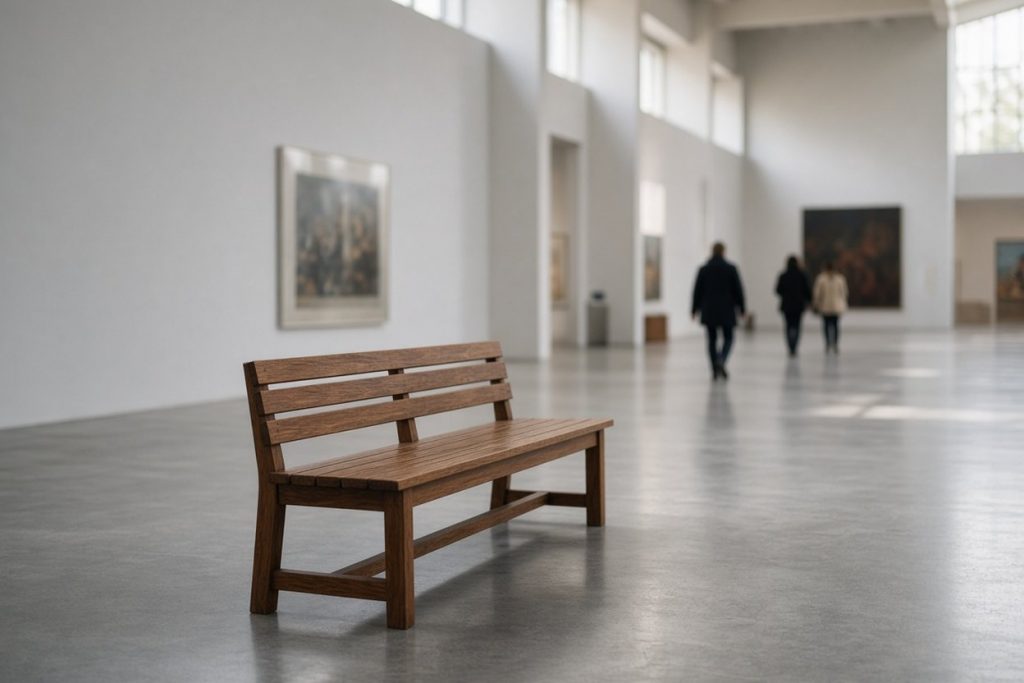
A museum, a gallery, or a bookshop gives you a door
A museum works when the door is public and the ticket is yours. You have something to look at besides each other, and you have a building you can exit without asking permission. RAINN’s in-person list does not name a museum. I am not pretending it does. I use the museum because it matches the part RAINN does say: a busy place, not a private one, for the first dates. A gallery with a guard and a bookshop with staff are the same shape. An empty installation in a warehouse at night is not.
Buy your own ticket, or agree before you arrive that each person buys their own. A ticket someone else bought can turn into a debt, a guilt trip, or a reason you “owe” the next stop. RAINN says never to send money or financial information to someone you have only met online. A museum ticket is smaller than a wire, and I still do not want the first hour to start with a payment you did not choose. Your budget plan can hold a cheap public hour. It should not depend on their wallet.
Keep the visit inside the daylight window and inside the time you named. You can look at one room. You do not have to “finish the collection” because someone is disappointed. RAINN says you do not owe anyone your time or politeness when your safety or comfort is at risk, and that it is okay to end earlier than expected. A museum door is an easy place to use that sentence.
Do not leave your bag with them while you look at a painting. The FCDO solo page says to keep valuables close to you, and to avoid carrying large amounts of money or wearing excess jewelry. A coat check run by the museum is the museum’s system. A person you just met is not a coat check.
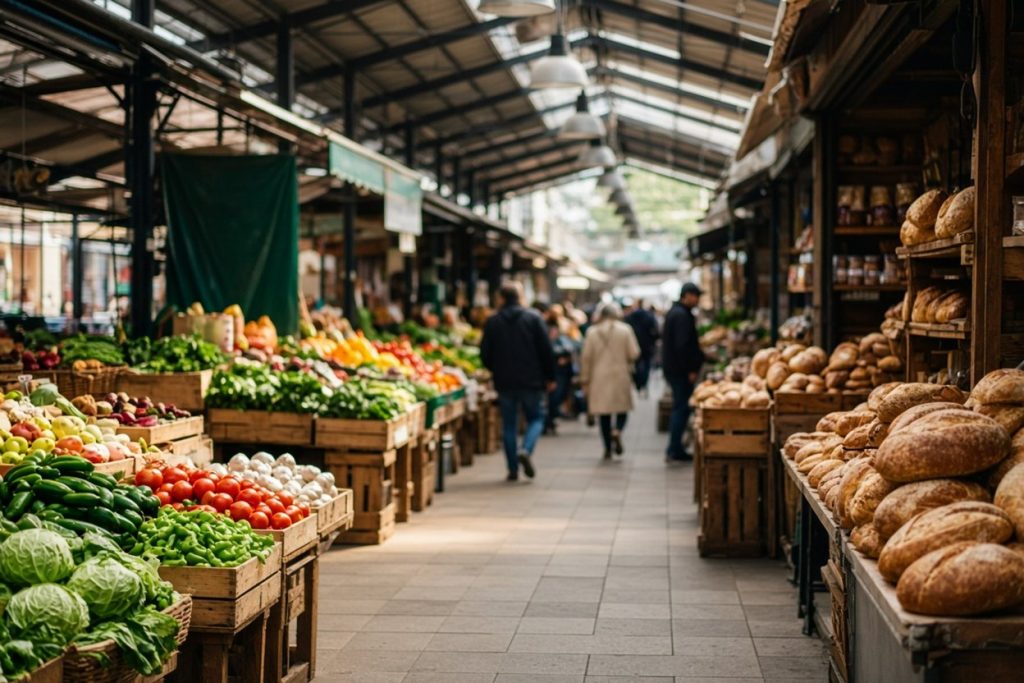
A market is a public aisle, not a dinner at their table
A food market or a covered hall can be a good idea because you can stand, point at food, and leave down an aisle that has other shoppers. It fails when it becomes “come back to mine and I will cook,” or a tasting in a back room, or a stall where someone else orders for you and you lose sight of the cup.
Canada’s advice for women travelers says to watch your drinks as they are being prepared and served, never to leave your food or drinks alone, and never to accept snacks, beverages, gum, or cigarettes from strangers. A market sample handed over a counter by a stranger you did not choose is the same family of problem as a drink. Buy the thing yourself, from the stall you picked, and hold it. If you do not want it, you do not have to taste it to be polite. The FCDO solo page says being safe is more important than being polite.
Pay as you go. A shared bill that only one person can see is how a short snack becomes a dispute in a language you do not read. If you want the language layer, it lives on the language and translation plan. This page only needs the smaller rule: you can see the price, and you can walk away from the stall.
Do not let the market “continue” into a flat, a car, or a beach after the hall closes. The end of the hall is a natural end. Use it. The exit strategy is the longer version of leaving without a speech.
A walk is an idea only when it already has an end
A walk is the idea people romanticize, and it is the idea that most often drops the shape test. Two blocks between a cafe and a station, in daylight, on a street with other people, can work. A promenade at dusk, a park after the lamps come on, a viewpoint you need a car to leave, or a beach with no shops does not. The FCDO says if you are walking alone, avoid poorly lit areas, particularly at night. Canada’s page says to be cautious if you go out alone, especially at night, and to share your plans.
I put the end in the invitation. “Cafe until 4, then I am going to the metro” is a walk with a door. “Let’s just wander and see” is a walk that belongs to the other person as soon as you are away from staff. The daylight window plan is where I put the clock. If the only free hour is after dark, I move the meetup or I skip it. I do not upgrade a dark walk into a date idea because the city is famous for sunsets.
Stay on streets you can name. The FCDO says to consider busy train carriages, and Canada says to choose reserved seating on trains if it is available. Those lines are about the ride, and I use them for the walk too: be where other people already are. A shortcut through a courtyard is not a favor. If you would not walk it alone, do not walk it because someone you just met calls it quicker.
A park is the awkward case. RAINN lists a park next to a coffee shop and a restaurant, as a populated public option, and it says to avoid isolated locations. I do not delete the park from RAINN’s sentence. I add the FCDO night line beside it. A busy park lawn at 2 in the afternoon, near a kiosk, with your own exit, can pass. The same lawn at 9 at night does not, even if the conversation is good. When I am editing the idea, the hour wins over the mood.
Illustrative scenario C, the sunset that kept moving: A traveler agrees to a river walk that was supposed to end at a staffed bridge cafe. The other person keeps suggesting “one more corner” away from the lights. In the composite, she stops at the cafe she named and takes her own metro. The extra corner was the ask. The bridge was the plan. The backup plan is how you name the second public pin before you need it, not from a dark corner.
Loving This Travel Dating Safety? Don't Explore It Alone.
Real Gallivanta members are planning trips to Travel Dating Safety right now. Join the community and turn your solo travel dreams into shared adventures.
Join Gallivanta FreeThe ideas I leave off a first meetup
Some ideas are popular because they look like travel. They are also the ones that take away the exit. I leave them off the first hour.
- Their car, a scooter, or a ride they insist on giving you. RAINN says to take your own transport, and to avoid letting the date pick you up, drive you home, or get into your car. The FCDO says to use only official, licensed, and reputable taxis, and to avoid hitchhiking.
- A boat, a hike, or any plan with one way back. If you cannot leave in the middle without their help, it is not a first idea. It can be a later idea, after trust exists, and even then it is a different risk.
- Their home, your room, or a “quick drink upstairs.” RAINN says not to go to someone’s home, or invite them to yours, until you have built trust. The FCDO says not to leave your key where someone can note your room number. Canada says to keep the room number and the location of your accommodation private, and to confirm the identity of visitors, including staff.
- The hotel bar. It feels public because there is a bartender. It is still the building where you sleep. Meet somewhere else, even if it is a short walk, and leave on your own.
- A job, a modeling test, a party, or a “hostess” shift offered by someone you just met. The FCDO women page says to be careful of job offers that appear too good to be true, including as hosts and hostesses, in childcare, or as domestic help. It says these scams can target anyone, and that criminal groups have sometimes targeted women and used jobs as a front for trafficking. A date idea is not an audition.
I am not saying you can never take a boat or see a sunset on a trip. I am saying those are poor first meetups with a person you do not know. Do the boat with your own ticket on a public schedule, on a day that is not a date, if you want the boat. Do not accept it as the price of being curious about someone.
If the other person mocks the line, the idea has already told you what you needed. RAINN says if someone is crossing boundaries, pressuring you, or making you uncomfortable, it is okay to leave. You do not have to workshop a better version of a bad idea.
The drink rule applies to coffee, not only to cocktails
The FCDO women page has a section on drug-assisted rape. It says drugs have been used in rape, and that if someone adds them to your drink you will not normally be able to detect them. It says rape drugs also work in non-alcoholic drinks such as coffee and tea. It says they are normally colorless and tasteless, and can make you unconscious and defenseless. The instructions on that page are plain: do not leave drinks unattended, and do not accept drinks from strangers. If you feel strange, sick, or drunk after only a small amount, tell a trusted friend who can get you to a safe place, or phone the local police, and contact the emergency services if you feel in danger.
Canada’s page is just as specific, and it adds food. Watch drinks as they are prepared and served. Never leave food or drinks alone. Never accept snacks, beverages, gum, or cigarettes from strangers. I use both pages. A coffee a match “already ordered for you” fails them. A pastry from their bag fails them. A cup you set down and then cannot swear you watched fails them.
RAINN says to avoid excessive alcohol and never to leave your food or drink unattended. The alcohol boundary plan is where I put the limit for a travel date. This page adds the idea-level version: the best solo date ideas for women still work with water you bought, or with no drink at all. Chemistry does not require a second glass. If you want alcohol, order it yourself, keep it in your hand, and stop at the number you chose before you left the room.
If you feel wrong after a small amount, you do not finish the hour to be sure. You tell staff, you contact the person who already has your plan, and you contact local emergency services if you feel in danger. That is the FCDO sequence. I am not a clinician, and I am not going to invent symptoms beyond what that page names: strange, sick, or drunk after a small amount.
Arrive on your own route, and leave on it
The idea is only as good as the way you get there and the way you get back. RAINN says to take your own car, arrange a rideshare, or have a trusted friend drop you off and pick you up. It says to avoid letting your date pick you up or drive you home, and not to invite them into your car. It also says to plan an exit in advance.
The FCDO transport list is the one I put under that: arrange airport transfers before you arrive, use only official, licensed, and reputable taxis, ride in busy train carriages, avoid hitchhiking, and keep valuables close. Canada adds registered taxis and, where they exist, women-only buses or train carriages. I do not tell you a women-only carriage exists in every city. I tell you to use it when the local system actually offers it, and to check that on an official or operator page rather than on a stranger’s advice.
Do not get in a car because the cafe was “just easier if I drive.” Do not accept a motorbike. Do not walk the last blocks to your door together. The transportation independence plan is the full version. This page only needs the sentence that belongs on the idea: you can leave in the middle, without their keys.
If you use a rideshare, it is a car you ordered, from an account you control, to a stop that is not your door. RAINN allows a rideshare you arrange. It does not allow their car. I keep that distinction. A driver they hailed on the street is not the same object as a car you requested yourself.
Have a way to pay for that exit. The FCDO says to make sure you can access your money, including quickly in an emergency. RAINN says to have cash so you can pay and leave. I want both: a card or cash that does not depend on the other person, and enough to cover the ride you already planned. If the idea only works when they pay, it is their idea, not yours.
Tell a trusted person the idea, not the match
RAINN says to let a friend or family member know your plans, including where you are going, who you are meeting, and when you expect to return. It says you can use a location-sharing app so someone you trust can follow the hour. It also says to set up a code word or an emoji with that person so they can help you end early. The FCDO says to leave an itinerary with someone at home and to agree how often you will be in contact. Canada’s page says consular officials often receive calls from friends or relatives who have not heard from someone abroad, and it tells you to plan that contact before you go out.
The match does not get the same packet. They get the public place, the start, and the end. They do not get the room, the door code, the flight, or a live dot. Canada’s page says to choose carefully what you post online and to avoid sharing your exact location. RAINN says not to share private details such as your home address, phone number, workplace, or daily routine until you have built trust, and to resist pressure to move the conversation off the dating app too soon. I keep the first coordination in the app. A cafe name does not require your personal number.
Australia’s online safety regulator says the same thing in its own words. The eSafety Commissioner’s online dating guide says to screenshot or photograph the person’s profile and your messages before you meet, and to let a friend or family member know where you are going and when, including by sharing your location so they can check that you get home safely. It also says that if you move to another messaging or social media service, you lose the dating app’s safety features, and the other person may get your number, your location, and your wider network. That is one more reason the cafe name stays in the app.
The check-in protocol is how the trusted person should react if you miss the window. Agree it before you leave. Do not invent it from the table. If you want a live dot, it goes to that person for a window you set, which is the rule on the location sharing plan. It does not go to the match.
A code word is a tool, not a mood. Pick it while you are calm. RAINN’s example is a message that means “call and give me an excuse to leave.” You can also just leave. The same page says it is okay to lie if you need an excuse, and that you can also walk away. I prefer the true, short line, and I keep the lie in reserve because RAINN names it as allowed when safety is the point. You do not owe a debate.
Women, and anyone at higher risk, get a tighter version of the same ideas
The ideas on this page are already the tighter version. I do not have a second, secret list that is “more fun” if you are willing to skip the exit. The FCDO says women traveling alone or in female-only groups can face extra risks and obstacles in some places, and that violence towards women and girls is a risk in many countries. Canada’s page says to be cautious going out alone, especially at night. Those sentences are why the first idea is a cafe in the afternoon, not a bar crawl.
On the meetup itself, the practical cuts are small and they are not cold. Do not confirm that you are traveling alone, that the booking is for one, or that nobody expects you. “I keep first plans in public, and I leave on my own” is enough. Do not explain the check-in. Do not narrate the route back. Clothing is a local fact, not a debate with a match: Canada’s page says norms vary by law and custom, and that not following them could put your safety at risk. Read that before you pack, from the country page, not from a person who wants you to change clothes for the hour.
If you are a trans woman, or you are traveling as an LGBT+ person, use the pages those governments wrote for you, not a guess from this article. Canada points 2SLGBTQI+ travelers, including trans women, to its own page. The FCDO women page points readers to its LGBT+ advice. I am not going to invent a city ranking on top of either page.
The longer context is on dating safely as a solo female traveler and on the solo travel safety guide for women. This page does not replace either. It answers a narrower question those pages are not built around: which ideas still count as a first meetup, and which ideas only look like one.
Red flags that cancel the idea
Leave or cancel when the idea turns into access. Concrete versions:
- Pressure to meet tonight, or to leave the app, before a public place exists
- A plan that only works in their car, their home, or a place you cannot leave
- Anger when you name a cafe, a time limit, or your own transport
- A drink, a snack, or a cigarette you did not watch and did not ask for
- A request for your hotel, your room, your workplace, or your daily route
- A job, a party, or a paid “opportunity” attached to the meetup
- A suggestion to walk away from staff, lights, or other people
One awkward question can be a miss. A pattern after a clear answer is the signal. RAINN says if something makes you uncomfortable, stop, block, and report. It also says that if a date is pressuring you, scaring you, or making you feel unsafe, that is not your fault, and you are not responsible for correcting their behavior. The reporting plan is how you save the thread before you block, after you are safe.
Money is its own red flag, even before a meeting exists. The FTC romance scam guide says scammers often say they cannot meet in person, sometimes because they are living or traveling outside the country, and that once they gain your trust they ask for help paying for things like their ticket to visit you, their visa, or medical bills. It says the bottom line is to never send money or gifts to a sweetheart you have not met in person, and to report a romance scam at ReportFraud.ftc.gov and to the app or site where you met. A solo date idea never needs a transfer first. If the plan only exists after you pay, there is no plan.
Scripts that keep the idea public
Short lines are easier to send when you are tired. Adapt the place. Keep the boundary.
- The idea: “I can do the station cafe at 3. I will get there on my own, and I need to leave at 4.”
- The moving pin: “If that cafe is closed, I will pick another public place nearby. I am not going to a home.”
- The ride: “I will take my own way. I will meet you at the door of the cafe.”
- The drink: “I will order for myself. I am good with one coffee.”
- The walk: “I can walk as far as the station. After that I am on the train.”
- The early end: “I am going to head out. This was good, and I am done for today.”
If you want the product side, how Gallivanta helps travelers meet explains how the app introduces people, and the Gallivanta privacy page covers what the app keeps. Neither link is a signup pitch. The ideas above work with any introduction, and they start with the official pages below.
Solo date ideas for women: the checklist
Run this before you say yes, and again before you leave your room.
- Read the country advice for your own passport, including the section on women’s safety. If you are British, use the FCDO women page and the solo page, and turn on the email alerts. If you are Canadian, read the destination advice and consider Registration of Canadians Abroad.
- Pick one shape that passes the test: a staffed cafe, a museum or bookshop, a market aisle, or a daylight walk with a named end.
- Say the start and the end. Keep it inside about 45 to 90 minutes. If the only hour is after dark, move it or skip it.
- Buy your own ticket and your own drink. Do not accept a drink, a snack, gum, or a cigarette you did not watch.
- Tell one trusted person the place, the person, the start, and the end. Leave the match out of that message. Agree a code if you want one.
- Arrive and leave on your own. No pickup, no ride home in their car, no walk to your door.
- Keep the room, the hotel name, and your number off the chat. Stay in the app until you have met.
- If the idea moves to a home, a car, a boat, a job, or a dark path, end it.
- If you feel strange, sick, or drunk after a small amount, tell staff or a trusted person and contact local emergency services if you feel in danger.
- If you feel unsafe, leave. Being safe is more important than being polite. Contact local emergency services. In the EU you can dial 112.
Then go have the hour, or spend it on your own and call that a good day. A trip can include a conversation. It does not have to include their car. That is the whole plan.
Sources, facts, and review boundaries
This guide is practical planning for a first public meetup. It is not legal advice, medical advice, visa advice, or a guarantee of safety. The FCDO says all travel comes with risk. RAINN says nothing you do can prevent another person’s predatory actions or guarantee your safety. Entry rules, criminal law, and country advice change. Verify the country page for the passport you are carrying the week you travel.
The images in this article are original generated images made for this Gallivanta guide. They are not stock photos, and they do not show a real meetup or a real traveler.
I separate reporting, composites, and product mentions on the editorial standards page and the why trust us page. Illustrative scenarios in this article are labeled composites. They are not things that happened to me, and they are not case reports.
Official pages I used for the factual claims above, checked for this draft on November 2, 2026 (U.S., FTC, and eSafety pages added and checked November 4, 2026):
- FCDO: Advice for women traveling abroad (updated September 8, 2026)
- FCDO: Solo and independent travel (updated June 12, 2025)
- FCDO: Lesbian, gay, bisexual and transgender foreign travel advice
- FCDO: If you have been raped or sexually assaulted abroad
- FCDO: Victim of crime abroad
- Government of Canada: Advice for women travelers
- Government of Canada: 2SLGBTQI+ travel advice
- Government of Canada: Sexual assault abroad
- RAINN: Tips for safer dating, online and in person (updated May 31, 2026)
- U.S. Department of State: Help abroad (last updated August 11, 2025)
- Federal Trade Commission: What to know about romance scams
- eSafety Commissioner (Australia): Online dating
- European Union: 112, the single European emergency number
If you are in immediate danger, contact local emergency services. The European Union says 112 is the European emergency number you can dial free of charge from fixed and mobile phones everywhere in the EU, and that some EU countries also keep a national number alongside it. British nationals can contact the nearest British embassy, high commission, or consulate, or call +44 (0)20 7008 5000 from the UK. The FCDO says those lines are open 24 hours. Canadians can contact the Emergency Watch and Response Centre at +1-613-996-8885, by email at [email protected], or by WhatsApp at +1-613-909-8881, or the nearest Canadian office. U.S. citizens can contact the nearest U.S. embassy or consulate, or call the State Department’s emergency line at 888-407-4747 from the U.S. and Canada or +1 202-501-4444 from other locations. Its crisis response page also points to the free Smart Traveler Enrollment Program, which sends email alerts from U.S. embassies and consulates and helps them reach you or your emergency contact in an emergency. RAINN says people can call 911 to request emergency responders, and that its National Sexual Assault Hotline is available for support. If you have been harmed, the FCDO and Government of Canada pages linked above are the ones I want you to open after you are safe. A blog cannot make those calls.
Editorial review date: November 4, 2026.
FAQ: solo date ideas for women
What are good solo date ideas for women?
A staffed cafe, a museum or gallery with other visitors, a public market, or a short daylight walk that already has an end. RAINN says to meet in a well-lit, busy place such as a coffee shop, a restaurant, or a park, and to avoid private or isolated locations for the first dates. The FCDO says that if you are walking alone, avoid poorly lit areas, particularly at night. I use those two sentences as the filter. A hotel room, a boat, a hike, or a ride in their car does not pass it.
Is a solo date the same as doing something alone?
No. Romantic things to do alone are a different page. This page is a first meetup with another person, kept public, with your own way out. Doing something by yourself can be a good afternoon. It is not the plan for meeting someone you do not know yet.
Is the hotel bar a good first meeting place?
It is a weak default. The bar is in the building where you sleep. The FCDO says you are most vulnerable when you first arrive, and it says not to leave a key where someone can note your room number. Canada’s advice for women travelers says to keep your room number and the location of your accommodation private. Meet at a different staffed public place, and leave on your own.
Should I accept a drink from someone I just met?
No. The FCDO says drugs used in rape also work in non-alcoholic drinks such as coffee and tea, that you will not normally be able to detect them, and that you should not leave drinks unattended or accept drinks from strangers. Canada says to watch drinks as they are prepared and served, never leave food or drinks alone, and never accept snacks, beverages, gum, or cigarettes from strangers. Buy your own, or skip it.
Should I let them pick me up or drive me home?
No. RAINN says to take your own transport, and to avoid letting the date pick you up, drive you home, or get into your car. The FCDO says to use only official, licensed, and reputable taxis, and to avoid hitchhiking. Arrive on your own, and leave on your own.
What if I feel unsafe?
Contact local emergency services. The FCDO says that if you feel in danger, contact the emergency services, and that being safe is more important than being polite. In the EU, 112 is the number you can dial free of charge from fixed and mobile phones. British nationals abroad should contact the nearest British embassy, high commission, or consulate. From the UK, call +44 (0)20 7008 5000. Canadians can reach the Emergency Watch and Response Centre at +1-613-996-8885. If you are harmed, RAINN says that is not your fault, and its National Sexual Assault Hotline is there for support. A blog cannot make those calls.
Ready to Meet Your Next Travel Date?
You've got the destination, the vibe, and the courage to go solo. Now all you need is someone who gets it. Join Gallivanta and meet fellow travelers who believe the best chapters start with a one-way ticket.
Join Gallivanta FreeSources linked in the article | Reviewed November 4, 2026