
Your Next Adventure Could Change Everything
Join thousands of adventurous women who've discovered that the best travel stories often include a plot twist.
Start Your Adventure – Join Free
✓ Free to join ✓ No credit card required ✓ Join 50,000+ travelers
A travel date accommodation privacy plan is the rule that your hotel, hostel, rental, room number, door code, and the fact that you are staying alone stay off the first meetup. Coordination needs a public pin, a time window, and a way for each person to arrive and leave alone. It does not need the building where you sleep.
Gallivanta’s travel-first position is adventure first, sparks welcome, traveler control intact. Accommodation privacy is one of the controls. A good conversation can continue at a second public place. It does not need to continue at your door.
Published and reviewed: October 3, 2026
This plan sits beside your location sharing plan, your meeting-point plan, your public-first arrival habit, your check-in protocol, and your exit strategy. It also belongs in the same pre-trip packet as the pre-landing safety plan and the first travel date planning guide.
Keep four truths separate. Facts are property names, room numbers, lock codes, booking references, and Wi-Fi passwords that identify or open where you sleep. Examples below are illustrative composites for teaching, not testimonials and not reports about real guests. Assumptions are personal risk tolerances that differ by traveler, city, and lodging type. Advice here is operational hygiene for a short public meetup. It is not a guarantee of safety, not legal advice, and not a substitute for local emergency services.
- → Why accommodation privacy matters
- → Keep lodging facts offline
- → Name a public pin, not a building
- → Handle lobbies, hostels, and upstairs invites
- → End the date before your door
- → Split what a trusted contact may know
- → Watch photos, deliveries, and screenshots
- → Strengthen the plan when risk is higher
- → Recognize lodging red flags
- → Use calm privacy scripts
- → Run the action checklist
- → Review sources and boundaries
- → Read the FAQ

Why accommodation privacy matters on a travel date
Travel dating compresses trust. You may have matched yesterday, landed this morning, and agreed to coffee before you know the neighborhood after dark. In that window, the most durable piece of personal data is often where you sleep. A hotel name plus a room number, a hostel bed, or a rental door code is not a fun fact. It is a way to find you later, to send an uninvited delivery, or to turn a public hour into a private one.
Other Gallivanta guides mention lodging in a sentence. The meeting-point guide picks the venue. The location-sharing guide covers the live dot. The public-first guide covers arrival day. None of them is the lodging plan itself. This page answers the practical question: what can you say when someone asks where you are staying?
Privacy here is not coldness. It is the same hygiene you already use for tickets, money, and time limits. You can be warm, specific, and easy to meet without handing over the building. A respectful match can use a square, a station, or a staffed cafe. Pressure to learn the property early is information about access, not about chemistry.
Keep four layers separate. Identity of the property asks whether the match can name or find the building. Access asks whether they could enter it, via a code, a key, a front-desk story, or a walk to your door. Routine asks whether your photos and chat reveal when you are there alone. Exit asks whether the meetup can end at a public place that does not point at the property.
Define the lodging facts that stay offline
Before you confirm a meetup, write a private line for yourself: the property’s neighborhood, the public pin you will actually use, and the route between them that you will not narrate. Then mark the facts that do not leave your notes.
- Property name, brand, and street address
- Room, bed, dorm, or apartment number
- Door codes, lockbox codes, Wi-Fi passwords, and booking references
- Confirmation screenshots, digital keys, and luggage tags that show the property
- The detail that you are staying alone, the dates you check out, and your next city
What you can share is smaller. A broad area is enough for route planning: “I’m on the east side of the old town, and I meet people at the market hall.” A staffed public venue with a start time and an end time is enough to coordinate. Your budget plan and your transportation independence plan still apply. Separate payment and a separate way home do not require a shared address.
If a profile, photo, or earlier message already leaked a landmark near the property, do not “correct” it by adding the hotel name. Freeze the extra detail. Move the meetup pin one clear public place away from the building, and do not walk the last block together.
Illustrative scenario A — The helpful hotel name: A traveler in Lisbon tells a new match the hotel so they can “pick somewhere close.” The match arrives in that lobby before the agreed cafe time and frames it as a surprise. With an accommodation privacy plan, the chat would have named only the square. The lobby would never have been a findable destination.
Name a public pin that does not identify the building
Choose the meeting pin the way the meeting-point guide already describes: staffed, easy to say out loud, short enough for a first hour, and reachable without either person’s vehicle. Add one lodging test. If you say the pin, can a stranger infer the property?
A main-station cafe, a museum foyer during posted hours, or a busy market counter usually passes. “The cafe in my hotel” usually fails, even when the lobby feels public. “The hostel bar” fails for the same reason: it names the building and the fact that you sleep there. A hotel lobby that is not your hotel can work when it is a known public landmark, you are not a guest, and you leave it for your own route home. Do not upgrade that exception into a habit of meeting where you sleep.

Say the pin in one sentence that includes the boundary: “Let’s do 45 minutes at the market hall counter at 4. I’ll get there on my own, and I keep lodging details off the chat.” Pair it with your daylight window so the walk between the pin and your area still happens while the street is usable. If the only “convenient” pin is the block you sleep on, move the pin. Convenience that reveals the building is not convenient.
Travelers who use Gallivanta to find travel-first connections still keep the property offline. The product can help you propose a public first hour. It does not need your room number, and neither does the match.
Handle hotel lobbies, hostel commons, and the upstairs invite
Three places feel public and still function as lodging disclosure.
Your hotel lobby. Staff, cameras, and a cafe do not erase the fact that the match now knows the property. A request to “just come up for the view” is a change of venue from public to private. Decline it as a venue change, not as a verdict on the person. Offer a second public pin on another day if you still want to talk. A solo evening in your own room is a different plan. Gallivanta’s solo hotel date nights guide is about time alone, not about inviting a new match upstairs.
A hostel common room. It can be busy and still show your bed assignment, your locker, your luggage, and the door you use at night. Treat it as private for a first meetup. Pick a staffed business nearby and do not name the hostel. If you are storing a bag, do that before you leave, not with the match waiting.
A rental or apartment. A “quick stop to drop your jacket” discloses the address and often the entry method. Door codes, lockboxes, and elevator fobs are access, not hospitality. Keep the jacket. Meet and end outside.
Illustrative scenario B — The common room that felt easy: A traveler in a Bangkok hostel suggests the common room because it is “public enough” and they are tired from a night bus. The plan uses a market hall two blocks away, in daylight, and never puts the property name in the chat. Tired is a reason to shorten the meetup, not a reason to reveal the bed.
If someone proposes their own lodging instead, the same rule applies in reverse. You do not need to see their room to know whether you enjoy the conversation. A first hour that can only happen in a private apartment is a different activity from a travel date. Your alcohol boundary plan matters here too: a private minibar is not a substitute for a staffed cafe.
End the date before your door
The leak often happens after a good hour, on the walk that “happens to” go toward your stay. Decide the ending point before you sit down. Good endings are a staffed transit entrance, a ride-hail pin on a bright plaza, or the meetup venue itself. Poor endings are the corner of your building, the hostel gate, or the elevator bank.
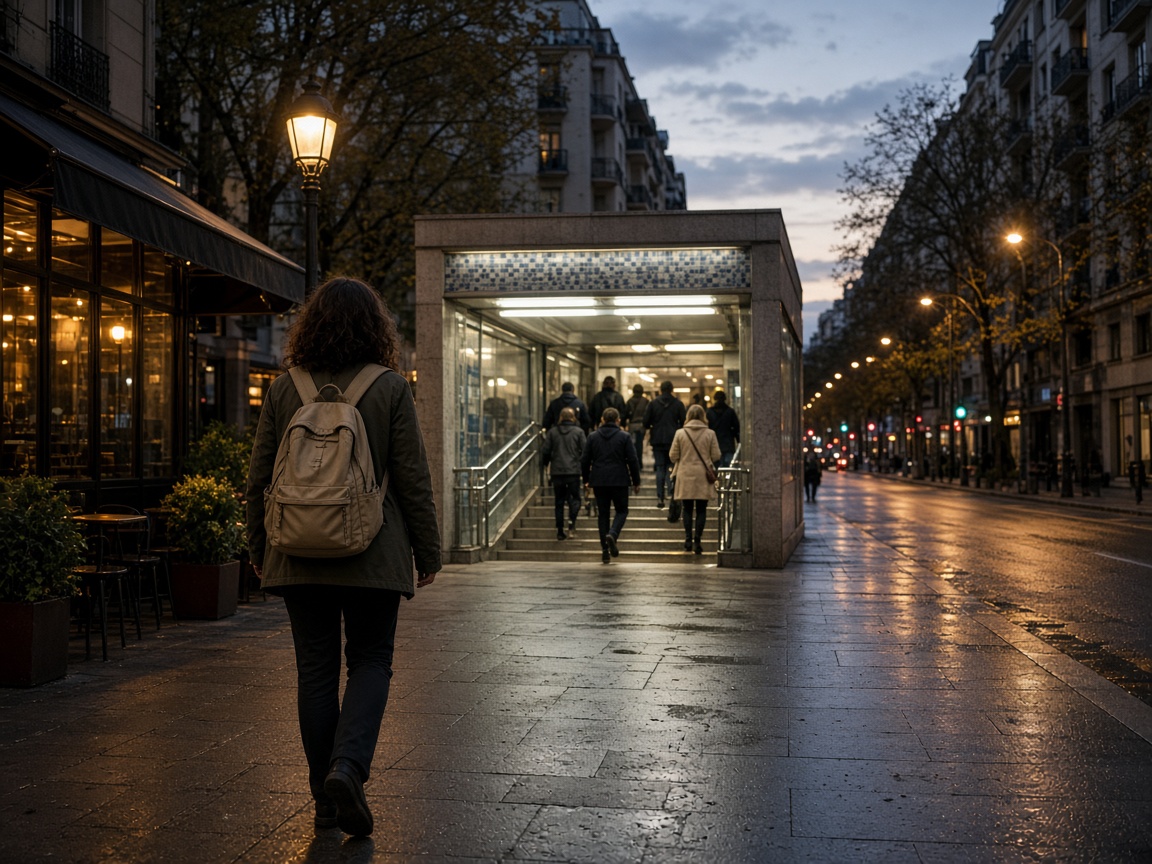
Use your exit strategy so the goodbye is warm and specific: “This was good. I’m heading to the metro on my own. If we do a second meet, let’s pick another public place.” Do not solve the last block by letting them escort you. A walk to the door teaches the building even when you never say the room number.
Loving This Travel Dating Safety? Don't Explore It Alone.
Real Gallivanta members are planning trips to Travel Dating Safety right now. Join the community and turn your solo travel dreams into shared adventures.
Join Gallivanta FreeIf the chemistry is real, schedule the next public pin before you part. Continuation is a calendar decision. It is not a reason to merge the route home. Your backup plan should use the same rule: a closed cafe is replaced by another public place in the same zone, never by either person’s accommodation.
Split what a trusted contact may know from what the match may know
Someone who loves you and someone you just matched do not get the same packet. A trusted contact can hold the property name, the room or bed, the meetup pin, the start, the planned end, and the escalation you already agreed in your check-in protocol. The match gets the public pin and the time window.
Live location follows the same split. If you share a dot, share it with the trusted contact for a bounded window. Do not share it with the match. A continuous trail can reveal the building you return to even when the chat never named it. Read that tradeoff in the location sharing plan before you turn a feature on.
Tell the contact what you are withholding from the match, so they do not “helpfully” text the hotel name into a group chat or reply on a thread the match can see. If you are in immediate danger, contact local emergency services first. A privacy plan does not replace that call.
Watch photos, deliveries, screenshots, and booking proof
Lodging leaks through artifacts more often than through a direct question.
- Photos and video. A balcony, a room key on the desk, a window view, or a hostel bunk can identify the property. On a verification call, use the practice in the verification checklist: a neutral background, no booking documents, no passport, no room number. A live call checks consistency. It is not a reason to display where you sleep.
- Deliveries and surprises. A gift, flowers, or a taxi “sent to your hotel” requires the address. Decline it. You can accept a coffee at the public pin without accepting a courier.
- Proof requests. Screenshots of a booking, a digital key, or a passport “so I know you’re real” move the chat into document sharing. Realness does not require those files. Pressure for them belongs with the romance-scam patterns described by the U.S. Federal Trade Commission and the FBI: fast trust, then a request that hands over money, documents, or control.
- Wi-Fi and codes. A network name often includes the property. Do not share the password, and do not join a network someone else created for the date.
Illustrative scenario C — The gift that needed an address: A traveler in Mexico City is offered a pastry delivery to her rental before a first coffee. She declines, keeps the address out of the chat, and repeats the public market pin. The offer was the ask. The pastry was optional.
Front desks are not your privacy policy. Some properties will refuse to confirm a guest to a stranger, and some will not. Do not rely on a clerk to un-say a hotel name you already sent. The reliable control is never giving the name.
Strengthen the plan for women and higher-risk travelers
The same rules apply to every traveler. Women, LGBTQ+ travelers, and anyone whose identity or mobility draws more harassment often need a tighter version, because questions about lodging are a common way to test whether you are alone and reachable. Gallivanta’s guides on dating safely as a solo female traveler and solo travel safety for women expand the wider context. The lodging layer is specific:
- Do not confirm that you are traveling alone or staying alone. “I’m meeting people around the center” is enough.
- Prefer a pin with staff you can see, not a lobby attached to your key.
- Keep the meetup inside your daylight window, with your own transport, as in the travel dating safety overview.
- If someone appears at the property after you withheld it, treat that as a reason to involve staff and, if you feel unsafe, local emergency services. Do not renegotiate the boundary in the doorway.
- Change nothing about your checkout story in order to seem polite. Your dates and your next city can wait.
Higher risk changes the margin. It does not change the right to a public plan. A match who mocks the margin is showing you how they handle a no.
Recognize lodging red flags
Leave or cancel when the conversation turns into access. Concrete versions:
- Repeated questions about the property, the room, or whether you are alone, after you already gave a public pin
- A surprise appearance in your lobby, hostel, or on your block
- Pressure to “drop something upstairs,” charge a phone in the room, or wait out rain inside
- A request for a booking screenshot, digital key, door code, or passport photo
- A gift, ride, or delivery that only works if you disclose the address
- Anger, guilt, or a safety lecture when you keep the building private
- A plan that has no staffed public version and only works at someone’s lodging
One awkward question can be a miss. A pattern after a clear answer is the signal. You do not owe a second explanation. Your verification checklist already treats respect for privacy as part of the pre-meet screen. Use it before you are standing outside a door.
Scripts that keep lodging private without killing warmth
Short lines are easier to send when you are jet-lagged. Adapt the place names. Keep the boundary.
- The pin: “I don’t share where I’m staying on a first meet. The market hall at 4 works, and I’ll arrive on my own.”
- The lobby offer: “The lobby at my hotel isn’t the plan. If you want coffee, the station cafe is public and easy.”
- The walk back: “I’m glad we did this. I’m taking the metro from here, and I’ll head out alone.”
- The gift: “That’s kind, and I don’t take deliveries at my stay. I’ll see you at the public pin, or we can leave it.”
- The proof ask: “I don’t send booking screens or codes. A short public meetup is the verification I use.”
- The second meet: “I’d like another hour later this week. Same rule: a public place, separate routes, lodging stays offline.”
If you want introductions with people who already expect a public first hour, look through Gallivanta’s meet-travelers path. The product does not replace the pin, the end time, or the decision to keep your key card in your pocket.
Travel date accommodation privacy action summary
Run this before you say yes, and again before you leave your room.
- Write the property, room or bed, and codes in a private note the match cannot see.
- Choose a staffed public pin that does not name your building, hostel, or rental.
- Share the pin, start, and end. Do not share the property, the room, or that you are alone.
- Send the fuller packet only to a trusted contact, including what you are withholding from the match.
- Keep photos, video backgrounds, luggage tags, and Wi-Fi names from identifying the stay.
- Decline deliveries, upstairs detours, and booking screenshots.
- End at transit or the venue, not at the door. Buy your own way back.
- If the pin falls through, use another public place in the same zone. Do not substitute either person’s lodging.
- If someone appears at the property or you feel unsafe, involve staff and contact local emergency services.
Then go have the hour. A private key card and a public pin can exist on the same afternoon. That is the whole plan.
Sources, facts, and review boundaries
This guide is practical planning for solo travelers arranging short public meetups. It is not legal advice, threat assessment, or a guarantee of safety. Hotel front-desk practices, hostel layouts, rental entry systems, and street conditions vary by city and change over time. Verify venue hours and your own route on the day you meet.
Gallivanta encourages traveler control, public-first first meetings, and proportionate boundaries. No checklist can certify another person’s intent. Use this plan so adventure and connection remain choices you can revise. Editorial standards for how Gallivanta separates reporting, composites, and product mentions are on the editorial standards page and the why trust us page.
Official guidance worth reading before you treat a lodging request as harmless:
- U.S. Federal Trade Commission — What to know about romance scams
- FBI — Romance scams
- U.S. State Department — Scams
- RAINN — Tips for safer dating, online and in person
Romance-scam patterns often include fast trust, pressure to leave a public plan, and requests that hand over money, documents, or access. Keeping your address offline does not detect every scam. It keeps the first hour from disclosing where you sleep while you still have your own judgment. If you are in immediate danger, contact local emergency services. Platform reporting and official consumer reporting channels matter after you are safe.
Editorial review date: October 3, 2026.
FAQ: travel date accommodation privacy
Should I tell a travel date my hotel name?
Not for a first meetup. A neighborhood plus a staffed public pin is enough to coordinate. The property name lets someone find the building, and the room number lets them narrow it further. Share more only after trust is earned across public meetings, and even then keep codes and booking files offline.
Is a hotel lobby a safe first meeting point?
A lobby that is not your hotel can be a staffed public landmark. Your own lobby still tells the match where you sleep and makes an upstairs invite easy to frame as a small step. Prefer a station, market, or museum that is not tied to your key.
Can we meet in the hostel common room?
Treat your hostel’s common room as lodging, not as a neutral venue. It can reveal your bed, your bag, and the door you use at night. Meet at a nearby staffed business and do not name the property.
What if they already know my neighborhood?
Do not add the property name to “clarify.” Put the pin at a public place that is not on your block, and end the meetup there. A broad area is not the same disclosure as a door.
Should I let them walk me back?
On a first meetup, no. End at the venue or at a staffed transit pin and take your own route. A walk to the building teaches the address even when you never say the room number. A second public meetup is a better sequel than a shared last block.
What if someone shows up at my property?
Do not open a debate in the doorway. Tell staff if you are in a hotel or hostel, and contact local emergency services if you feel unsafe. A surprise visit after you withheld the address is a boundary failure, not a romantic gesture. Save the messages and report the profile after you are safe.

Fact-checked | Safety reviewed | Updated October 3, 2026
Ready to Meet Your Next Travel Date?
You've got the destination, the vibe, and the courage to go solo. Now all you need is someone who gets it. Join Gallivanta and meet fellow travelers who believe the best chapters start with a one-way ticket.
Join Gallivanta Free