Your Next Adventure Could Change Everything
Join thousands of adventurous women who've discovered that the best travel stories often include a plot twist.
Start Your Adventure – Join Free
✓ Free to join ✓ No credit card required ✓ Join 50,000+ travelers
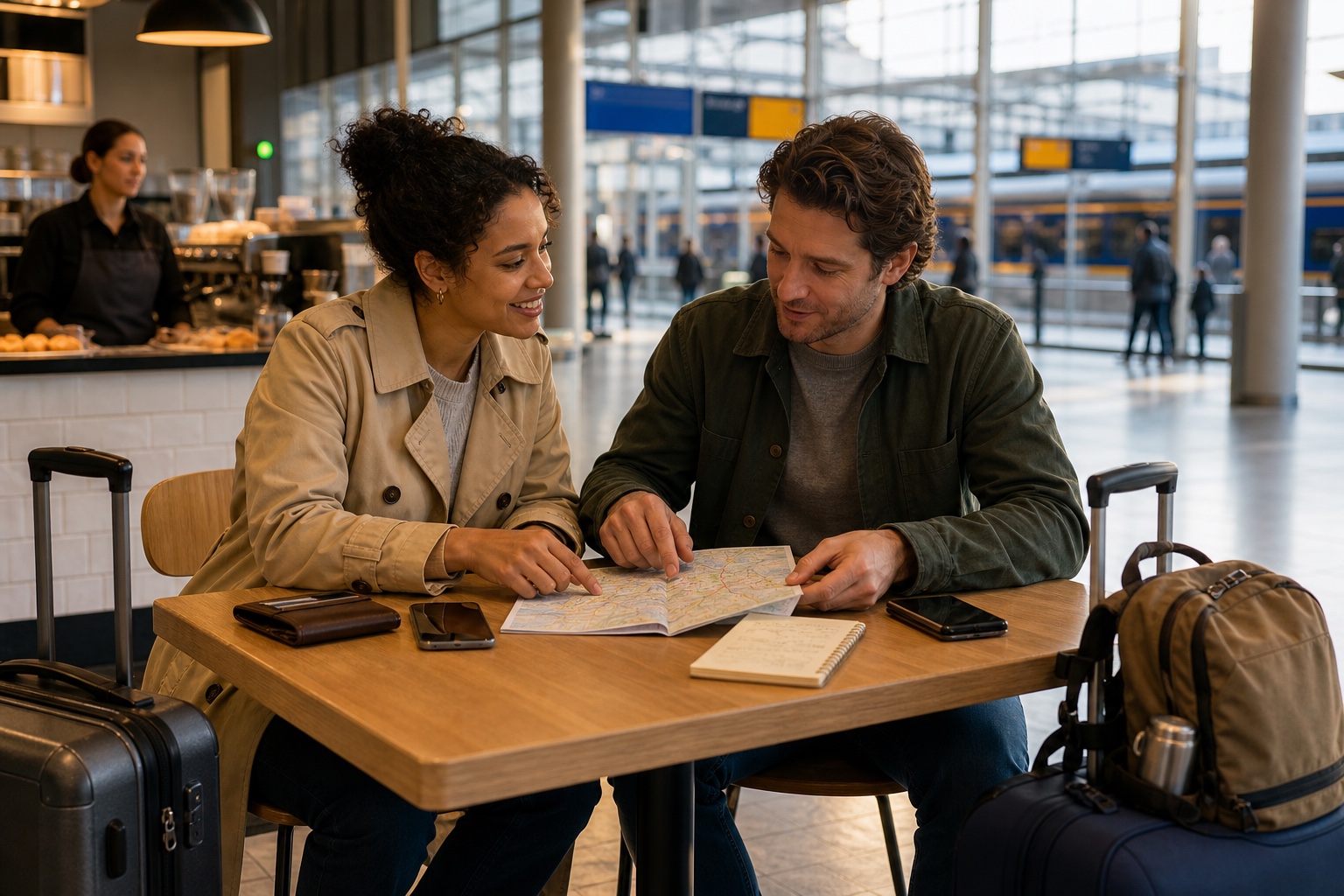
A travel date budget plan is not a spreadsheet for romance. It is a short agreement that protects the trip around the meetup: what you can comfortably spend, what each person expects to pay, which currency or payment method works, and what money must remain untouched for transit, data, lodging, food, and an independent route home. Clear limits make connection lighter because neither traveler has to decode generosity, pressure, or a surprise bill in an unfamiliar place.
Gallivanta’s travel-first position is simple: adventure first, sparks welcome, traveler control intact. A good meetup fits the route, timing, intent, and real travel budget of both people. It does not require one traveler to subsidize the other, reveal a financial account, accept an expensive change, or spend the fare needed to leave. The plan can be warm and flexible while the financial boundaries stay exact.
Published and reviewed: August 24, 2026
- → Understand what the plan protects
- → Set a three-part spending ceiling
- → Choose a fair-spending venue
- → Discuss payment before ordering
- → Handle local currency and card fees
- → Use payment apps carefully
- → Protect the exit fund
- → Fit costs around arrival and check-in
- → Strengthen the plan for higher-risk travelers
- → Use practical scripts
- → Run the action checklist
- → Review sources and boundaries
- → Read the FAQ
What a travel date budget plan protects
A useful plan protects three things at once: personal solvency for the rest of the day, social clarity during the meetup, and an independent exit afterward. The amount can be small or generous. What matters is that it is chosen before the date and does not borrow from lodging, food, medicine, tickets, work connectivity, baggage storage, or the next fixed travel commitment.
Separate the meetup from the trip budget. If you have the equivalent of 60 units of local currency available tonight but need 18 for transport, 10 for breakfast, 8 for data, and a 12-unit disruption buffer, the date does not have a 60-unit budget. The social ceiling is what remains after essentials and the exit are protected. These sample numbers are an illustration, not a destination price claim or a recommendation for every traveler.
This differs from a general guide to traveling solo on a budget. The focus here is a new-person meetup, where money can carry unspoken expectations. Paying for a coffee may be a simple gift. Paying for a ticket, cross-city ride, or room can create pressure or dependence. A plan makes the meaning explicit: a payment is either agreed, freely offered with no obligation, or declined.
The rule is not “always split everything exactly.” The rule is “nobody loses control because the cost was vague.” One person can invite, both can pay separately, or travelers can alternate small items. Consent around money works like consent around the route: it must be informed, voluntary, specific, and easy to change before the charge is made.
Illustrative scenario: Maya, 31, arrives in Porto at 15:00, has a 19:30 hostel check-in cutoff, and wants a one-hour public cafe meetup. She keeps her metro fare and a licensed-taxi fallback separate, then sets a modest cafe ceiling. When her match suggests a river cruise after coffee, Maya says the ticket is outside today’s plan and offers a public walk near the station instead. The concrete outcome is a warm first meeting, an on-time check-in, and no need to borrow money or accept a ride.
Set a three-part spending ceiling
Build the ceiling from three buckets: the meetup itself, the route around it, and the reserve you do not spend socially. The meetup bucket covers the venue, admission, or activity you actually agreed to. The route bucket covers independent transport to and from the public meeting point. The reserve covers a missed connection, weak data, a closed station entrance, weather, or another ordinary disruption.
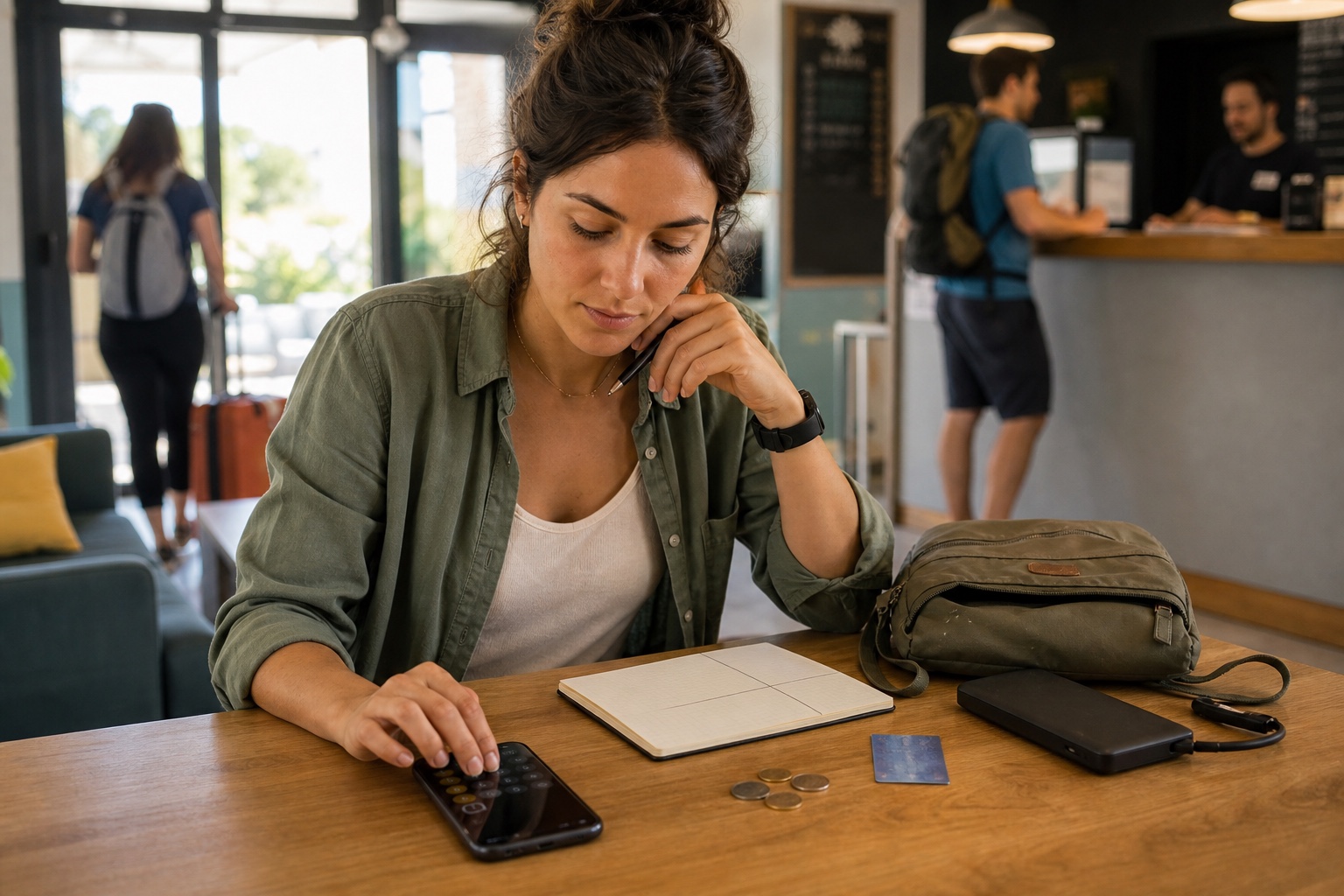
Choose the ceiling in your own currency first, then translate it into a rough local amount. This reduces the risk of treating unfamiliar notes or large-looking numbers as play money. Do not make the other traveler your exchange-rate calculator. Save a current conversion for orientation, but check the actual card, ATM, or payment-app terms that apply to you because provider charges and rates differ.
Use a range when the venue has variable prices. “I am keeping tonight to coffee or one casual meal” is often more usable than a precise number. For a ticketed activity, verify the official price, refund rule, booking fee, and whether each traveler can purchase independently. A nonrefundable ticket bought by someone else can feel like a debt even when the buyer says it is not.
Decide what happens if the date runs long. The protected end time in Gallivanta’s travel meetup exit strategy should also be a spending stop. One more drink, an unplanned ride, or late-night food can consume the reserve needed after transit becomes less frequent. If both people want more time, plan a second public meetup instead of turning the first date into an open tab.
Keep the ceiling private if sharing the exact number would expose more financial information than necessary. The other traveler needs to know the type and scale of the plan, not your account balance, daily limit, salary, or total trip budget. “Casual cafe, separate checks, about an hour” is enough context for a fair decision.
Choose a venue that supports fair spending
The venue is part of the budget agreement. Prefer a public place with visible prices, no mandatory package, no surprise cover, no minimum spend, and an easy way to order individually. A staffed market cafe, museum cafe before ticketed galleries, public food hall, daytime bakery, or casual counter-service spot often makes separate choices easier than a tasting menu, bottle-service venue, or activity requiring one person to book for both.
Use Gallivanta’s framework for a fair public travel date meeting point to compare walking time, transit fares, accessibility, luggage, and the next obligation. A cheap venue can still be unfair if one traveler must cross the city, pay two extra fares, or return through an unfamiliar neighborhood after service drops. Count the whole route, not only the menu.
Check whether the location is before or after a ticket barrier, airport security, an attraction entrance, or a private-property checkpoint. “Meet at the station cafe” may imply one person needs a rail ticket to enter. “Meet at the staffed cafe beside the north entrance, before the barriers” is clearer. Gallivanta’s public-first planning guide before check-in explains why the public access frame matters as much as the price.
Avoid using either person’s accommodation as a money-saving substitute. A hostel kitchen or hotel room may remove the cafe bill, but it also reveals sleeping location, access routines, and a private setting. Free is not automatically low-cost when the hidden price is control. Choose a neutral public walk, market, library exhibition, waterfront route with steady foot traffic, or another free activity that preserves independent entry and exit.
If the chosen venue is unexpectedly expensive, leave before ordering and move to the agreed public fallback. The person who noticed the mismatch can say, “This is above the plan we discussed. The counter cafe across the plaza still works for me.” Gallivanta’s travel meetup backup plan provides the broader same-zone rule for closures, delays, weak data, and other changes.
Discuss payment before the order
Have the smallest useful conversation before a server, ticket screen, or cashier creates urgency. Confirm whether you are paying separately, one person is inviting, or you are sharing a specific item. If somebody offers to pay, they should state the scope: “Coffee is my invitation; no expectation.” The other person can accept, decline, or choose a less expensive item without defending the choice.

Do not use a large payment as a test of interest, status, generosity, or cultural fluency. Local customs can influence who usually offers, but two travelers still need a shared understanding. Ask rather than assuming: “What feels normal and comfortable for you here?” No one owes extended time, physical affection, itinerary access, a second location, or a future date because somebody paid.
Ask the venue early if it can split checks or process two payments. Some businesses cannot or will not. If that is the case, each person can order separately at the counter, one person can pay and receive an immediate agreed reimbursement, or the pair can choose another place. Do not wait until the bill arrives to discover that only one card can be used.
Keep passports, primary wallets, and phones in your control during payment. Do not hand an unlocked phone to a new acquaintance to “help” with an app, currency setting, or translation. Let staff rotate the terminal or explain the screen. Shield PIN entry, verify the amount and currency, collect your card, and keep the receipt until the transaction is visible in your own account.
Illustrative scenario: Theo, 28, meets Sam, 30, in a busy Mexico City food hall between a walking tour and an evening bus. They agree to order at separate stalls and meet at a shared public table. One stall is cash-only, so Sam chooses another vendor rather than borrowing from Theo. They spend 50 minutes comparing routes, then leave for separate transit lines. The concrete outcome is connection without a reimbursement problem or pressure tied to a purchase.
Handle local currency, card fees, and conversion
Paying abroad can involve more than the displayed price. The Consumer Financial Protection Bureau’s current credit-card terms data dictionary describes foreign-transaction-fee policies as fees that may apply to overseas transactions or purchases with a foreign merchant. It does not say every card charges one. Check your own issuer’s current terms before travel and avoid assuming another person’s card has the same cost.
Dynamic currency conversion is a separate choice that can appear at a merchant terminal or ATM. Visa’s official dynamic currency conversion guidance says the offer should show both currencies, the exchange rate, and any additional fee or markup, and the cardholder should be able to accept or decline. If the details are missing or someone pressures the choice, Visa advises declining the conversion offer and contacting the issuer. The best selection for a traveler still depends on the specific card terms and displayed rate.
Read the terminal yourself. Confirm the total, currency, tip, and whether a conversion screen is optional before approving. Do not let a date select a currency, add a tip, or press through prompts for you. If you cannot understand the screen, ask staff to explain without taking control of your card or unlocked phone. A slower payment is better than approving an unknown amount.
Cash can simplify small separate purchases, but it also needs limits. Carry only what fits the day, split backup cash from the primary wallet, and do not display the full reserve. Use an ATM in a staffed, well-lit place when possible, review the machine and bank charges, and keep enough other payment capacity for transport. Never make the other traveler the sole source of local cash.
If a venue adds an unexpected fee or the bill is wrong, pause and ask staff for an itemized explanation. Do not argue with the other traveler over a charge that belongs to the merchant. Pay only the amount you can verify and follow local dispute procedures. If staying to resolve it threatens the last safe route, move the issue to an official channel and protect the trip.
Use payment apps without turning trust into a transfer
Peer-to-peer payment can solve an agreed reimbursement, but it should not become a shortcut around judgment. The U.S. Federal Trade Commission’s mobile payment app guidance warns that it can be difficult to recover money sent to a scammer. The FTC recommends confirming the recipient, double-checking their information, protecting the account with a PIN or multi-factor authentication, and never sharing credentials.
Use the app you already know. Do not install an unfamiliar app from a link sent by a new match, share an authentication code, scan an unexplained QR code, or accept screen-sharing help. Enter the recipient through your own app, verify a small identifying detail in person, check the amount and currency, and send only the reimbursement you agreed. A screenshot claiming payment is not the same as a settled transaction in your account.
Treat overpayment and refund requests as stop signals. If someone claims they sent too much, do not send a new transfer until your own provider confirms the original payment is real, settled, and reversible through the correct process. Do not use gift cards, cryptocurrency, bank wires, or payment apps to solve a stranger’s travel emergency. The FTC’s 2026 advice on spotting scams by the requested payment method says insistence on hard-to-recover methods is a major warning sign.
Loving This Travel Dating Safety? Don't Explore It Alone.
Real Gallivanta members are planning trips to Travel Dating Safety right now. Join the community and turn your solo travel dreams into shared adventures.
Join Gallivanta FreeKeep romance and rescue money separate. A new travel connection may describe a stolen wallet, canceled room, visa problem, medical need, or ticket emergency. The story may be real, but you are not the appropriate verification system. Direct the person to their bank, insurer, accommodation, airline, consulate, local emergency service, or a trusted contact. You can show concern without transferring funds or becoming their only route out.
Gallivanta’s travel-first dating app helps people compare route, timing, and intent before meeting. It does not make payment requests safe or verify a financial story. Keep the social context in the app and financial credentials in your own protected accounts.
Protect the exit fund and independent transport
The exit fund is the money, card capacity, transit ticket, and phone access reserved for leaving. It is not part of the date ceiling. It covers the planned trip home plus a realistic second option: another transit line, an official taxi or licensed ride where appropriate, a staffed waiting area, a luggage fee, or communication with accommodation. Once set aside, it is unavailable for another round.
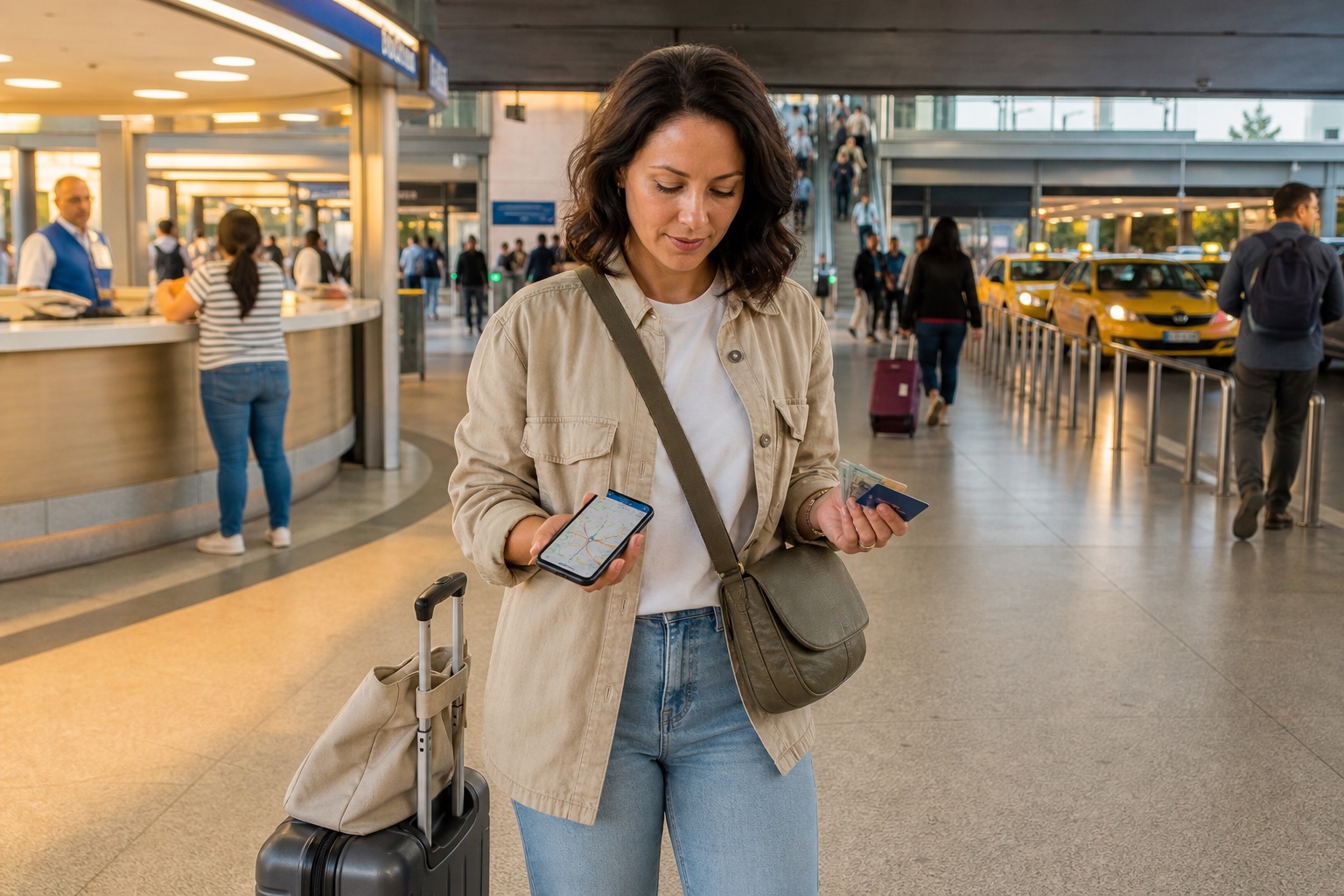
Check the last service you are actually comfortable using, not merely the final scheduled departure. Include walking time, station entrances, ticket purchase, accessibility, luggage, security, and a disruption buffer. If service frequency drops at night, leave while the primary and secondary routes are still available. Do not turn a missed train into dependence on the other person’s car, room, money, or local knowledge.
Order and verify your own transport. Match the license plate and driver details in the official service, wait in a public place, and do not accept a substitute vehicle because the quoted fare is cheaper. For transit, hold your own ticket and know the stop after your destination in case you miss it. For walking, save the route, check lighting and public activity, and change plans before entering an isolated stretch.
The U.S. State Department’s page on emergency financial assistance abroad explains options for U.S. citizens who lose access to money and advises reporting lost or stolen cards to the issuer immediately. Eligibility and services are specific; this is not a promise of funds. Travelers of every nationality should identify the appropriate issuer, insurer, consular, and local help routes before departure.
Use Gallivanta’s guide for solo travel dating to keep chemistry inside the trip rather than above it. A compatible person respects the protected exit. Pressure to spend it, miss a train, share a ride, or move to private accommodation is information about fit.
Fit money decisions around arrival, data, and check-in
Arrival day makes every cost harder to judge. Before agreeing to meet, finish immigration, baggage, money access, data setup, medication, food, and lodging check-in, or leave enough verified time to do them afterward. An estimated flight or train arrival is not a usable date start. Delays can turn a cheap meetup into a taxi, missed check-in fee, storage problem, or late return.
Work backward from the next fixed point. Name the local time zone, public meeting point, start, hard end, and total route cost. Add the data required for maps, tickets, payment authentication, accommodation entry, and contact with a trusted person. If the phone battery or data plan cannot support both the meetup and the remainder of the trip, shorten or reschedule.
Do not share an accommodation address to reduce navigation friction. Share a neighborhood, station, or public landmark. Keep booking confirmations, room numbers, entry codes, passport images, card details, and complete itineraries private. Gallivanta’s solo travel dating safety plan before landing separates what a trusted contact needs from what a new match needs.
For an airport window, include terminal transfers, immigration, bags, security, and boarding before pricing the social time. Gallivanta’s long layover meetup plan gives that setting a stricter time gate. If the remaining window is too small, do not pay for a faster private transfer simply to preserve the date.
For road trips or remote routes, protect fuel, tolls, parking, charging, and daylight. Do not let a new person hold vehicle keys, pay for all the fuel, or become the only navigator. For digital nomads, protect the data, coworking, and quiet transport needed for the next work commitment. For backpackers, count lockers, luggage storage, and late reception rules. The cheapest social plan is the one that does not create an expensive recovery.
Strengthen the plan for women and higher-risk travelers
Women, LGBTQ travelers, disabled travelers, travelers facing racism or xenophobia, and anyone whose identity or mobility changes local risk may need a larger exit reserve and a narrower venue choice. Prefer staffed public places, earlier hours, transparent prices, accessible routes, separate ordering, and transport that does not depend on the date. Verify that both the venue and the backup route work for you before money is committed.
Financial pressure can be part of coercion. Leave if someone orders for you after you decline, hides prices, insists you owe them time, blocks separate payment, takes your phone or wallet, pressures alcohol, demands reimbursement for an unapproved purchase, or ties transport to intimacy. You do not need to prove a scam or bad intent. A boundary violation is sufficient reason to end the meetup.
Tell a trusted person the public location, expected end, and check-in plan when appropriate. Keep enough phone battery and data for that contact and the independent route. Do not make the new match your emergency contact, translator for financial credentials, or sole holder of location information. Gallivanta’s guide to dating safely as a solo female traveler expands the public-place and check-in framework for women.
Accessibility costs belong in the plan. An accessible taxi, step-free station entrance, assistant ticket, medication timing, or quieter venue may change the budget. These are not optional extras to sacrifice for fairness. If the proposed split ignores one person’s access needs, choose a different venue or date. Fair does not always mean identical amounts; it means each person knowingly agrees without losing access or control.
Illustrative scenario: Aisha, 35, uses a wheelchair and is visiting Berlin for a conference. She and a match choose a step-free museum cafe with separate counter ordering, then confirm a second accessible route to her hotel. When a lift outage removes the cheaper rail option, Aisha ends 25 minutes earlier and uses the exit reserve for her verified accessible transport. The concrete outcome is a date that stays enjoyable without gambling on the final accessible route.
Scripts for fair costs without killing the spark
Direct language makes a budget feel ordinary instead of defensive:
- Setting the scale: “I am keeping tonight simple: one casual cafe and about an hour before my train.”
- Choosing separate payment: “I prefer separate checks on a first travel meetup. That keeps the route easy for both of us.”
- Accepting a small invitation: “Thank you. I am happy to accept the coffee, and I am still leaving at 19:00 for check-in.”
- Declining an expensive change: “That ticket is outside today’s plan. I can do the public walk nearby or save it for another day.”
- Protecting the exit fund: “I have set that money aside for my route home, so it is not available for another round.”
- Handling a single-check venue: “If they cannot split it, let’s each order at the counter or choose the cafe next door.”
- Refusing a transfer request: “I do not send money to new travel connections. Your bank, insurer, accommodation, or consulate is the right route.”
- Ending after pressure: “This no longer works for me. I am paying for my item and leaving by my planned route.”
These are planning scripts, not claims about what every culture or person expects. Adapt the tone, keep the boundary, and leave if the other person turns a small money discussion into pressure. Gallivanta’s approach to meeting travelers around the trip you are already taking makes route and timing part of the match; budget belongs in that same practical context.
Travel date budget plan checklist
Run this checklist before either traveler leaves reliable Wi-Fi:
- Protect lodging, food, medicine, tickets, data, and the next fixed commitment first.
- Set a meetup ceiling in your own currency and a rough local equivalent.
- Reserve independent transport plus a realistic second exit option.
- Choose a public venue with visible prices and no surprise minimum spend.
- Confirm whether payment is separate, invited, or shared before ordering.
- Verify official ticket prices, refund terms, booking fees, and access rules.
- Check your own card’s foreign-transaction and cash-withdrawal terms.
- Read the terminal amount, currency, tip, and conversion choice yourself.
- Use only a familiar payment app and verify the recipient before sending.
- Never share PINs, passwords, one-time codes, card images, or unlocked devices.
- Keep accommodation, primary wallet, documents, and complete itinerary private.
- Save enough battery and data for tickets, authentication, maps, and check-in.
- Leave before the exit reserve becomes the social budget.
- Cancel if money becomes tied to pressure, privacy, transport, or intimacy.
The final test is simple: can both travelers understand the likely cost, choose what they pay, stop spending, and leave independently without embarrassment or obligation? If not, simplify the venue, shorten the window, or reschedule. A useful plan protects the trip and leaves room for the spark.
Sources, facts, and review boundaries
This guide was published and reviewed on August 24, 2026. Its factual payment and travel-assistance claims were checked against current public guidance from the U.S. Federal Trade Commission, U.S. Consumer Financial Protection Bureau, Visa, and U.S. Department of State. Fees, exchange rates, app protections, merchant practices, transport, laws, accessibility, emergency services, and consular options can change. Verify the provider and official destination information that applies to you before acting.
The spending framework, sample amounts, venue tests, scripts, and scenarios are advice and assumptions, not universal financial, legal, or safety rules. Gallivanta did not test financial products, payment terminals, exchange rates, or consular services for this article. No statistic, testimonial, credential, traveler quotation, or customer story is claimed. Maya, Theo, and Aisha are invented composites, each labeled as an Illustrative scenario.
Primary and authoritative references used:
- U.S. Federal Trade Commission: Mobile Payment Apps: How To Avoid a Scam When You Use One
- U.S. Federal Trade Commission: A way to spot scams: how someone asks you to pay
- U.S. Consumer Financial Protection Bureau: Terms of Credit Card Plans data dictionary
- Visa: Decoding Dynamic Currency Conversion
- U.S. Department of State: Emergency Financial Assistance for U.S. Citizens Abroad
FAQ: Travel date budget plan
What should a travel date budget plan include?
It should include a meetup spending ceiling, the expected payment arrangement, independent transport in both directions, an exit reserve, and protected money for lodging, food, data, tickets, medicine, and the next fixed commitment. It should also define what happens if the venue or cost changes.
Should travelers split every first-date cost equally?
Not necessarily. They can pay separately, accept a clearly defined invitation, or share an agreed item. The important rule is that both people understand the arrangement before the charge and neither person loses money, mobility, privacy, time, or consent because somebody paid.
Is it safer to use cash or a card on a travel date?
Neither method is universally safer. Cash can limit exposure but may be lost or stolen. Cards can provide records and issuer support but may involve fees or terminal choices. Carry limited cash, protect account details, review your provider terms, and preserve a second payment option for transport.
Should I choose local currency at a card terminal abroad?
Review the displayed exchange rate, markup, and your own card terms before deciding. Dynamic currency conversion should be optional and disclosed. If the choice is unclear or pressured, pause, decline the conversion offer, or contact your issuer rather than letting another person choose for you.
Is it okay to reimburse a new travel match through a payment app?
Only after you independently verify the person, amount, currency, and settled transaction. Use an app you already trust, never share credentials or verification codes, and do not send money for emergencies, overpayment refunds, gift cards, cryptocurrency, or unfamiliar links.
How much money should remain in an exit fund?
There is no universal amount. It should cover your planned independent route plus a realistic second option, taking account of local fares, service frequency, accessibility, luggage, phone data, and the time of day. Protect that amount before setting the social budget.

Fact-checked | Safety reviewed | Updated August 24, 2026
Ready to Meet Your Next Travel Date?
You've got the destination, the vibe, and the courage to go solo. Now all you need is someone who gets it. Join Gallivanta and meet fellow travelers who believe the best chapters start with a one-way ticket.
Join Gallivanta Free