
Your Next Adventure Could Change Everything
Join thousands of adventurous women who've discovered that the best travel stories often include a plot twist.
Start Your Adventure – Join Free
✓ Free to join ✓ No credit card required ✓ Join 50,000+ travelers
A travel date check-in protocol is a timed communication plan you set with a trusted contact before a first meetup in a city that is not your permanent home. It does not prove a match is safe, kind, or compatible. It gives someone you already trust a clear schedule for when you should be reachable, what to do if you miss a window, and how to avoid guessing while you are focused on a public hour.
Gallivanta’s travel-first position is adventure first, sparks welcome, traveler control intact. After you run a verification checklist, the next control layer is operational: who knows you are meeting, when they should hear from you, and what happens if silence lasts too long. A protocol keeps that layer calm, proportionate, and independent of the person you are meeting.
Published and reviewed: September 10, 2026
- → Why a check-in protocol matters
- → Choose your trusted contact
- → Define the five-window cadence
- → Decide what to share
- → Build a fail-closed alert
- → Pair it with a public meeting plan
- → Strengthen for higher-risk travelers
- → Recognize check-in red flags
- → Use calm protocol scripts
- → Run the action checklist
- → Review sources and boundaries
- → Read the FAQ
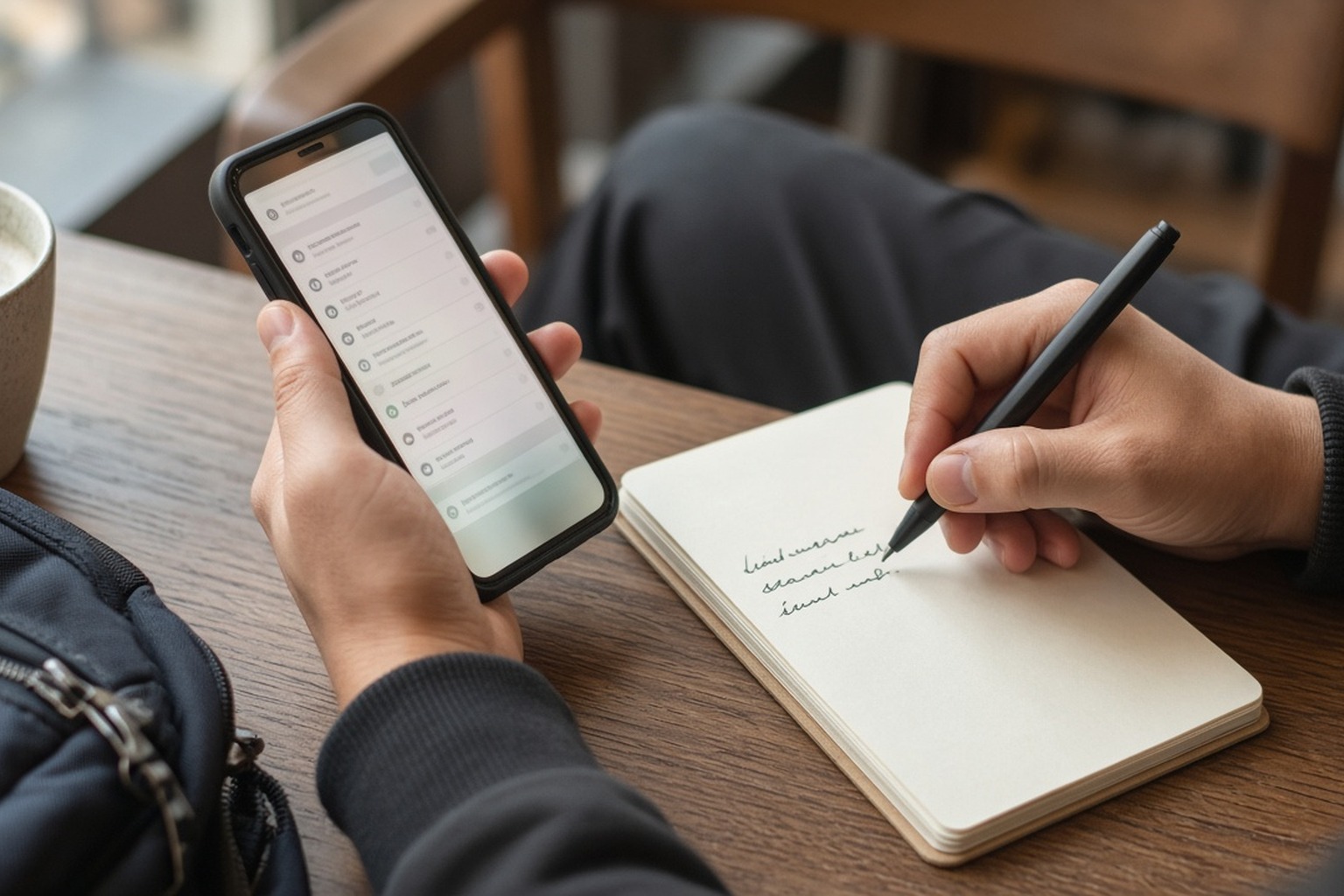
Why a check-in protocol matters after verification
Verification reduces some forms of impersonation and story inconsistency. It does not remove logistics risk in an unfamiliar neighborhood, jet lag, language friction, or the social pressure to keep a meetup going past your planned exit. A check-in protocol sits beside—not instead of—your travel date verification checklist, your meeting-point plan, and your exit strategy.
Travel dating compresses time. You may confirm a cafe meet the same afternoon you arrive. That speed is part of the appeal and part of the hazard. A trusted contact who only receives a vague “meeting someone downtown” message is forced to invent a response plan if you go quiet. A written cadence removes invention.
Keep four truths separate. Facts are what you can verify from official guidance and your own logistics. Examples are illustrative composites used for teaching, not testimonials. Assumptions are personal risk tolerances that differ by traveler. Advice here is operational hygiene for a short public meetup, not a guarantee of safety and not a substitute for local emergency services.
Official consumer and travel-safety resources repeatedly warn that romance and travel contexts attract social-engineering pressure, money requests, and rushed private meetings. A check-in protocol does not solve those threats by itself. It creates a time-bound human backup while you keep the meetup public, short, and independently leaveable—principles also reflected in Gallivanta’s pre-landing safety plan.
Choose your trusted contact before you land
Pick one primary contact who will actually answer. Prefer someone in a compatible time zone for the hours of your meetup, or someone who has already agreed to stay reachable for that window. A contact who is asleep, offline, or conflict-avoidant is not a protocol; it is a hope.
Agree on role clarity in advance:
- They are not joining the date and not negotiating with the match.
- They know the cadence, the venue name or zone, the planned end time, and the escalation steps.
- They will treat a missed window as actionable, not as drama.
- They will not post your location publicly or contact the match unless you explicitly planned that step.
If you travel frequently, keep a short standing note with your contact: preferred messaging channel, backup channel, and the phrase that means “call local emergency services / hotel front desk help now” versus “please message me once more.” Clarity prevents overreaction and underreaction.
For travelers who use Gallivanta to find travel-first connections, the check-in contact is still outside the app relationship. Platform messaging is for the match. Safety cadence belongs with someone who already knows your real-world context.
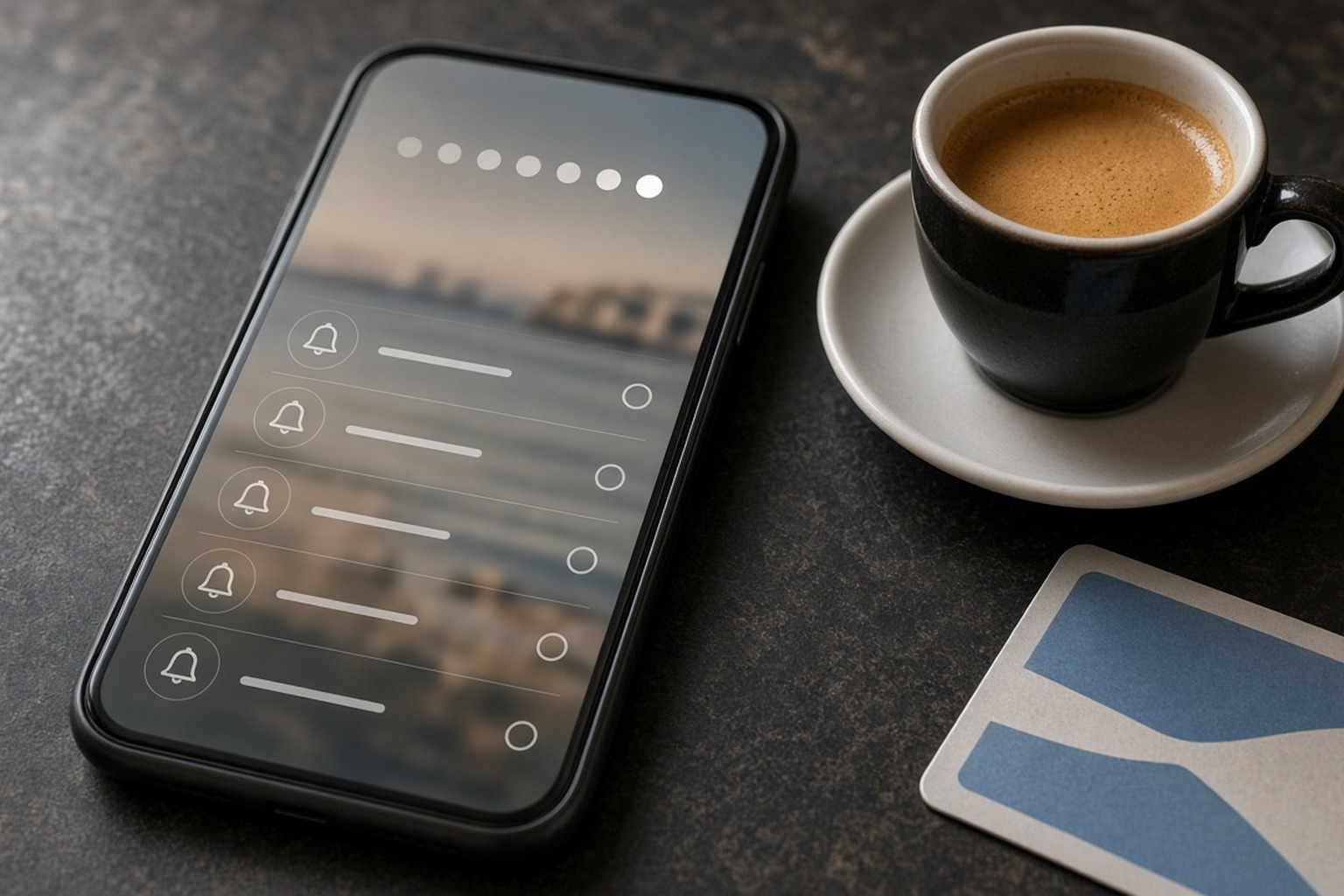
Define the five-window cadence: before, arrive, mid, leave, home
A workable default for a sixty- to ninety-minute first travel date uses five windows. Adjust the minutes to your city, transit, and energy, but keep the sequence.
- Before: Message your contact when you leave lodging or when you commit to the final venue time. Include venue name, neighborhood or zone, start time, and planned end time.
- Arrive: Send a one-line “arrived, public, starting” note after you are inside or at the agreed public pin—not while crossing a dark street distracted.
- Mid: A mid-meetup ping at a pre-chosen minute mark (for example, +35 minutes). This can be a single emoji or code word you already defined.
- Leave: Message when you stand up to leave, before you walk into a transit transfer or rideshare that may drop signal.
- Home: Confirm when you are back inside your lodging or another pre-agreed safe endpoint.
Put the mid and leave windows on your own phone as silent alarms. Do not rely on memory during conversation. If chemistry is good, memory is exactly what fails first.
Align the cadence with your backup plan. If the cafe is full and you move two blocks to a second public venue, your Before/Arrive notes should update the venue name. Your contact should never be tracking yesterday’s pin.
Illustrative scenario A — The mid-window that prevents drift: Maya schedules a 4:00–5:15 cafe meet after a short video call. Her brother has the five-window list. At 4:40 her phone vibrates; she sends the agreed “🟡” mid code while still seated. At 5:10 she stands, sends “leaving,” and later “home.” Nothing dramatic happened. The protocol still did its job: her contact never had to invent a story from silence.
Decide what to share — and what never to share
Share with your trusted contact only what they need to act:
- City and general zone
- Public venue name and start/end window
- First name or profile handle you are comfortable repeating
- The channel you will use for check-ins
- Escalation steps if a window is missed
Do not send the match your lodging address, room number, booking screenshots, passport images, or continuous live location unless you have a separate, time-bounded plan with a trusted person—not with the match. For location hygiene that protects privacy while still supporting safety, pair this protocol with the practices in Gallivanta’s location sharing plan.
Do not ask the match to join your check-in thread. A first travel date is not improved by performing safety theater for the other person. Your protocol is for your network. Their behavior is evaluated by how they respect a public, time-bounded meetup—not by how closely they monitor your phone.
If you use temporary location sharing with your trusted contact, set an automatic end time that covers the meetup plus your return. Infinite shares create fatigue and accidental oversharing later in the trip.

Build a fail-closed alert that does not rely on you typing
“Fail-closed” means silence is treated as a problem after a defined grace period, not as proof that you are fine. Your mid-window and home-window need grace periods that match reality: subway dead zones, cafe Wi-Fi captive portals, and the ninety seconds it takes to pay a bill.
A practical pattern:
Loving This Travel Dating Safety? Don't Explore It Alone.
Real Gallivanta members are planning trips to Travel Dating Safety right now. Join the community and turn your solo travel dreams into shared adventures.
Join Gallivanta Free- Mid-window due at :40. Grace until :50. If no message, contact sends one check ping.
- If still silent at :55, contact follows the prewritten escalation: call you, then call the venue if the number is public, then use local emergency guidance appropriate to the city if there are stronger risk signals.
- Home-window due at planned return plus transit buffer. Same grace logic.
Write the escalation on one screen your contact can read under stress. Avoid improvisation. Also avoid instructing your contact to harass the match, dox anyone, or confront strangers. Escalation should move toward staffed help and official channels, not toward amateur investigation.
Optional technical helpers—shared notes, calendar holds, duplicate reminders—are fine. They are not magic. The protocol still depends on a human who will act when the timer expires. If you prefer travel-first product tooling for meeting travelers who already expect public-first norms, you can explore Gallivanta’s meet-travelers path while keeping check-ins offline with your own contact.
Illustrative scenario B — Fail-closed without panic: Jordan’s mid-ping is late because the cafe’s basement restroom has no signal. The trusted contact sends one check message at grace expiry. Jordan replies two minutes later with “all good, heading up.” Because the protocol defined a single check ping before escalation, nobody called the venue prematurely—and nobody waited an hour hoping.
Pair the protocol with a public meeting plan
A check-in protocol cannot rescue a private first meetup design. Keep the first hour in a staffed, public place you can leave without the other person’s vehicle, key, or permission. That pairs with public-first travel dating before check-in and with independent logistics when you plan a first travel date.
Before you sit down, confirm for yourself:
- You can arrive and leave on your own ticket or route.
- The venue has visible staff or steady public traffic during your window.
- Your check-in messages will not require stepping into an isolated alley for signal.
- Your planned end time is real, spoken, and not negotiable under guilt.
If the match pressures you to skip check-ins, silence your phone, move to a private apartment, or “prove trust” by going offline, treat that as information about control. Chemistry does not require isolation. For broader context on risk framing, see Gallivanta’s overview on whether travel dating can be approached safely.
Strengthen the plan for women and higher-risk travelers
Risk is not evenly distributed. Women traveling alone, LGBTQ+ travelers in hostile legal environments, disabled travelers who need predictable exits, and anyone facing language or documentation barriers may need a denser cadence or a second contact.
Strengthening options that stay proportionate:
- Shorter mid-window intervals for night-adjacent meetups (still prefer daylight first meets).
- A second trusted contact who only activates if the primary is unreachable.
- Pre-saved venue phone numbers and neighborhood landmarks that are easy to say aloud.
- A code word that means “call me with a realistic excuse to leave” versus “escalate now.”
- Lodging staff awareness only when you choose it—for example, a front-desk note that you expect to return by a certain time—without advertising your dating plans to strangers.
Do not outsource judgment to the match. Do not accept “I’ll keep you safe” as a substitute for your own leave plan. Protective language can be caring or controlling; your protocol should work even if the caring story is wrong.
Illustrative scenario C — Code word leave assist: Samira’s sister holds the protocol. Midway through a meetup that feels pushy about “one more bar,” Samira texts the pre-agreed “call me about the reservation.” Her sister calls with a calm cover reason. Samira exits to a staffed street, sends “leaving,” then “home.” The match’s disappointment is data, not a debt.
Recognize check-in red flags and pressure tactics
Stop or downgrade the meetup when you see patterns like:
- Anger or mockery when you mention a time boundary or a need to message someone.
- Pressure to move immediately to a private location, parked car, or unmarked entrance.
- Requests for money, crypto, gift cards, account codes, passport scans, or booking takeovers—classic romance-scam patterns highlighted by consumer-protection agencies.
- Insistence that you disable sharing, leave your phone behind, or drink past your plan.
- Attempts to isolate you from staffed areas or to negotiate away your independent return.
A check-in protocol is not an interrogation script for the other person. If you feel you must secretly film, trap, or confront someone to feel basically okay sitting in a cafe, the meetup design is already wrong. Return to public-first planning, verification hygiene, and—if needed—cancel.
Scripts that keep the protocol calm and proportionate
Use short scripts that do not overshare and do not apologize for having a life:
- To your contact (Before): “Cafe Nova, east side, 4:00–5:15. Arrive/mid/leave/home cadence as planned. Mid code 🟡.”
- To your contact (Mid): “🟡”
- To your contact (Leave): “Leaving, transit next, home ping after.”
- To the match (time boundary): “I can do until 5:15—I’ve got a hard stop after that.”
- To the match (decline private shift): “I’m keeping first meets public. If we both want round two later, we can talk then.”
- To the match (phone use): “I need to send a quick message—back in a second.”
If someone treats basic logistics as disrespect, you have a compatibility signal. You do not owe a debate. You owe yourself a leaveable hour.
Travel date check-in protocol: action summary
- ☐ Choose one primary trusted contact who will be reachable during the meetup window.
- ☐ Agree on channels, code words, grace periods, and escalation steps in writing.
- ☐ Complete verification and public-meeting planning before you rely on chemistry.
- ☐ Set five windows: Before, Arrive, Mid, Leave, Home—with phone alarms for Mid and Leave.
- ☐ Share venue/zone/times with your contact; do not share lodging details with the match.
- ☐ Keep the meetup staffed, public, time-bounded, and independently leaveable.
- ☐ Treat silence after grace as actionable; use one check ping before broader escalation.
- ☐ Exit early if pressured to go private, go offline, send money/documents, or abandon the protocol.
- ☐ Send the Home ping, then end temporary shares so the protocol does not leak into the rest of the trip.
- ☐ Afterward, note what worked so the next city starts from a template, not from memory.
Sources, facts, and review boundaries
This guide synthesizes operational practices for solo travelers with publicly available safety guidance. It does not claim firsthand testing of every city venue, does not invent traveler testimonials, and does not present illustrative scenarios as real people. Romance-scam and communication-abroad guidance from consumer-protection and foreign-travel authorities remains essential reading when money, documents, or isolation pressure appears.
Primary references consulted for framing:
- U.S. FTC — What to know about romance scams
- U.S. State Department — Communication abroad
- RAINN — Safety tips for online dating
- U.S. State Department — Scams
If you are in immediate danger, contact local emergency services. Platform reporting and official consumer reporting channels matter after you are safe. Editorial review date: September 10, 2026.
FAQ: Travel date check-in protocol
Does a check-in protocol make a travel date safe?
No. It creates a timed backup with a trusted person while you keep the meetup public, bounded, and independently leaveable. It cannot prove intent, eliminate crime, or replace local emergency help.
Who should be my check-in contact?
Choose someone who will actually respond during your meetup window, understands the escalation steps, and will not contact the match or post your location unless you planned that specific action.
How often should I check in during a first meetup?
A common first-date pattern is five windows—Before, Arrive, Mid, Leave, and Home—with a mid ping around the halfway mark of a 60–90 minute public meetup. Adjust for transit and signal realities, not for guilt.
Should I share live location with the person I am meeting?
Usually no for a first travel meetup. If you use temporary location sharing, prefer a trusted contact with an automatic end time. Keep lodging details off the match chat.
What if I miss a check-in because of bad signal?
Build a grace period and a single check ping before escalation. Message as soon as you have signal. Repeated unexplained silence after grace should still follow your fail-closed steps.
What if a match mocks my check-in habit?
Treat mockery of basic logistics as a stop signal. You can end the meetup politely, move to a staffed exit, and complete your Leave and Home windows without debating your right to have a protocol.

Fact-checked | Safety reviewed | Updated September 10, 2026
Ready to Meet Your Next Travel Date?
You've got the destination, the vibe, and the courage to go solo. Now all you need is someone who gets it. Join Gallivanta and meet fellow travelers who believe the best chapters start with a one-way ticket.
Join Gallivanta Free