
Your Next Adventure Could Change Everything
Join thousands of adventurous women who've discovered that the best travel stories often include a plot twist.
Start Your Adventure – Join Free
✓ Free to join ✓ No credit card required ✓ Join 50,000+ travelers
A first travel meetup can feel easy until the second round arrives and your timeline softens. An travel date alcohol boundary plan is the pre-agreed limit on drinks, venue type, payment control, and exit timing that keeps your judgment online while you still enjoy the conversation. It sits beside—not instead of—your travel date verification checklist, your meeting-point plan, your travel date check-in protocol, and your daylight window plan.
This guide is for solo travelers who want connection without surrendering control of pace, transport, or privacy. It is not medical advice, legal advice, or a guarantee of safety. It is an operational boundary you write before you sit down so you do not negotiate it under social pressure.
- → Why alcohol boundaries matter on travel dates
- → Define your hard limits before you meet
- → Choose venues that protect the plan
- → Scripts for saying no without killing rapport
- → Payment, transport, and pace control
- → Pair boundaries with check-ins and daylight
- → Illustrative scenarios
- → Red flags that end the drink plan
- → Alcohol boundary action checklist
- → Review sources and boundaries
- → Read the FAQ
Why alcohol boundaries matter on travel dates
Travel dating compresses trust-building into a short window in an unfamiliar city. Alcohol accelerates rapport for some people and accelerates risk for everyone: slower exits, fuzzier memory, easier persuasion into a private second location, and weaker attention to your exit strategy. A boundary plan treats alcohol as a controllable variable, not as the default soundtrack of meeting someone new.
Authoritative consumer and travel guidance repeatedly warns that romance and travel contexts attract social-engineering pressure, money requests, and rushed private meetings. The U.S. Federal Trade Commission’s romance scam guidance describes how trust can be manufactured quickly online and then leveraged offline. The U.S. State Department’s communication-abroad guidance stresses staying reachable and keeping situational awareness when you travel. Sexual violence prevention resources such as RAINN’s travel safety tips emphasize public spaces, clear personal limits, and trusted contacts. An alcohol boundary plan does not replace those principles. It makes them executable when the first toast appears.
On Gallivanta’s product side, travelers who want structured, public-first connection can review how meetups are framed on Gallivanta Meet Traveler and how accounts start on Gallivanta Join. The article itself stays operational: your limits travel with you whether or not you use any app.
Define your hard limits before you meet
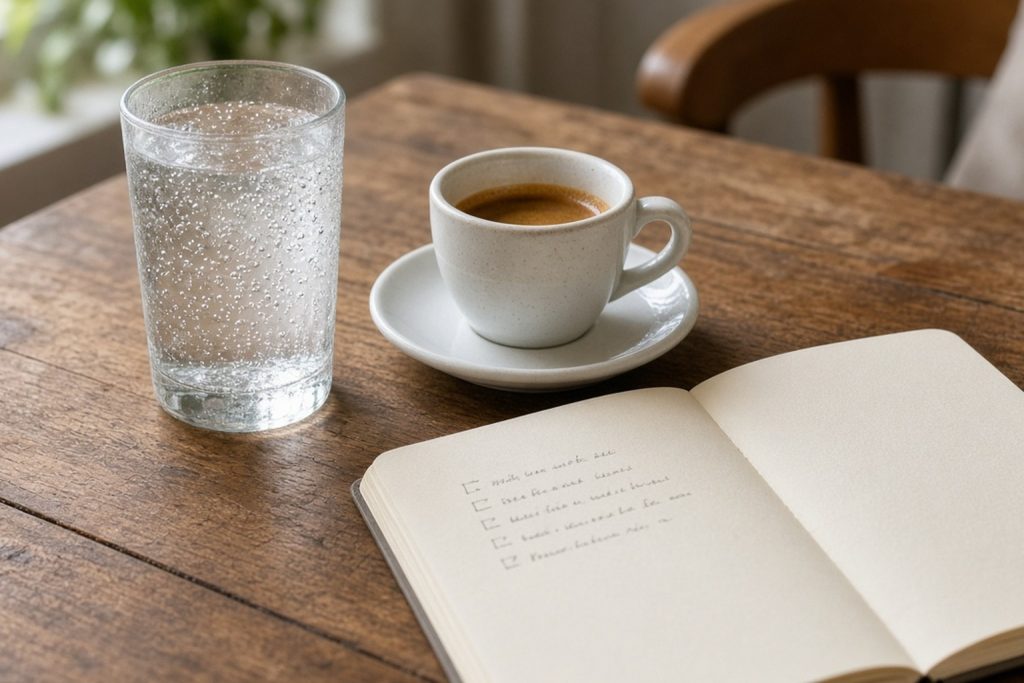
Write the plan on paper or in a locked note before you leave your lodging. Do not draft it at the table. A usable plan answers five questions in one screen:
- Drink cap: zero, one, or two standard drinks maximum for this first meet—pick one number and stop.
- Non-negotiable alternate: what you order after the cap (sparkling water, soft drink, coffee) so you never “just nurse” another pour.
- Time box: hard end time that still leaves daylight or staffed transit, aligned with your daylight window plan.
- Second-location rule: no private venues, no hotel bars attached to lodging, no “quick stop at mine” on meet one.
- Fail-closed cue: if the other person pressures past the cap, the meet ends—full stop—using your meetup backup plan.
Optional but strong: text the drink cap and end time to your trusted contact as part of your check-in protocol. The point is not surveillance. The point is that your future self cannot quietly rewrite the rules mid-conversation.
If you do not drink at all, say so early and treat alcohol-free as the plan, not as a temporary mood. If you do drink occasionally, first travel meets are still a poor place to discover your limit in a new country with new pour sizes.
Choose venues that protect the plan
Venue choice either supports or sabotages an alcohol boundary. Prefer staffed, well-lit, independent cafes, daytime food halls, museum courtyards with seating, or early dinner counters where ordering water looks normal. Avoid bottomless brunch setups, standing-room-only bars, venue-hopping itineraries, and “just one more neighborhood” crawls that reset your time box every twenty minutes.
Use the same fairness rules from your meeting-point plan: public, easy to leave, not adjacent to either person’s lodging, and reachable on transport you control. Pair that with your public-first travel date plan so the meetup never depends on checking into a private room first.
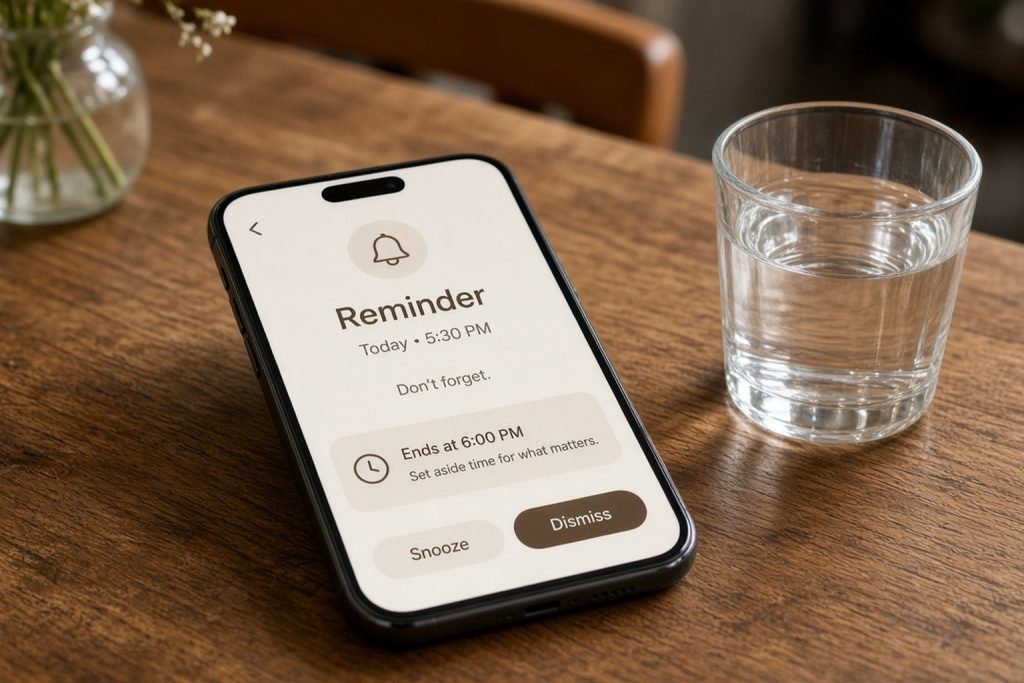
When you propose the place, include the boundary without apology: “I’m keeping this to coffee/one drink and wrapping by 5:30.” People who respect pace will adapt. People who need you loose to enjoy the meet have already failed the filter.
Scripts for saying no without killing rapport
Boundaries land better when they sound like preferences you already decided, not debates you are opening. Practice short lines out loud once before you leave:
- “I’m on a one-drink max today—next one’s water for me.”
- “I don’t do venue hopping on first meets; this spot is the plan.”
- “I’m heading out at our time box—let’s pick a daylight follow-up if this feels good.”
- “I’m not comfortable moving private yet; public is my default.”
- “If we keep drinking past my limit, I’m going to call it—nothing personal.”
You do not owe a biography. If they escalate into teasing, guilt, or “you’re no fun,” that is data. End using your exit strategy: settle your share, stand, leave toward pre-chosen transport, and send the leave check-in.
Payment, transport, and pace control
Alcohol pressure often arrives bundled with payment pressure (“I got this, let’s do shots”) or transport pressure (“my driver is outside”). Keep three controls in your pocket:
- Pay your own order when practical, or settle promptly after shared bills so you never owe a round you did not want.
- Arrive and leave independently with a rideshare or transit plan that does not depend on their car, in the spirit of transportation independence without turning the meet into a logistics lecture.
- Keep your phone charged and your location-sharing rules intentional per your location sharing plan—share windows with a trusted contact, not live pins with a new match.
Pace control also means food. Order something substantial early if the venue is food-capable. Empty-stomach “just drinks” first meets collapse drink caps faster than travelers expect, especially with jet lag.
Pair boundaries with check-ins and daylight
An alcohol plan is strongest when it is welded to time and human backup. Before you sit down, confirm:
Loving This Travel Dating Safety? Don't Explore It Alone.
Real Gallivanta members are planning trips to Travel Dating Safety right now. Join the community and turn your solo travel dreams into shared adventures.
Join Gallivanta Free- Your daylight or staffed-hours end time from the daylight window plan.
- Your five-window or simplified check-ins from the check-in protocol.
- Your verification basics from the verification checklist—identity consistency, no money asks, public meet only.
- Your pre-landing setup from the safety plan before you land.
If jet lag or medication makes even one drink impairing, choose zero for meet one. Clear-headed travelers make better calls about second meets, which should still follow your first travel date planning guide rather than leap into private space because “we already had drinks.”
Build the plan into your pre-meet ritual the same way you pack a charger. The night before, confirm the venue’s closing time, your independent ride home, and whether the neighborhood stays staffed through your end window. On the morning of the meet, reread the five-line note: drink cap, alternate beverage, end time, second-location rule, fail-closed cue. If any line feels fuzzy, rewrite it before you leave the lodging door.
Jet lag, altitude, empty stomachs, and unfamiliar pour sizes all shrink your effective limit. In cities where “one drink” is a large pour, treat volume—not glass count—as the real unit. If you cannot estimate the pour, default to zero for meet one. Clear judgment is the product you are protecting; conversation quality usually improves when neither person is managing intoxication.
If you are traveling with friends in the same city, do not outsource your boundary to the group. A friend nearby is helpful for check-ins, not a license to ignore your cap. Likewise, do not let a charming match redefine “first meet” as a bar crawl that spans three neighborhoods. Crawl logistics break daylight windows, meeting-point fairness, and exit simplicity at the same time.
After you leave, write a two-minute debrief for yourself: Did the cap hold? Did they respect the time box? Any pressure tactics? That note informs whether a second public meet is worth scheduling and keeps your series of controls honest instead of aspirational.
Illustrative scenarios
Illustrative scenario A — The water pivot that holds: Jordan caps the first Lisbon cafe meet at one small beer. At minute forty the match orders a pitcher “for the table.” Jordan smiles, points at the water already poured, and says the one-drink line. The match shrugs and switches topics. Jordan leaves on time, sends the leave check-in, and books a second daylight walk only after sleeping on it.
Illustrative scenario B — Pressure as a filter: Sam’s match in Mexico City keeps pushing tequila flights and a “chill rooftop at my place.” Sam ends the meet, pays for their own soda, and walks to a pre-chosen metro stop. The match’s insult texts confirm the filter worked. Sam updates the trusted contact and does not re-engage.
Illustrative scenario C — Jet-lag zero: Priya lands after a red-eye and still wants a short public hello. She sets drink cap to zero, meets at a staffed daytime bakery, and keeps the window to seventy-five minutes. Chemistry can wait for a clearer day; judgment cannot.
Red flags that end the drink plan
End the meetup immediately—do not “finish the round”—if you see:
- Drink tampering, distraction while pouring, or insistence you finish something you did not order.
- Repeated mockery of sobriety, recovery, medication, religion, or “one more for trust.”
- Attempts to isolate you from staffed areas, move you into a car you do not control, or relocate after dark against your daylight window.
- Money asks, investment stories, or urgent transfers—classic patterns covered in FTC romance scam guidance.
- Anger when you enforce the time box or refuse a private second stop.
Your job is not to diagnose their intent. Your job is to leave while you still can, using independent transport and your backup contact.
Alcohol boundary action checklist
- □ Write drink cap (0/1/2), alternate beverage, and hard end time before leaving lodging.
- □ Choose a staffed public venue that fits your meeting-point and daylight rules.
- □ Tell your trusted contact the cap, venue area (not live pin spam), and end time.
- □ Arrive independently with phone charged and exit route known.
- □ Order food or a substantial non-alcohol base early if drinking at all.
- □ Pay your share; refuse rounds that bust the cap.
- □ Decline venue hops and private second locations on meet one.
- □ Leave at the time box; send leave and home check-ins.
- □ Log pressure tactics; do not schedule a private follow-up to “fix” chemistry.
- □ Sleep before escalating to a second meet; keep it public again.
Review sources and boundaries
This article synthesizes operational practices for solo travelers with publicly available safety guidance. It does not claim that any single checklist prevents harm. For romance-scam patterns, see the FTC. For staying reachable abroad, see the State Department communication guidance and broader travel advisories. For interpersonal harm prevention framing while traveling, see RAINN. Cross-check local laws on alcohol age limits and public drinking; when in doubt, choose zero.
Gallivanta’s editorial approach favors public-first meets, verification before trust, and human backup. Use this alcohol boundary plan with your existing verification, meeting-point, check-in, daylight, exit, and backup articles so each control reinforces the others.
FAQ: Travel date alcohol boundary plan
Do I have to drink zero on every first travel date?
No. Many travelers choose zero for meet one, especially with jet lag. Others choose a hard cap of one. The requirement is a prewritten limit you will not renegotiate under pressure—not a universal sobriety rule.
What if they already ordered a round for me?
Decline politely, keep the drink untouched if you did not want it, order your alternate, and watch whether they respect the boundary. Pressure after a clear no is a leave cue.
How do I handle cultural toasting norms without blowing the plan?
Participate socially with water or a symbolic sip only if that still fits your cap and local safety judgment. You can honor hospitality without matching volume. If toasting becomes mandatory heavy drinking, end the meet.
Should my trusted contact know my drink cap?
Yes when possible. Sharing the cap and end time makes check-ins meaningful and reduces the chance you silently escalate. Keep location sharing privacy-safe per your location sharing plan.
Is a hotel lobby bar okay for meet one?
Usually no if it sits inside lodging, especially yours or theirs. Prefer a separate public cafe or food venue you can leave without walking through private floors.
What if I break my own cap?
Stop further drinks, switch to water, shorten the meet, leave with independent transport, and tell your trusted contact. Treat the break as a process failure to fix before any second meet—not as proof you should “go with the flow.”

Fact-checked | Safety reviewed | Updated September 18, 2026
Ready to Meet Your Next Travel Date?
You've got the destination, the vibe, and the courage to go solo. Now all you need is someone who gets it. Join Gallivanta and meet fellow travelers who believe the best chapters start with a one-way ticket.
Join Gallivanta Free