Your Next Adventure Could Change Everything
Join thousands of adventurous women who've discovered that the best travel stories often include a plot twist.
Start Your Adventure. Join Free
✓ Free to join ✓ No credit card required ✓ Join 50,000+ travelers
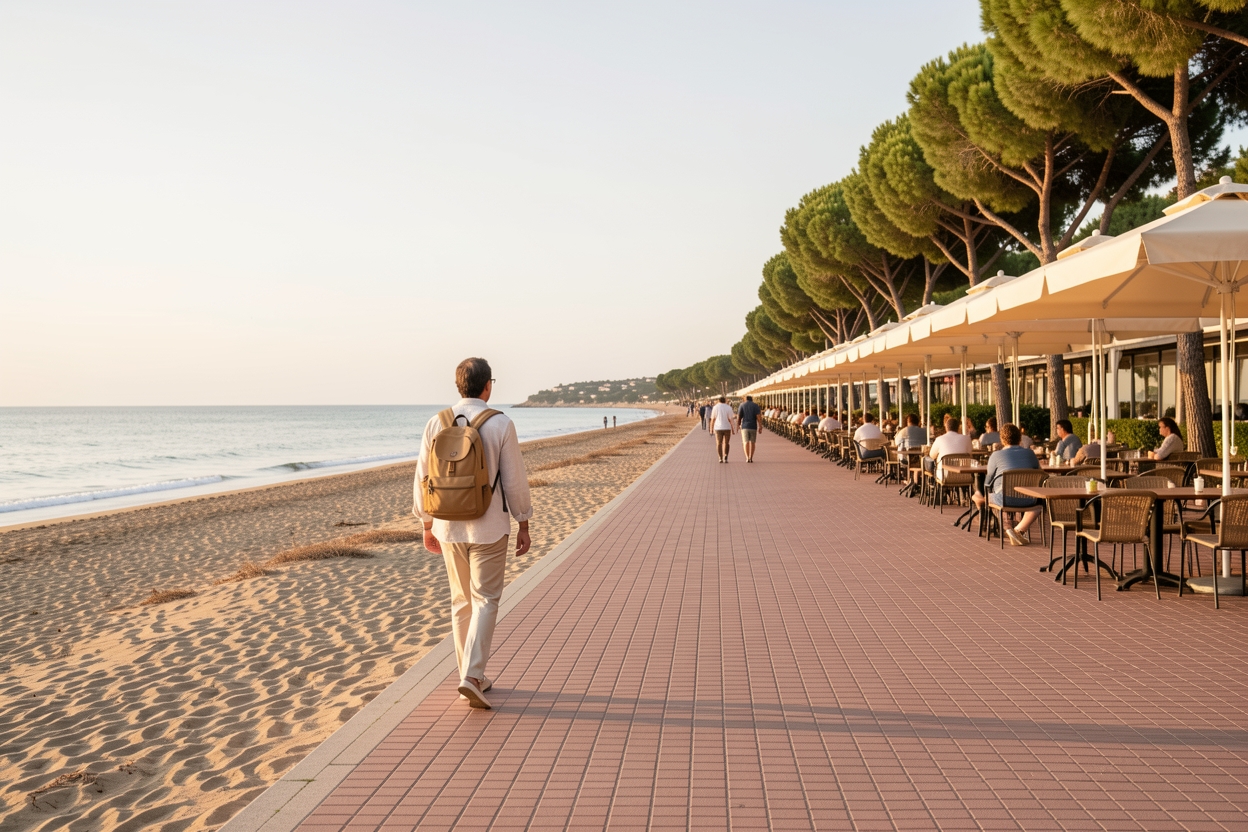
The best beach holidays for singles are the ones where a first meetup can happen at a staffed public place, in daylight, with your own way off the sand. A beautiful cove is not the plan. A boat you do not control is not the plan. The villa, the room, and the hotel beach are not the plan. Coordination needs a pin, a start, and an end. It does not need the water.
I am Rico Roger. I founded Gallivanta, and I write the destination and safety guides on this blog. I have traveled solo in more than 35 countries on five continents, and I still start a coast trip by opening the official water page and the country page before I open a chat. Gallivanta’s travel-first position is adventure first, sparks welcome, traveler control intact. On a beach holiday, control is the path back to the promenade.
Published and reviewed: November 9, 2026
This page is the plan. The beach destinations roundup is a list of coasts. The Canggu beach clubs guide is the sand-venue list, and the Uluwatu beach clubs guide is the sibling list for the Bukit cliffs. The Costa Rica date spots are place ideas. None of those pages is the rule for the first hour. Read this beside the meeting-point guide, the daylight window, the alcohol boundary plan, the accommodation privacy plan, and the public-first arrival habit.
Keep four things separate. Facts are what a government or an official safety page said, with the link in the sentence. Examples are illustrative composites for teaching. They are not my diary and not reports about a real guest. Assumptions are risk tolerances that change with your passport, your swimming, the forecast, and the town. Advice is the method I use when I edit a first hour on a coast. Advice is not a guarantee of safety, not legal advice, not medical advice, and not a substitute for a lifeguard or for local emergency services.
- → See why a singles beach holiday is a plan
- → Decide what the hour needs
- → Choose the coast without ranking a fantasy
- → Read the water rules before the chat
- → Put the pin on a staffed terrace
- → Decline the boat and the quiet beach
- → Keep drinks, sun, and swimming apart
- → Keep the bag, the phone, and the room
- → Split what a trusted contact may know
- → Tighten the plan when the risk is higher
- → Recognize coast red flags
- → Use short scripts
- → Run the checklist
- → Review sources and boundaries
- → Read the FAQ
Why the best beach holidays for singles are a plan, not a backdrop
People search for the best beach holidays for singles because a couples resort and an empty cove both fail a solo traveler in quiet ways. The resort assumes two people already share a room. The cove assumes the scenery is the safety. I do not use either assumption. A singles beach holiday is a trip you can take alone, plus an optional public hour with someone who is also there. The trip has to work if the hour never happens.
The beach destinations roundup answers which coasts have a social scene. It does not answer how to spend the first hour if you meet someone. I am not rewriting that roundup. This page is the missing plan, and I link the roundup when you want towns.
A beach compresses the usual checks. You may be in a swimsuit, away from your bag, a little sun-tired, and a long walk from the street where a taxi or a bus actually stops. The National Weather Service beach safety page defines the surf zone as the water between the shore and the first line of breaking waves, and it says many people are injured or killed each year along U.S. beaches by dangerous waves and currents. That page is about the water, not about dating. I use it because a meetup that moves into the surf zone has picked up a hazard the chat never mentioned.
The same page says to stay aware of the weather, the ocean, the tide, and what is going on around you, and that storms far out at sea can create dangerous waves and currents even on a sunny day. It also says even small waves can hit you with the force of a car. I keep that sentence next to any plan that treats a calm postcard as proof the water is gentle. Great weather for the beach is not the same fact as safe swimming. The NWS rip current page says rip currents often form on calm, sunny days, and it says not to assume.
Decide what the first hour needs before you say yes
Before I confirm a meetup on a coast, I write a private line: the staffed pin, the start, the end, how I leave, and the forecast I already checked. Then I mark the facts that do not leave my notes.
| Enough to coordinate | Stays off the chat |
|---|---|
| A staffed terrace, promenade cafe, or lifeguard beach in daylight | An empty cove, a hotel beach, or a pin only reachable by boat |
| A start time and an end time you can both see | Your villa, room number, door code, or resort name |
| The fact that you will arrive and leave on your own | A ride on their scooter, jet ski, or boat |
| A second public pin if you want to talk again | Your flight, your checkout, or a live location share with the match |
What you can say is smaller than what a beach chat asks for. “The promenade cafe at 4 works. I’ll get there on my own, and I’ll head out at 5.” That is a complete plan. Your budget plan still applies: the drink you can pay for yourself is part of leaving independent. A daybed minimum you did not price is not.
If an earlier message already named your hotel, do not “fix” it by adding the room, the beach entrance, or a boat time. Freeze the extra detail. Use the meeting-point guide to name a public pin that is not the property, and do not walk the last block together. Where you sleep stays on the accommodation plan even when the beach plan has already leaked a little.
Illustrative scenario A, the cove that was framed as romance: A traveler in a coast town is asked to skip the cafe and meet on a beach with no lifeguard, “so we can actually talk.” No pin with staff has been named. In the composite, the reply stays on the promenade cafe and a one-hour window. The quiet was the ask. The cafe was the plan.
Choose the coast for exits, not for a postcard
I do not publish a second list of twelve beaches here. The roundup already exists, and repeating it would fight that URL instead of helping the query this page is for. When I pick a coast for a singles holiday, I use four practical tests, and I check them against official pages rather than against a photo.
- A staffed public edge. I want a promenade, a cafe terrace, or a beach with lifeguards, so the first hour has witnesses and a person whose job is the water. The United States Lifesaving Association safety page says the odds of a swimmer fatally drowning at a beach protected by USLA-affiliated lifeguards are 1 in 18 million. The NWS cites that same figure and says to swim near a lifeguard whenever possible. A beach with no patrol is a different product.
- A way off the sand that I own. I want a walk, a bus, or a taxi I can hail without the other person. The transportation independence plan is the full version of that rule. A scooter offered “because the road is sandy” is a ride, not a shortcut.
- A daylight window that survives the forecast. I read the surf zone forecast before I agree to a time. NOAA’s rip current safety page tells you to check the Surf Zone Forecast, and it explains the three outlooks: low risk, moderate risk, and high risk. Low risk is not zero. That page says life-threatening rip currents often occur near groins, jetties, reefs, and piers even when the outlook is low.
- A country page for the passport in my pocket. A U.S. Travel Advisory describes risks for U.S. citizens, not for every passport. If yours is different, start with your own foreign ministry. I still open the U.S. country page as a worked example of the kind of detail a beach chat will not give you.
The U.S. State Department’s Brazil travel page is one of those worked examples, not a verdict on a holiday. It tells U.S. citizens not to walk on beaches after dark, and it says assaults are common in that setting. It also says many of Brazil’s beaches have very dangerous riptides even if the water looks safe, that ocean currents and waves are unpredictable even at popular tourist beaches, and that you should never swim while under the influence of alcohol. It says to follow local authorities and to refrain from swimming alone in areas marked with red warning signs or at beaches with no municipal lifeguards or first responder services. I do not copy those sentences onto every country. I copy the habit: open the page for the country you are actually entering, and let that page overrule a sunset photo.
CDC’s swimming and diving page for travelers says drowning accounts for 1 out of 10 deaths in U.S. travelers abroad, and that it is the leading cause of death for U.S. travelers visiting countries where water-related activities are popular. The page names Fiji, the Bahamas, Jamaica, and Costa Rica as examples of that pattern. That is a reason to treat a Costa Rica swim as a water plan, not as a reason to throw out the date-spot list. The spots can still be ideas for a public day. The water page decides whether you enter the water at all.
Read the water rules before you agree to a swim
A first meetup does not have to include swimming. If it might, I want the rules in my head before I am standing in a swimsuit with someone I met yesterday. NOAA’s rip current page is the one I use, and I keep the instructions in NOAA’s order rather than in a slogan.
- Know how to swim. NOAA says people who do not know how to swim and are pulled out by a rip current stand little chance of survival, and that a person standing waist deep can be dragged into deeper water and drown. Shallow is not the same as safe.
- Know before you go. Check the Surf Zone Forecast. Ask a lifeguard about conditions before you enter. The NWS beach page says no one will know the current water conditions better than the lifeguard or beach patrol.
- Swim at a lifeguard-protected beach when you can. Never swim alone. NOAA says to stay at least 100 feet (30 meters) away from piers and jetties, because permanent rip currents often exist alongside those structures.
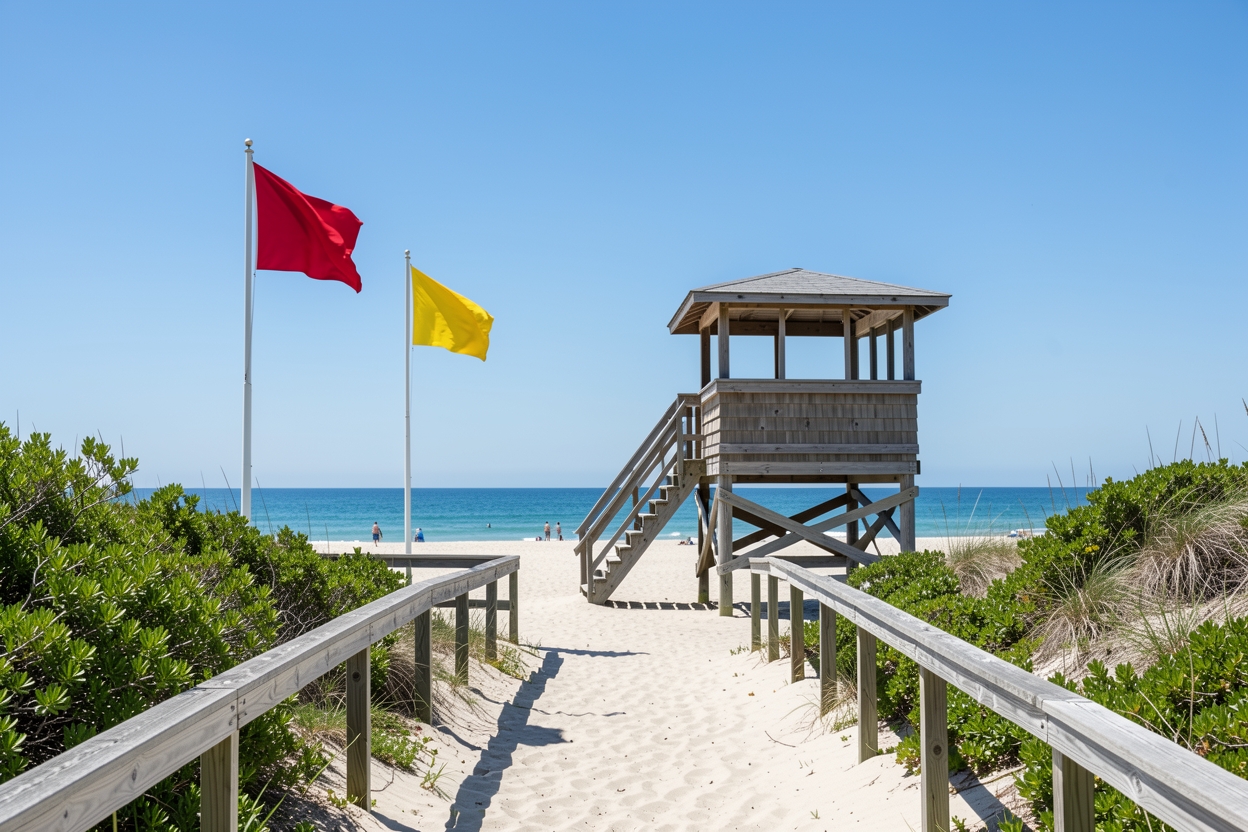
- Obey lifeguards, flags, and posted signs. CDC tells travelers to pay attention to colored beach flags and to make sure they understand local warnings. Flag colors are not the same on every coast. I ask what the flag means at that beach. I do not guess from a flag I learned at home.
- If you are caught in a rip current, NOAA says to relax, because rip currents do not pull you under. Do not swim against the current. You may be able to escape by swimming out of the current in a direction following the shoreline, or toward breaking waves, then at an angle toward the beach. You may also be able to escape by floating or treading water if the current circulates back toward shore. If you need help, yell and wave.
CDC’s version of the escape is the short form I can remember when I am tired: swim parallel to the shore until you are free of the rip, then swim diagonally toward the shore. I do not treat that sentence as a dare. I treat it as the reason the first hour stays where I can stand up and walk to staff.
Helping someone else has its own rule, and it is the rule I want a match to follow if I am the one in trouble. NOAA says not to become a victim while trying to help. Many people have died trying to rescue rip current victims. Get a lifeguard. If a lifeguard is not present, call 911 in the United States, then try to direct the person to swim following the shoreline. Throw something that floats. Never enter the water without a flotation device. A romantic impulse to swim out after someone is the failure mode that page is written to stop.
The USLA page says more than 80 percent of rescues by USLA-affiliated lifeguards at ocean beaches are caused by rip currents. It also says many fatal drownings involve swimmers who were alone, and it says not to rely on inner tubes, plastic air mattresses, or other inflatable toys. A float someone hands you “so we can drift” is not a lifeguard. I leave those toys for a beach I would already trust without a date attached.
Put the pin on a staffed terrace, not on an empty cove
The meeting-point guide already says a first pin should be public, specific, and easy to leave. On a beach holiday I add one more test: could a member of staff see me if I stood up and looked unhappy, and could I reach a street without crossing deep water? A towel on open sand fails that test. A cafe on the promenade passes it. A beach club passes it only if I can pay my own cover, sit where other people are, and walk out to transit. The Canggu beach clubs guide can help you recognize a venue. It is not permission to share a daybed with someone you have not met.
I name the end before I sit down. The daylight window is the tool. A sunset swim sounds like the point of a beach holiday, and it is also the hour when the lifeguard tower may close and the walk back gets dark. The Brazil page’s “do not walk on beaches after dark” is country advice for U.S. citizens in Brazil. The method I use everywhere is stricter than waiting for one country page to say it: if the only time we can both do is after the tower closes, I move the meetup to the next daylight window or I skip it.
Arrival matters on a coast the same way it matters in a city. The public-first guide says not to spend your landing hour on a date while you are tired, carrying luggage, and still learning the neighborhood. I give myself a night before a beach meetup. Jet lag plus surf is a bad pair. If I have not yet found the promenade in daylight, I do not agree to meet at the far end of it.
Solo date ideas for women are useful when you want the shape of a public hour that is not a bar. On a coast I still want that shape: a seated place, a clock, and a street. The ocean can be the view. It does not have to be the activity.
Decline the boat, the jet ski, and the “quiet beach only I know”
A boat is a room that moves, with one person who knows the motor. CDC tells travelers to wear a life jacket on boats and whenever they take part in water recreation. The USLA page states that some 77 percent of fatalities associated with boating accidents are from drowning, and that 84 percent of those were not wearing life jackets. It says most of those deaths involve people who never expected to end up in the water. I do not need a first meetup to be the hour I discover that.
The NWS beach page says to have U.S. Coast Guard approved life jackets with you, and to know the address of the beach in case you have to call for help. A private boat often has neither a street address nor a spare jacket in your size. I do not get on it to be polite. If both people later want a boat, that is a second plan: daylight, my own ticket on a staffed trip, and a jacket I put on myself. It is not the way we meet.
A jet ski has the same problem in a smaller package. You cannot step off. You cannot choose the landing. NOAA’s distance rule for piers and jetties is a reminder that structures and motors sit next to the currents. I do not need a ride along them.
“I know a quiet beach” is the cove problem with a driver attached. Quiet means no lifeguard, no cafe, and no witness. CDC says never to swim alone in unfamiliar waters, even if you are a strong swimmer, because rip currents or other circumstances beyond your control can occur. Two people who just matched are still unfamiliar water. The quiet beach does not fix that. It removes the lifeguard.
Illustrative scenario B, the boat that was framed as a better view: A traveler at a busy beach is told the sand is too crowded and that a short boat ride reaches a private cove. In the composite, the hour stays at the terrace. The boat is declined. A second public pin, if there is one, is another staffed place in the same town, chosen out loud, not a landing only one person can find. The backup plan is for a closed cafe, not for a change of coastline.
Keep the drink, the sun, and the swim in different hours
CDC’s travelers page says not to drink alcohol before or during swimming, diving, or boating. It says alcohol affects balance, coordination, and judgment. It says alcohol use is involved in 3 out of 4 adolescent and adult deaths associated with water recreation. That page was last reviewed on October 6, 2022, so I recheck it when I edit, and I still treat the instruction as current until CDC replaces it. The USLA page, citing CDC, also says alcohol and water do not mix, and it adds that sun and heat heighten the effects. I do not reconcile their percentages into a new number. I follow the instruction they share: if swimming is even a maybe, the drink waits.
The drink has a second problem that is not drowning. The U.S. State Department’s women travelers page describes drug-assisted rape: someone drugs another person in order to sexually assault them, typically by adding drugs to a drink without the person’s knowledge. It names Rohypnol, ketamine, and scopolamine as drugs that can make a person unconscious and defenseless. The page says to watch your drink, to cover it with your hand if you can, and not to accept drinks from strangers. It says to notice symptoms that are not ordinary intoxication, to tell a trusted friend if you can, and to call local emergency services or the nearest U.S. embassy or consulate. It says that if you are sexually assaulted, get medical care, and that care within 72 hours matters for HIV prevention and emergency contraception. It points to RAINN for help remotely or after you return to the United States.
Loving This Beach Escapes? Don't Explore It Alone.
Real Gallivanta members are planning trips to Beach Escapes right now. Join the community and turn your solo travel dreams into shared adventures.
Join Gallivanta FreeI use those drink rules for every traveler. The drug does not check a passport gender marker before it works. The women travelers page is written for women, and I link it so readers can see the source. The alcohol boundary plan is the longer version of how I keep a first hour at one drink or none. On a beach, “none” is the default if anyone might enter the water.
The State Department’s Mauritius page is another country example, not a global statute. Under dating apps it says criminals may use dating apps to target people for robbery or assault. It says to meet in a popular public place, to tell friends the details and which app, to use a video call before you agree to meet, to avoid isolated places such as hotel rooms and private houses, never to leave food or drinks unattended, to refuse food or drinks from strangers, and to send updates on a schedule you agreed. I can do every one of those steps at a promenade cafe. I cannot do them on a boat.
Brazil’s page is more specific about the pattern I do not want to learn in person. It says criminals target foreigners through dating apps or at bars before drugging and robbing them. It says not to accept food or drinks from strangers, not to go to bars or nightclubs alone, and not to leave with strangers. It says that if you suddenly feel ill, walk away, and that a suspected drugging needs immediate medical care because some people have life-threatening reactions. Then report it to local police and contact the nearest U.S. embassy or consulate. Again, that is Brazil advice for U.S. citizens. The habit travels: a first beach hour is a bad place to accept a cup I did not watch being poured.
Sun is the third clock. The USLA page lists sunburn, heat exhaustion, heat cramps, and potentially fatal heat stroke as immediate effects, and it says to drink water, avoid alcohol, take breaks out of the hottest part of the day, and use broad-spectrum sunscreen. I put the meetup in a seated shade on purpose. A two-hour walk on open sand at noon is how a pleasant person becomes a bad decision. If I feel unwell, I tell staff. I do not ask the match to “get me back to the villa.”
Illustrative scenario C, the swim after the second drink: A traveler at a lifeguard beach is offered another cocktail and then a swim “while the water is calm.” In the composite, the drink stays at one or at zero, and the swim does not start. CDC’s rule is the reason. The calm water is not a rebuttal. The NWS rip current page already said calm, sunny days are when people assume wrong.
Keep the bag, the phone, and the room in your own hands
Brazil’s page says armed robberies happen at or near public beaches, and that belongings are taken even if they are only unattended for a moment. It says that if you are confronted, hand over the belongings without resisting, because resisting raises the chance of injury. I do not treat that as a reason to skip every beach. I treat it as a reason not to leave a bag on a towel while I walk to the water with someone I just met. The bag stays on me, or it stays at the staffed table where I am sitting. A match who offers to “watch it” is asking to be the person closest to the passport.
The phone follows the phone and data plan. A beach is a common place to say the app is annoying and the number would be easier, or to ask to hold an unlocked phone “for a photo in the waves.” I keep the first messages in the app. I keep the phone in my hand. I do not read a verification code aloud. Salt water is not a reason to hand the device over.
The room follows the accommodation plan. A hotel beach is still the building where you sleep. A beach club that bills the room is the room number in another font. I do not meet at the property, and I do not let a match walk me to the gate “so I know you got in safe.” Getting back is my transportation plan. The itinerary privacy plan covers the rest: no flight number, no checkout hour, no airport pickup framed as a beach welcome.
Money follows the budget plan. I decide the ceiling before I sit down, including a cover charge if the terrace has one. I do not split a bottle I did not order. I do not send money, a transfer, or a “hold my card while you get the towels” errand. If a payment leaves my sight, I treat that as the end of the hour, and I tell the bank from my own phone once I am on the street.
Split what a trusted contact may know from what the match may know
The Mauritius dating-app list and the check-in protocol agree on the shape, even though one is a country page and the other is my editorial method. A trusted contact can hold the public pin, the start, the planned end, the area where I am staying, and the escalation we already wrote. They can also hold the real swim plan if I have one: which beach, whether a lifeguard is on duty, and the local emergency number.
The match gets the pin and the window. The match does not get a live dot. Live location, if I share one, follows the location sharing plan and goes to the trusted contact for a bounded time. A dot on a beach traces the walk back to the room even when I never said the hotel name.
I do not add the match to a group message with that contact. That introduction gives away both phone numbers. If I miss the end window, the contact follows the protocol. They do not need the match’s number to do it. If I am in the water and something is wrong, the person I want is the lifeguard, then local emergency services, not a new acquaintance swimming out.
Emergency numbers are local. In the United States, NOAA’s rescue instruction says to call 911 if no lifeguard is present. In the European Union, 112 is the European emergency number you can dial free of charge from fixed and mobile phones everywhere in the EU. Some EU countries also keep a national number. For any other country, I save the number from an official page before I fly. The emergency and consular plan is where that number lives, next to the embassy contact for my passport. A beach article does not replace that card.
Tighten the margin for women and anyone who draws more harassment
The same public-pin rules apply to every traveler. Women, LGBTQ+ travelers, and anyone whose identity or mobility draws more harassment often need a shorter hour, because “a quiet beach” and “I’ll walk you back along the sand” are common ways to test whether you are alone. Gallivanta’s guides on dating safely as a solo female traveler and solo travel safety for women hold the wider context. The coast layer is specific:
- Do not confirm that you are in a villa alone or that the beach road is empty after dinner. “I keep first plans at a staffed cafe” is enough.
- Do not accept the drink, the boat, or the unlit walk. The State Department women travelers page is the source I want in your pocket for the drink, and RAINN’s safer dating tips say to meet in a well-lit, busy place such as a coffee shop, restaurant, or park, and that pressure to meet quickly is a red flag.
- Keep the meetup inside the daylight window, as in the travel dating safety overview.
- If someone keeps asking after a clear no, end the plan. You do not owe a second explanation from the water.
RAINN also says not to share a home address, a phone number, a workplace, or a daily routine until you have built trust, and that there is no rush to meet. On a short beach holiday the routine is the walk from the sand to the room. That is the detail I keep off the chat. Higher risk changes the margin. It does not change the right to a public plan. A match who mocks the margin is showing you how they handle a no.
Recognize beach-holiday red flags
Leave or cancel when the conversation turns into access to the water, the bag, or the room. Concrete versions:
- Pressure to leave a staffed terrace for an empty cove, a boat, or a jet ski before you have sat down
- A plan that only works after the lifeguards leave, or only if you swim
- A drink you did not watch, a second drink pushed before any swim, or anger when you cover your glass
- A request to watch your bag, hold your phone, or walk you to the hotel gate
- A request for your room, your villa name, your flight, or a live location share
- A dare to ignore a flag, a closed-beach sign, or a lifeguard’s instruction
- Guilt or a lecture when you keep the hour at one public pin
One awkward question can be a miss. A pattern after a clear answer is the signal. The exit strategy is how you leave without a speech. You stand up, you thank them, and you take the street you already chose. You do not finish the conversation on the sand.
Scripts that keep the hour public without killing warmth
Short lines are easier when you are sun-tired. Adapt the place names. Keep the boundary.
- The cove: “I like a public first hour. The promenade cafe at 4 works, and I’ll head out at 5. I’ll get there on my own.”
- The boat: “I don’t do boats on a first meet. If we both want a staffed trip later, we can look at that in daylight, with our own tickets.”
- The swim: “I’m keeping this one at the table. If the lifeguard says the flag is fine another day, we can talk about the water then. Not after a drink.”
- The drink: “I’ll order my own, and I’ll keep it in my hand. If that is awkward, the cafe was still a good idea.”
- The bag: “I’ll keep my bag with me. If we walk, it walks with me.”
- The villa: “I don’t meet at the place I’m staying. This terrace is the plan. I can say a real goodbye here.”
- The second hour: “I’d like another public hour tomorrow, same shape. A cafe, daylight, and we both leave on our own.”
Warmth is the tone. The boundary is the content. A person who wants a beach holiday with you can use a terrace. A person who needs the cove, the boat, or the room is telling you what they wanted access to.
Beach holiday action summary for a first hour
Run this before you fly, and again before you leave your room.
- Open the country page for your passport, plus the NWS or local surf forecast for the beach you might actually use.
- Save the local emergency number. If you are a U.S. citizen, also save how you will reach the embassy. In the EU, 112 reaches emergency services.
- Choose a staffed pin you can walk away from: a promenade cafe, a terrace, or a lifeguard beach in daylight. Not a cove, a hotel beach, or a boat.
- Name the start and the end in the chat. Do not name the room, the flight, or a live dot.
- Send the fuller packet only to a trusted contact.
- Decide the money ceiling, including any cover charge. Pay for your own drink. Do not enter the water if you have been drinking.
- Ask a lifeguard about flags and conditions before any swim. Never swim alone. Stay away from piers and jetties. Skip inflatable toys as a safety plan.
- Keep your bag and your phone on you. Decline a boat, a jet ski, and a ride back to the gate.
- If a flag, a forecast, or your body says no, the hour stays at the table or it ends.
- If you feel ill, tell staff and contact local emergency services. If someone is in a rip current, get a lifeguard. Do not swim out after them.
Then go have the hour, or go have the beach without it. A public pin and a private room can exist on the same coast. That is the whole plan. The best beach holidays for singles are the ones you can still enjoy if you never meet anyone at all.
Sources, facts, and review boundaries
This guide is practical planning for solo travelers who may arrange a short public meetup on a beach holiday. It is not legal advice, medical advice, lifeguard training, or a guarantee of safety. Forecasts, flag systems, emergency numbers, and crime patterns change by beach and by week. Verify the local forecast and your own country’s travel advice before you meet.
The photographs in this package are original images made for this Gallivanta article. They are not stock photos, and they do not show a real meetup or a real traveler.
I encourage traveler control, public-first first meetings, and proportionate boundaries. No checklist can certify another person’s intent. Editorial standards for how Gallivanta separates reporting, composites, and product mentions are on the editorial standards page and the why trust us page. My bio is on About Rico Roger.
Official pages I used for the factual claims above:
- National Weather Service: Beach safety
- National Weather Service: Rip currents
- NOAA: Rip current safety
- CDC Travelers’ Health: Swimming and diving safety
- United States Lifesaving Association: beach and water safety tips
- U.S. Department of State: women travelers
- U.S. Department of State: Brazil international travel information
- U.S. Department of State: Mauritius travel advisory
- European Union: 112, the single European emergency number
- RAINN: tips for safer dating, online and in person
Country pages above are written for U.S. citizens in those countries. They are examples of how to read an official page, not a ranking of destinations. If you are in immediate danger, contact local emergency services first. The reporting and blocking plan is the page for what you do on an app after you are safe.
Editorial review date: November 9, 2026.
FAQ: best beach holidays for singles
What makes a beach holiday work for a single traveler?
A staffed public place, a daylight window, and your own way off the sand. The best beach holidays for singles are not the emptiest coves. They are coasts where you can sit at a cafe, see other people, and leave without a boat or a ride from someone you just met. A list of towns is a different page. This page is the first hour.
Is a quiet beach a good first meeting place?
No. A first meetup needs staff and other people. An empty stretch of sand has no witness and a hard exit. Use a staffed terrace, a promenade cafe, or a lifeguard beach in daylight, and name the end time before you sit down. Quiet can wait until you already know how the person handles a no.
Should I get on a boat on a first meetup?
No. A boat takes away your own way off the water. CDC tells travelers to wear a life jacket for boating. The USLA page says some 77 percent of boating-accident fatalities are drownings, and that 84 percent of those people were not wearing a life jacket. A first hour does not need that risk. If you both still want a boat later, make it a second plan, in daylight, with your own ticket and a life jacket you chose.
Can we swim on a first date?
Only if you would swim there without the date: a lifeguard beach, inside the flagged area, without alcohol, and with a way out that does not depend on the other person. NOAA says never to swim alone and to ask a lifeguard before you enter. If the flag, the forecast, or your own comfort says no, the date stays at the table.
What if they want to meet at the villa or the hotel beach?
Decline. Where you sleep stays private. A hotel beach is still the building where your room is. Meet at a different staffed public pin, and leave on your own. Do not add the room number to make the walk feel shorter.
What if I feel sick, or the water takes me?
Tell staff, leave the drink, and contact local emergency services. In the United States that number is 911. In the European Union, 112 is the emergency number you can dial free of charge. If you are in a rip current, NOAA says to relax, not to swim against the current, and to yell and wave if you need help. Do not have the other person swim out to you. Get a lifeguard.
Ready to Meet Your Next Travel Date?
You've got the destination, the vibe, and the courage to go solo. Now all you need is someone who gets it. Join Gallivanta and meet fellow travelers who believe the best chapters start with a one-way ticket.
Join Gallivanta FreeSources linked in the article | Reviewed November 9, 2026