
The Freedom of Solo Travel, with a Safety Net
Discover the freedom of solo travel with the safety of a community. Join Gallivanta today.
✓ Free to join ✓ No credit card required ✓ Join 50,000+ travelers
Solo travel for women is a trip you take without a companion you already trust, with a plan you can change when the official country page changes. I use that same definition for solo trips for women, solo female trips, and the searches that come in as travel women solo. The words differ. The planning job does not.
I am Rico Roger, founder of Gallivanta. I wrote this page on October 27, 2026, after reading the current public advice from the UK Foreign, Commonwealth and Development Office, the Government of Canada, and the U.S. Department of State, and the CDC Yellow Book 2026 chapters on the pre-travel visit. I did not add a crime rate, a percentage of women, or a city ranking. If a number is not on a page I link, it is not in this article.
Published and reviewed: October 27, 2026
The wider set of tactics lives on my solo female travel page. This URL is the planning order I want finished before a ticket is bought. The solo travel safety guide for women goes deeper on habits once you are moving. If the trip is your first one, use how to plan your first solo trip beside this page. More guides in this cluster sit in the Solo Female Travel guides.
Keep four truths separate. Facts are what an official page says, and each one below is linked. Examples are illustrative composites for teaching. They are not my diary, not testimonials, and not reports about a real guest. Assumptions are personal risk tolerances that differ by traveler, passport, city, and health. Advice is the sequence I use when I plan a page like this. It is not a guarantee of safety, not legal advice, not medical advice, and not a substitute for your own government’s travel advice or for local emergency services.
- → What this page does
- → Read the country page first
- → Set documents, insurance, and health
- → Keep money and the phone usable
- → Choose where you sleep
- → Decide how you move
- → Handle drinks, attention, and being impolite
- → Check laws, clothing, and job offers
- → Go alone, with a partner, or on a group departure
- → Run the sequence I use
- → Review sources and boundaries
- → Read the FAQ
If you already know you want a city break, a rail trip, an outdoor base, or a small-group departure, and you need the filter before the city photo wins, read best solo trips for women. Keep both open when you pay.
What I mean by solo travel for women
I do not use “solo” to mean lonely, and I do not use it to mean reckless. I use it for a woman who will arrive, sleep, and leave without a companion she already trusts in the room with her. That includes a first international trip, a familiar city visited alone, and a seat on a group departure where the other people are still strangers on day one. The FCDO page on solo and independent travel, updated 12 June 2025, separates those ideas in the same way: traveling by yourself, and traveling independent of a group or organised tour. It says all travel comes with risk, and that solo and independent travel can bring additional challenges.
I also do not pretend every woman faces the same street. The FCDO’s own note on how its travel advice works says no foreign travel can be guaranteed safe, and that you may face different risks because of gender, ethnic background, sexuality, or health. Canada’s advice for women travellers adds a separate pointer for 2SLGBTQI+ travellers, including trans women. If that is your situation, I want you on that page as well as this one. I will not invent a single risk score that covers all of you.
Lists of cities are a different product. I have published places I have written about for solo female travel in Asia and a page on safest solo travel destinations. I do not treat either list, or anyone else’s list, as a safety certificate. A list cannot see the week you fly. The country advice page can be updated after I publish. When the two disagree, I follow the country page.
Illustrative scenario A, the list that replaced the country page: A woman books a solo female trip because a roundup called the city easy. She has not opened the safety section for that country. In the plan I use, the list is a menu. The official page is the decision. The composite ends with her reading that page before she pays for a fare she cannot change.
Read the country page before you fall in love with the trip
The FCDO’s advice for women travelling abroad was reviewed for accuracy on 8 September 2026, with new information about domestic abuse. It says all travellers face risks abroad, and that in some countries or cultures women traveling alone or in female-only groups can face extra risks and obstacles. It tells you to research the local culture and whether women there have received unwanted attention or difficulties because of gender. It points you to the safety and security section of the country travel advice, to guidebooks and forums, to its solo travel advice, and to its advice for LGBT+ travellers. It also says you could talk to people who have been to the places you plan to visit. That is the research block I start with when the reader holds a British passport or is using GOV.UK as the public source.
Canada’s advice for women travellers asks you to read Travel advice and advisories for the destination, including laws, religions, and customs that may affect women, and to check the Safety and security section for women’s safety in particular. It says to sign up for the free and confidential Registration of Canadians Abroad service. It says norms for clothing vary by law and custom, and that not following them could put your safety at risk. It says consular officials often receive calls from friends or relatives who have not heard from someone abroad, so plan the contact before you fly. It suggests learning culture, customs, and gender roles from women born there or from women who have travelled there often. I treat that last line as a source of questions, not as a promise that any one traveler’s story is the country’s story.
For U.S. citizens, the Department of State tells women to read its women travelers page and the destination’s travel guidance. Its Smart Traveler Enrollment Program page describes STEP as a free service that emails updates and alerts from U.S. embassies and consulates, and that helps the embassy or consulate contact you or your emergency contact. The same page says you can create an account, register a trip if you use Login.gov, and update the record when plans change. I do not enroll anyone from this article. I tell U.S. citizens to enroll themselves.
Your passport country is the government that can usually help you. I link three public systems because they publish detailed pages in English. If you are not British, Canadian, or American, use your own foreign ministry and the embassy it lists. I will not borrow another country’s emergency number and pretend it is yours.
On the women travelers page, the State Department says that if you are a victim of violence you can contact the Office of Overseas Citizens Services at 888-407-4747, and from overseas at +1-202-501-4444, or the U.S. embassy or consulate for the destination. The FCDO advice for women travelling abroad says British nationals who need urgent help should contact the nearest British embassy, high commission, or consulate, and from the UK can call +44 (0)20 7008 5000, with lines open 24 hours. Canada’s advice for women travellers lists the Emergency Watch and Response Centre at +1-613-996-8885, by email at [email protected], and via WhatsApp at +1-613-909-8881, plus the nearest Canadian office during office hours. I am copying those contacts from those pages for this October 27, 2026 review. Check the page again the week you travel. A saved number can go stale.
Set the documents, the insurance, and the health visit
The FCDO foreign travel checklist tells you to sign your passport and complete the emergency contacts page, to make sure the passport meets the entry rules of the country you are visiting, and it gives the example that the passport may need to be valid for a set period after the trip ends. It tells you to get the correct visa, to carry an extra photo ID besides the passport, and to check extra documents if you are traveling with children. I do not print a universal “six month” passport rule on this page. The checklist itself refuses that shortcut. The period, if there is one, is an entry rule of the country, and it can differ from the rule next door.
The same foreign travel checklist says to get appropriate travel insurance as soon as you book, covering the places, the duration, and planned activities such as adventure sports. It says to tell the insurer about medical conditions, including undiagnosed conditions being investigated, and to check that the policy will cover them. The solo and independent travel page repeats that you should have appropriate insurance even if you are visiting friends or family or know the country well. For EU countries and Switzerland, the checklist says a Global Health Insurance Card or a European Health Insurance Card may not cover all health costs and never covers repatriation, and is not a substitute for travel insurance. That GHIC point is UK guidance. I do not translate it into a rule for every passport.
Health timing is another place I keep two government sentences side by side. Canada’s advice for women travellers says a visit to a health care professional well before travel, with six weeks ahead of departure as a good target, to discuss health risks at the destination. The FCDO checklist says to check vaccinations and health precautions at least eight weeks before you travel. Both sentences are advice to the readers of those sites. If you are pregnant, or you might be, do not use my sentence as the medical plan. The FCDO women page says you may need specialist care, that the right care may not be available, and that in some countries pregnancy or birth outside marriage may fall outside medical insurance, and that abortion may be denied even when it would be life-saving. It points to NaTHNaC on pregnancy. Canada’s page says to ask a clinician about diseases that may affect a pregnancy, to make sure insurance covers pregnancy-related conditions, and, if you will give birth outside Canada, to identify a facility beforehand where you can.
The CDC Yellow Book 2026 chapter on the pre-travel consultation, dated 23 April 2025, says a comprehensive consultation with a travel medicine specialist is indicated for all international travelers and is particularly important for people with a complicated health history, pregnant women, people taking special risks, and people with prolonged or complicated itineraries. The pregnant travelers chapter in that same edition says pregnancy can cause physiologic changes that need special consideration, that safe travel is possible with careful preparation, and that the pre-travel assessment should include an obstetric healthcare professional. It says pregnant travelers should carry a copy of prenatal records and the clinician’s contact information. I am not a clinician. I stop at that referral.
Medication is a legal question as well as a packing question. The FCDO women page tells readers who take regular medication to read NaTHNaC’s advice on medicines and travel. Canada says to contact the destination country’s embassy or consulate to make sure a medicine is legal there. I do not list drugs that are “usually fine.” Legal in one country is not a fact about the next country.
Keep money and the phone usable without posting the plan
The FCDO solo page says to make sure you can access your money abroad, including funds you may need quickly in an emergency. The checklist adds a concrete failure mode: you can lose the phone and then be unable to complete a payment that depends on that phone. It tells you to avoid financial trouble by being able to pay unexpected costs if the main payment method fails. My habit is to write down, on paper a trusted person can read, how you will pay for a night and a ticket home if the card in the app stops working. That habit is mine. The underlying warning is theirs.
The same checklist says to have a backup of accommodation details, flight details, passport details, contact numbers, and the insurance policy, in case you lose the phone, and to share that backup with friends or family or store it in a secure way. The solo page says to leave an itinerary with someone at home, agree how often you will be in contact, and consider leaving photocopies of the passport and the insurance policy. I split that packet the way I split it in every safety guide I write. A trusted person at home can hold the property name, the flight, and the insurance. A new acquaintance does not get that packet. A public social post does not get it either.
The State Department crime page says not to share detailed travel plans online until you return home. It also says to tell someone at home the itinerary, including hotel names, places you will visit, U.S. embassy or consulate information, and emergency contacts. Those two lines are not a contradiction. They are two audiences. Canada says to choose carefully what you post, and to avoid sharing your exact location on social media. It also says to carry a fully charged phone programmed with emergency contacts, including the Emergency Watch and Response Centre and the nearest Canadian embassy or consulate.
The crime page tells travelers to download offline map apps so they can navigate without an internet connection, to keep the phone charged, and to carry a portable battery. It says a “find my phone” tracker can be shared with someone trusted at home. I point readers who want a product list to my separate page on solo travel apps for women. I am not ranking apps in this article, and I am not claiming any app makes a street safe. The official line I will stand on is the offline map, the charge, and the person at home who already has the plan.
Illustrative scenario B, the group chat that learned the hotel: A woman posts the property name in a large chat so friends can “feel close” during a solo trip. The State Department crime page says detailed plans stay offline until you are home. In the composite, she deletes the post and sends the property only to the one person who already holds her check-in. The chat keeps the city and the fact that she will write tomorrow. It does not keep the door.
Choose where you sleep before you land
The State Department lodging safety page says it is important to pick safe places to stay, especially if you are traveling alone, and that safety features differ everywhere. It tells you to research lodging, read the destination information and reviews, and book before you travel, because you are most at risk when you first arrive in a new place. It says to have backup options. It says to try to stay near public transportation and important services, to check crime information near the lodging, and to consider places with a 24-hour lobby, gates, or security guards. The FCDO solo page uses the same arrival logic: book before you travel, in particular the first night, because you are at your most vulnerable when you first arrive, tired and unsure of the surroundings. It also says to know the address of where you are staying in case a host or transfer does not show up, and to know what other lodging exists if the first option is not what you expected.
On the women travelers page, the State Department adds two lines I repeat whenever someone asks me what to say at the desk. When you register, use your first initial and no title. Do not use Mrs., Ms., or Miss. And do not tell strangers where you are staying. Canada’s page says to keep room number and location private, and to confirm the identity of visitors, including staff. The FCDO solo page says never to leave your key where someone can note your room number. The lodging safety page says to carry the room key separate from the key packet that has the room number on it.
The room check on the State Department lodging page, which I treat as a list to do after check-in and not as a vibe, is specific. Look behind curtains, under the bed, and around the room. Make sure the phones work. Check for carbon monoxide detectors, fire alarms, and fire extinguishers. Make sure doors and windows, including the bathroom door, lock. Make sure curtains close fully. Check for unusual electronics and report them to the front desk. Read the posted emergency plan, find the nearest exit, and learn the route. The page notes that leaving through a window may not be possible. It also says to meet new visitors or strangers in the public lobby, not in your room, and to tell the front desk about suspicious activity.
The FCDO solo page adds fire and carbon monoxide detail I do not want to soften. Check for smoke alarms and appropriate fire exits. Badly fitted water heaters or cookers, or poor ventilation, can kill. If you carry a portable carbon monoxide detector, the FCDO says to use one that is British Standard compliant, with a BS Kitemark or EN 50291, and to follow the manufacturer’s instructions. It points to UK Health Security Agency and NHS information on carbon monoxide. Close windows, especially on the ground floor or where there is a balcony. Lock the door when you are inside. Use the spy hole or chain, if the door has one, before you open it, especially if you are not expecting anyone. A door wedge is on both the FCDO list and the Canadian list, and Canada also mentions a door alarm or a wearable alarm.
None of that is a promise about a neighborhood. The lodging page says features and accessibility differ, and it tells you to call ahead if you need elevators, ramps, or other access, and to confirm they work. I keep that in the plan because a “safe” hotel you cannot enter, or cannot leave in a fire, is not a finished plan.
Decide how you move before someone else offers the ride
I will not collapse three official pages into one slogan about crowds, because they do not say the same thing. The State Department women travelers page says the safety of public transportation varies, and that informal taxis or minibuses can be dangerous, particularly for women traveling alone. It says to check trusted local sources and the transportation section of the destination guidance. It says to arrange transport to and from the airport before you arrive, from a licensed and reputable company. It says not to hitchhike. It says to research taxi and ride-share companies and use licensed ones. It says app-based companies can keep a record of the ride, unlike a car hailed on the street, that some let a rider require a PIN at pickup, and that you can share the live record to another phone. It also says to avoid crowded sections of train cars and crowded buses, because they can create opportunities for unwanted physical contact and for pickpocketing.
The FCDO solo page says to consider arranging airport transfers before you arrive, using only official, licensed, and reputable taxis, traveling in busy carriages, avoiding hitchhiking, keeping valuables close, and avoiding poorly lit areas if you are walking alone, particularly at night. Canada’s page says to use legal, meaning registered, and reputable taxis, to choose reserved seating on trains if it is available, and to use women-only buses or train carriages if they exist. It also says to be cautious about going out alone, especially at night, and to share plans with family or friends.
Loving Trips Like These? Don't Explore Them Alone.
Real Gallivanta members are planning trips like these right now. Join the community and turn your solo travel dreams into shared adventures.
Join Gallivanta FreeWhen I plan a solo trip for women, I write the transport choice as a destination decision. If the country page describes a women-only carriage, Canada’s advice is to consider using it. If the risk in front of you is a packed carriage and unwanted contact, the State Department’s line is to avoid that crush. If the FCDO’s line about busy carriages fits the theft pattern on that route, use a busy car where you are not isolated. I do not own a universal rule that beats the page for the country you are actually in. What all three pages agree on, and what I will say without a hedge, is licensed transport arranged before you land, and no hitchhiking.
The crime page repeats the airport booking, the licensed research, the tracked app ride shared with someone you trust, and the warning against crowded buses and trains. It also says not to wear expensive jewelry or carry valuable items. The FCDO says the same about large amounts of money and excess jewelry. I treat a visible camera, a laptop bag, and a phone held out for a long navigation session as the same class of object. That last sentence is my packing habit, tied to their instruction not to display what you cannot afford to lose.
Handle drinks, attention, and the right to be impolite
The FCDO women page says violence towards women and girls is a risk in many countries, and that the form depends on local context, laws, history, and culture. It says rape and sexual assault are risks to women worldwide, and that local services and attitudes vary widely by country. It takes allegations seriously and points to country-specific advice on what to do after a rape or sexual assault abroad. The solo page adds that rape and sexual assault is a risk to people of all genders. Canada’s travel safety section says that in some destinations women travellers risk harassment, verbal abuse, or physical or sexual assault, and that local authorities’ response to sexual violence may differ substantially from the response in Canada. It says aggression against foreigners can occur in many places, including beach resorts, and it says to be wary of offered rides and other invitations and to avoid public transportation or walking alone at night. The State Department women page defines violence against women and girls as any act that causes or may cause physical, sexual, or emotional harm, including threats, and says women travelers can be targeted for assault, harassment, trafficking, and other violent acts.
I cite those pages so the risk is not a rumor I invented. I also cite them so you can see the limit. None of them gives you a percentage you can pack. They give you behaviors and a place to report.
On drinks, the pages are concrete. The FCDO says drugs have been used in rape, that you will not normally be able to detect them, that they work in non-alcoholic drinks such as coffee and tea, and that they are normally colourless and tasteless and can make you unconscious and defenceless. It says not to leave drinks unattended and not to accept drinks from strangers. If you feel strange, sick, or drunk after a small amount, tell a trusted friend who can get you to a safe place, or phone local police, and contact emergency services if you feel in danger. The State Department crime page names Rohypnol, ketamine, and scopolamine as drugs that can make a person pass out or become defenseless. It says to watch your drink and cover it with your hand if you can, to meet strangers only in public areas, to refuse drinks from strangers, and to notice symptoms that are not ordinary drunkenness. If you feel sick or unusual, it says to tell a trusted friend and call local emergency services or the nearest U.S. embassy or consulate. If you are attacked, it says to get immediate medical help and contact the embassy or consulate. Canada’s page says to watch drinks as they are prepared and served, never to leave food or drinks alone, and never to accept snacks, beverages, gum, or cigarettes from strangers.
The CDC Yellow Book 2026 chapter on sex and travel says travel can come with new social interactions, that alcohol or drugs can lower inhibition, and that apps can make it easier to meet partners. It tells clinicians to include sexual-assault prevention counseling in the pre-travel visit, along with counseling on condoms, contraception including emergency contraception, and infections. If a solo trip might include sex, or might include a situation you did not plan, I want that conversation to happen with a clinician before you fly. My dating guide, dating safely as a solo female traveler, is the operational page for a public first meeting. It is not a medical page.
Politeness is the point the State Department and the FCDO both refuse to put above safety. The women travelers page says that in an unsafe situation it can help to speak loudly, that this may draw attention and prevent unwanted actions, and that being safe is more important than being polite. It says to use facial expression, body language, and a firm voice, and to think through a safety plan before you need it. It says a friend should know your plans and how to contact you. It says to consider a whistle or a personal alarm, and to confirm legality before you travel with an item such as pepper spray. It says to consider a self-defense course before you go, and to know where nearby police stations and hospitals are. The FCDO solo page says not to be afraid to draw attention by shouting, and to contact local police if you are fearful or in danger. Canada says that if you are robbed, stay calm and do not resist, because resistance can increase the risk of violence. I hold both instructions at once. Making noise to stop unwanted contact is what those pages recommend. Fighting a robber for a bag is what Canada warns against. They are different moments. I will not mash them into “always fight” or “always stay quiet.”
Check the law, the clothing, and any job that appears mid-trip
The FCDO women page says to research laws and authorities’ attitudes toward gender equality, particularly around crimes and violence against women. It says laws on divorce and child custody vary, that courts may differ by religion, and that in some countries a married woman may need her husband’s permission for herself or her children to leave. It says a husband may be able to place a stop order so authorities stop you or the children at the border. Canada’s page says that in some countries a wife must have her husband’s permission to obtain travel documents and to leave the country. If your trip touches a marriage, a child, or an exit stamp that is not only yours, those paragraphs are the ones I want you to read in full on the government site, not in my summary. I am not qualified to tell you how a foreign court will rule.
Clothing is part of that legal and social reading, not a style note. Canada says to research what is appropriate because norms vary and ignoring them could put your safety at risk. I do not publish a dress code for a region from memory. I send you to the country page and, when you can, to women who live there, which is the research step Canada already names.
Job offers are a solo-travel problem because a long trip can turn into a search for work. The FCDO warns about opportunities that look legitimate, including call centres, hostess work, childcare, and domestic help, and about offers that seem too good to be true. It says these scams can target anyone, and that criminal gangs have sometimes targeted women and used the jobs as a front for trafficking or modern slavery. It says some people have had passports confiscated, been held in poor conditions, been forced into illegal activity, or been pressured to make large payments. Canada says traffickers frequently recruit foreigners, particularly women, through fraudulent ads for work as hostesses, models, nannies, maids, or other jobs that look legitimate, and that the destination’s travel advice can say whether trafficking levels are high there. My rule, which sits on top of those warnings, is that a job that needs your passport “for a few days” is a reason to stop the conversation and contact your embassy, not a reason to hand the passport over.
Illustrative scenario C, the contract that wanted the passport: A woman on a solo trip is offered nanny work that pays more than the local ads, if she leaves her passport at the office overnight. The FCDO and Canada both describe job fronts used in trafficking. In the composite she keeps the passport, leaves the office, and contacts her embassy using the number she saved before the trip. The offer is not a character reference. It is the ask.
Canada’s section on overseas relationships is the one I use when the solo trip is really a flight to meet someone new. It says to proceed with caution, not to give that person information about your finances, to have a plan for leaving the country, and to protect your return ticket or enough money to get home, and to protect your passport. It points to official material on overseas fraud. A charming chat is not a source. That page is.
Go alone, with a partner, or on a group departure
Some solo trips for women stay solo on purpose. Some become a search for company after a week of eating dinner alone. I do not treat that search as a failure, and I do not treat a new person as an automatic upgrade in safety. The FCDO says solo and independent travel may bring an increased risk of crime or other risks to personal safety, especially somewhere unfamiliar. Adding a stranger does not, by itself, remove the “unfamiliar” part. My page on how to find a travel partner is the one I want you to use before you share a room, a ride, or a bank of dates with someone you did not already know. Until that trust exists, the lodging rules on this page still apply. The new person does not get the room number.
A group departure is a third shape. You can travel women solo onto a tour and still be responsible for your own passport, insurance, and exit. The FCDO’s definition of independent travel is travel that is not with a group or organised tour, which implies the reverse is a different risk picture, not a magic shield. I wrote group tours for solo travelers for readers who want that structure. Read the operator’s terms yourself. I am not endorsing a company from this page, and I am not claiming a group removes the need to read the country advice.
If the trip includes a first meeting with someone from an app, keep it inside the dating guide and inside the drink rules above. Public place, your own way there and back, no hotel name. That is the same split the State Department lodging page makes when it says to meet strangers in the lobby and not in the room, applied one step earlier: meet them in a public place that is not your lodging at all.
The sequence I use for a solo trip
This is the order I follow when I plan solo travel for women, and the order I want on one page you can check off. The facts inside it are the ones linked above. The order is my editorial method.
- Open the country advice from your own government. Read the section on safety, women, laws, and health. If you are using the British, Canadian, or U.S. pages linked here, read those. Sign up for the alert service your government actually offers: email alerts on GOV.UK, Registration of Canadians Abroad, or STEP.
- Check the passport and visa rules on that country page, including any validity period after the trip. Do not borrow a rule from a different country.
- Buy insurance that matches the countries, the dates, and the activities, and tell the insurer about health conditions. If a card such as a GHIC applies to your passport, read what it does not cover. The FCDO says it never covers repatriation.
- Book the health visit on the timeline your clinician and your government’s page support. Canada names six weeks as a good target. The FCDO checklist names at least eight weeks for vaccinations. Pregnant travelers should use the CDC chapter and their own obstetric clinician, not a blog.
- Confirm medicines with the destination’s embassy or with NaTHNaC if that is the source your government names. Pack what the Canada page flags as easy to miss, including supplies that may be hard to find, such as menstrual products.
- Book the first nights before you fly. Keep a backup. Read reviews and the crime information near the lodging. Prefer a place you can leave on foot toward transit, with a lobby that is staffed if the State Department’s lodging list fits the property.
- Arrange the airport ride with a licensed company before you land. Decide the daytime and nighttime transport from the country page, not from a slogan about crowds. Save offline maps. Charge a battery pack.
- Write the private packet for one trusted person: property, flights, insurance, embassy contact, and how often you will check in. Keep that packet off social media and off a first conversation with someone new.
- At the desk, use a first initial and no title if you are following the State Department women travelers page. Keep the key separate from anything that shows the room number.
- Run the room check from the lodging page the hour you arrive. Find the exit. Lock the door when you are inside.
- If a drink, a ride, a job, or a person asks for more access than the plan allows, stop. Being safe is more important than being polite, which is the State Department’s line and the FCDO’s line. If you are in danger, contact local emergency services, then your embassy.
Then go take the trip. A plan you can revise is the whole point of solo travel for women as I write it. The solo female travel page remains the place I send you for the wider tip set. This page is the order.
Solo travel for women action summary
Run this before you pay for a fare you cannot change, and again the night before you fly.
- Read the destination safety section, including the part about women, from your own government.
- Enroll in the alert or registration service that government publishes.
- Match the passport, the visa, and any extra validity period to that country’s entry rules.
- Put insurance, a health visit, and legal medicines in place before packing.
- Book the first nights and a licensed airport ride. Keep a backup bed in mind.
- Give the full itinerary to one trusted person. Do not post the property.
- Save offline maps, embassy contacts, and a charged battery.
- On arrival, check locks, exits, and the key. Meet new people in public, not in the room.
- Refuse drinks you did not watch, rides you did not book, and jobs that want your passport.
- If you are in danger, call local emergency services and then your embassy. A blog cannot make that call for you.
Meeting someone while you travel is optional, and it has its own primary sources. The U.S. Department of State scams page describes fraud patterns that target travelers. The FTC romance scam guidance says never send money to a sweetheart you have not met in person. RAINN safer-dating tips keep first meets public and tell a trusted person where you will be. I treat those as hard stops, not as mood.
For the app layer that keeps a meetup plan separate from your room key, see Gallivanta meet travelers and the privacy page. This guide is still about the trip sequence. The app pages are not a join button inside the body.
Sources, facts, and review boundaries
This guide is practical planning for women taking solo trips. It is not legal advice, medical advice, insurance advice, threat assessment, or a guarantee of safety. Entry rules, criminal law, hospital capacity, and street conditions vary by country and change. The FCDO says no foreign travel can be guaranteed safe, and that only you can decide whether to travel. I agree with that limit. Verify the country page, the insurance contract, and the clinic visit yourself.
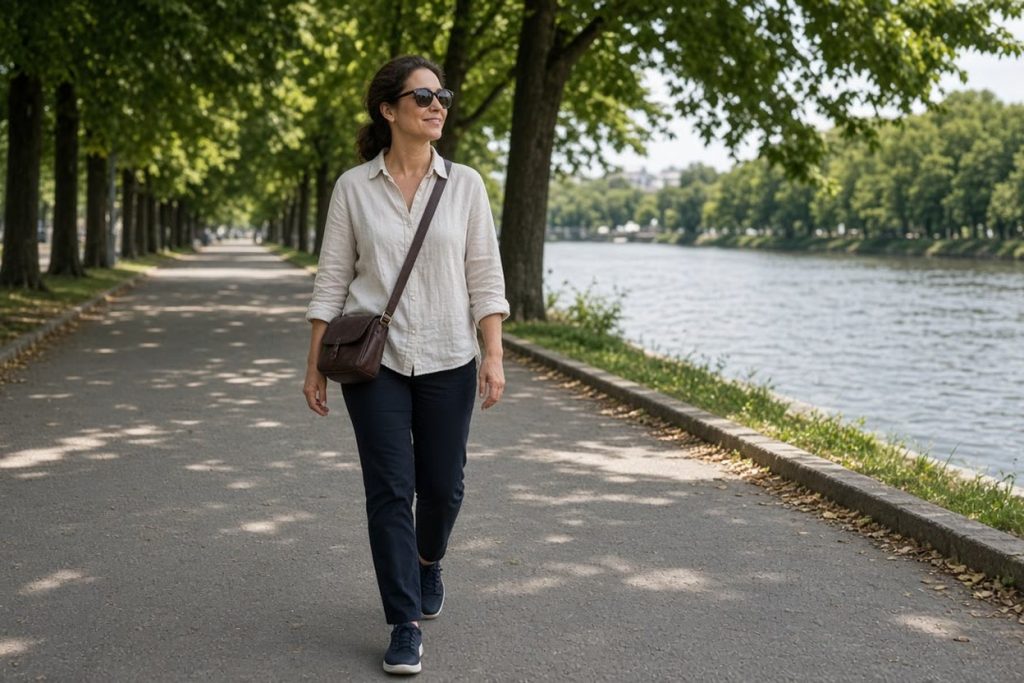
The photographs in this package are original images made for this Gallivanta article. They are not stock photos, and they do not show a real trip or a real traveler.
I separate reporting, composites, and product mentions on the editorial standards page and the why trust us page. Illustrative scenarios in this article are labeled composites. They are not things that happened to me, and they are not case reports.
Official pages I used for the factual claims above, checked for this draft on October 27, 2026:
- FCDO: Advice for women travelling abroad (page last updated 8 September 2026)
- FCDO: Solo and independent travel (page last updated 12 June 2025)
- FCDO: Foreign travel checklist
- FCDO: About foreign travel advice
- Government of Canada: Advice for women travellers
- U.S. Department of State: Women travelers
- U.S. Department of State: Lodging safety
- U.S. Department of State: Crime
- U.S. Department of State: Smart Traveler Enrollment Program
- CDC Yellow Book 2026: The pre-travel consultation
- CDC Yellow Book 2026: Pregnant travelers
- CDC Yellow Book 2026: Sex and travel
If you are in immediate danger, contact local emergency services first. Embassy and consular lines matter after that call is made, or when local services are the thing you need help reaching. I do not print a single worldwide emergency number, because the right number is the one for the country you are standing in, and it belongs on the advice page you saved before the trip.
Editorial review date: October 27, 2026.
FAQ: solo travel for women
Is solo travel for women safe?
The FCDO says no foreign travel can be guaranteed safe, and that in some places women traveling alone can face extra risks. I do not have a yes or no that replaces the country page. Read that page, decide whether the trip is safe enough for you, and keep a way to leave.
What should I read before a solo female trip?
Read the safety section of your destination’s official travel advice, including any part written for women. I link the FCDO, Canada, and U.S. State Department pages above. Your own government is the one that can help you if you are its citizen.
Should I share my hotel while I am traveling alone?
Not on social media, and not with someone you just met. The U.S. State Department crime page says not to share detailed travel plans online until you return home. Canada’s advice for women travellers says to avoid sharing your exact location. A trusted person at home can still hold the property name.
Are women-only train cars always the safer choice?
I do not treat them as a universal rule. Canada says to use women-only buses or carriages if they are available. The U.S. State Department tells women to avoid crowded sections because of unwanted contact and pickpocketing. The FCDO solo page says to consider busy carriages. Follow the destination page for the route you are on.
Do I need travel insurance for a solo trip?
If you are using the UK checklist, the FCDO says to get appropriate travel insurance as soon as you book, and that a GHIC or EHIC never covers repatriation and is not a substitute. Match any policy to the countries, the dates, and the activities. I cannot see your policy from here.
What if I want a travel partner later?
Use the guide on how to find a travel partner, and keep the lodging and money rules on this page until you actually know the person. Canada says that if you are going abroad to meet someone new, you should not hand over financial information, and you should protect your return ticket and your passport.
Ready to Meet Your Next Travel Date?
You've got the destination, the vibe, and the courage to go solo. Now all you need is someone who gets it. Join Gallivanta and meet fellow travelers who believe the best chapters start with a one-way ticket.
Join Gallivanta FreeSources linked in the article | Reviewed October 27, 2026