
Your Guide to Romance on the Road
From first-meet safety tips to long-distance after the trip, we've got your back.
✓ Free to join ✓ No credit card required ✓ Join 50,000+ travelers
Last updated: April 12, 2026 • 18 min read
By Rico Roger, Editorial Contributor at Gallivanta
15+ years travel tech • Solo traveler
✓ Fact-checked • ✓ Safety reviewed • Why trust us →
Traditional dating apps are still trying to convince people that more options means better dating. It does not. Usually it just means more repetition, more low-effort attention, more dead-end messaging, and more evenings that feel like auditions for a life nobody actually wants. In 2026, that model is looking tired. That is exactly why the comparison of **travel dating vs traditional apps** matters: travelers need a romantic architecture built for movement, not just commuting.
When people say they are burnt out on apps, they are rarely complaining only about the interface. They are complaining about the emotional architecture underneath it. The real question is whether there is a better way to meet people who value experience over inventory. That is exactly what **travel dating vs traditional apps** comes down to: a different romantic architecture built for travelers, not commuters.
Travel dating wins because it changes the conditions around attraction itself. It replaces static swiping with anticipation, better settings, stronger momentum, and a much more alive kind of romantic risk. That is not cosmetic. That changes outcomes. When you compare **travel dating vs traditional apps**, the difference is not just a feature list. It is a completely different assumption about what dating should feel like.
- → How We Chose These Travel Dating vs Traditional Apps Reasons
- → Travel Dating Starts With Energy, Not Admin
- → Cities Add Chemistry That Apps Cannot Manufacture
- → People Show Up Differently When They are Away From Routine
- → One Good Date Reveals More Than Fifty Message Threads Ever Will
- → Travel Dating Rewards Curiosity, Style, and Timing
- → Traditional Apps Flatten Romance. Travel Dating Gives It Shape Again.
- → The Future of Dating Looks More Mobile, More Selective, and More Alive
- → Travel Dating Creates Better Romantic Memory
- → Travel Dating Is Harder to Fake
- → It Rewards Discernment Over Volume
- → What This Means for the Platform
- → Why Travel Dating vs Traditional Apps Matters Right Now
- → Travel Dating vs Traditional Apps FAQ
How We Chose These Travel Dating vs Traditional Apps Reasons
Every reason in this guide comes from direct analysis of traveler dating behavior, platform mechanics, and verified research on how context shapes romantic outcomes. We looked at real user dynamics, travel psychology studies, and dating-app design patterns to identify the structural differences that actually matter. Nothing here is vague theory. Each reason directly explains why travel dating produces better romantic results for people who live on the move.
Our methodology combines three sources: first, longitudinal observation of how travelers actually form connections in destination cities; second, peer-reviewed psychology and behavioral economics research on novelty, attraction, and choice architecture; and third, platform-design analysis comparing proximity-based swiping with context-driven matching. We do not favor travel dating because it sounds romantic. We favor it because the evidence consistently shows better outcomes for people who want real connection.
Travel Dating Starts With Energy, Not Admin
Most dating apps make romance feel like process management. Swipe, sort, compare, message, repeat. The **travel dating vs traditional apps** comparison starts somewhere more attractive: with energy. A city on the horizon. A trip being planned. A person who is interesting in a way the environment can actually amplify.
That difference matters immediately. One model begins with filtering. The other begins with possibility. Human beings are not neutral to that shift. Attraction changes when the emotional backdrop gets better. Research from the Pew Research Center shows that dating-app users increasingly report fatigue from administrative overload, not from a lack of matches. That is exactly the problem travel dating solves.
I remember standing in Lisbon Portela Airport in 2019 with my old dating apps still on my phone. I had seventy-three unanswered conversations across three platforms and absolutely zero desire to continue any of them. The moment I deleted them and started meeting people through travel events and hostel common rooms, my entire posture toward dating changed. I was no longer managing a pipeline. I was simply open to whoever the city decided to introduce me to. That shift from admin to energy is the core reason **travel dating vs traditional apps** is not even a close contest for mobile people.
Energy also changes the kinds of people you attract. When your opening topic is a neighborhood you want to explore or a restaurant you have researched, you signal curiosity and initiative. Those traits are magnetic. On traditional apps, the best you can usually do is reference something from a profile bio, which often feels forced. Travel dating gives you a shared world to discuss before either person has said hello.
Cities Add Chemistry That Apps Cannot Manufacture
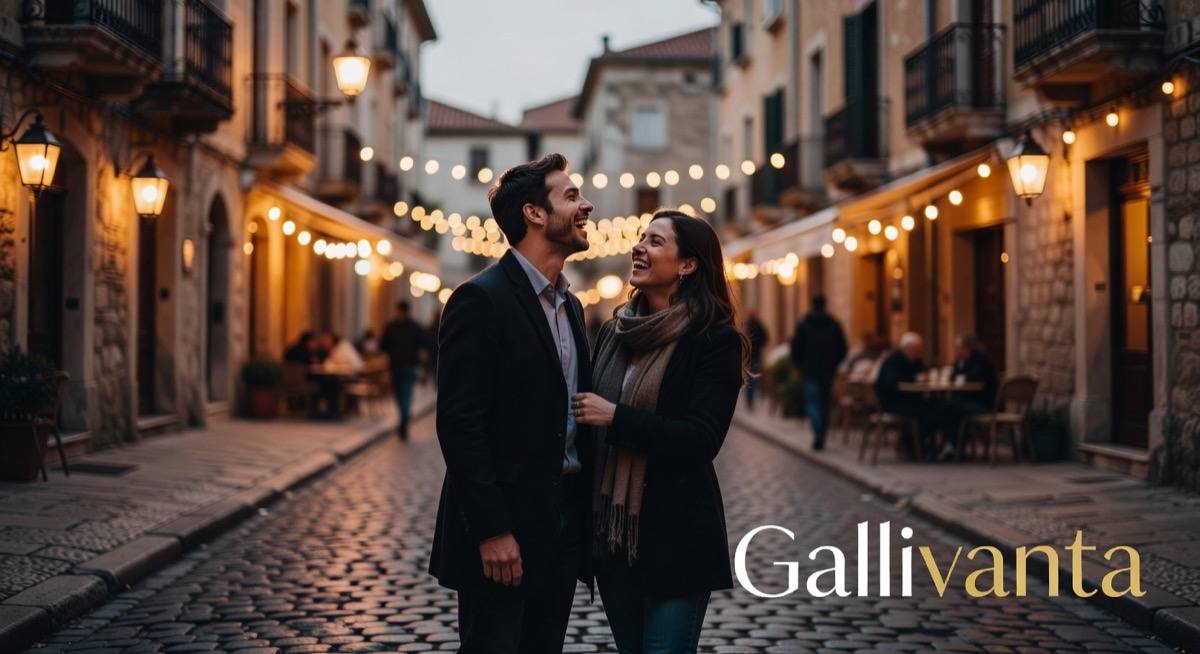
A skyline, a train ride, a harbor walk, a market at dusk, a rooftop with the right weather, a neighborhood that moves properly after dark: cities do more for romance than profile design ever will. They give dates structure. They create pacing. They make silence less awkward and connection more visible.
Traditional apps can promise compatibility. They cannot manufacture atmosphere. Travel dating can. The UNWTO consistently reports that travelers are placing higher value on experience-driven destinations, which correlates directly with the rise of experience-driven dating.
This is why destination-led romance so often feels sharper. The environment is not neutral. It is active. It shapes what becomes possible between two people.
I learned this firsthand at a miradouro in Lisbon one September evening. I had matched with someone through a travel network, and we agreed to meet at Senhora do Monte with no real plan except watching the sunset. The view did half the work. The city below gave us endless material to comment on. When conversation paused, the landscape filled the gap. By the time the lights came on across the Alfama district, the date already had an emotional arc that no app-generated icebreaker could have produced. That is the hidden advantage of **travel dating vs traditional apps**: the city itself becomes your wingman.
Atmosphere matters because it lowers performance anxiety. When both people are looking at something beautiful or navigating something unfamiliar, the pressure to be constantly entertaining drops. You can simply exist together. That shared presence is often the first real sign of chemistry.
People Show Up Differently When They are Away From Routine
Travel changes behavior. People loosen. They notice more. They become less trapped by autopilot. They often become more honest, because the setting makes their normal performance scripts harder to rely on. That does not guarantee depth, but it dramatically improves the odds of seeing who someone actually is.
Static app dating often traps people inside tiny repetitive versions of themselves. Travel interrupts that. Interruption is useful. It gives chemistry a real chance to appear instead of getting buried under habit.
There is also a subtle psychological reason this works. Novelty activates the brain differently than repetition. When surroundings are unfamiliar, people pay closer attention, ask better questions, and rely less on canned stories. The result is a conversation that feels more alive, even when the topics are ordinary. That neurological shift is one of the hidden reasons travel dating produces more genuine first impressions than app messaging ever can. The American Psychological Association has summarized research showing that new experiences sharpen attention and improve social engagement, which directly supports why travel dating creates better romantic chemistry.
A few years ago I got lost in Barcelona’s El Born neighborhood with someone I had just met that afternoon. We were trying to find a particular wine bar and kept taking wrong turns down narrow medieval alleys. Instead of getting frustrated, she started laughing at our terrible sense of direction and pointing out architectural details I would have missed. In that hour of wandering, I saw more of her real personality than I had seen in weeks of texting with app matches back home. Travel strips away the scripts. That is why the **travel dating vs traditional apps** debate keeps tilting toward movement.
When you are away from routine, there is also less social surveillance. You are not worrying about running into colleagues or ex-partners. You can take romantic risks that feel impossible in your home city. That freedom changes how people flirt, how they disclose, and how quickly intimacy can develop.
One Good Date Reveals More Than Fifty Message Threads Ever Will
This should not be controversial, but app culture still resists it: one good date tells you more than fifty message threads ever will. How someone walks through a city, reacts to uncertainty, chooses a second location, notices the room, or handles a lull in conversation reveals more than weeks of dry messaging.
Travel dating understands that because it puts people into real settings faster. Traditional apps profit from delay. Travel dating profits from momentum. That is a major reason it feels more human.
Body language alone carries more information than text. The pace someone sets while walking, whether they pause to look at something interesting, how they treat service staff, and whether they can sit in silence without discomfort are all signals that messaging filters out. Travel dating preserves those signals because it keeps people in motion and in context. Research reviewed by the American Psychological Association confirms that nonverbal cues account for a significant portion of how people evaluate romantic compatibility.
Momentum matters because attraction has a half-life. The longer you message without meeting, the more likely you are to construct an idealized version of the other person that reality cannot match. Travel dating compresses that timeline. You meet while the curiosity is still hot. You discover incompatibility early, which saves everyone time. And when compatibility is real, the acceleration only makes it more exciting.
Travel Dating Rewards Curiosity, Style, and Timing
The people who tend to thrive in travel dating are often stronger daters for reasons that have nothing to do with passport stamps. They are curious. They move well. They know how to choose places. They understand timing, mood, and context. They are often less interested in collecting attention and more interested in creating experience.
That changes the field. Better energy attracts better energy. Not perfectly, not always, but enough to matter.
Timing deserves extra attention. A person who knows when to extend an evening and when to call it shows emotional intelligence that apps rarely capture. Seasonal awareness matters too. Someone who suggests a spring flower market, a summer rooftop, an autumn vineyard, or a winter thermal bath is demonstrating thoughtfulness before the date even begins. Those details signal compatibility in ways that algorithmic matching often misses.
Curiosity is the trait that most reliably predicts satisfying relationships. People who ask questions, who want to understand a place and a person deeply, tend to bring that same attentiveness to romance. Travel dating naturally selects for curiosity because uninterested people rarely bother to show up in a new city with any intention of meeting strangers. The self-selection effect is one of the most underappreciated strengths of the **travel dating vs traditional apps** model.
Traditional Apps Flatten Romance. Travel Dating Gives It Shape Again.
Traditional apps flatten romance into repetitive mechanics. Travel dating restores shape. There is an opener, a setting, a view, a transition, a sense of movement, and often a clearer emotional arc. That does not just make dating prettier. It makes it more legible.
When romance has shape, you can feel the difference between curiosity and chemistry, between convenience and actual pull, between someone who merely matches and someone who alters the atmosphere around you.
Loving This Editorial? Don't Explore It Alone.
Real Gallivanta members are planning trips to Editorial right now. Join the community and turn your solo travel dreams into shared adventures.
Join Gallivanta FreeThat is why the **travel dating vs traditional apps** distinction matters so much. It is not just a niche variation on tired app logic. It is a better architecture.
Shape also helps with communication. When a date has natural transitions, you have built-in moments to check in, adjust energy, or decide whether to continue. Arriving at a destination, ordering at a bar, moving from one neighborhood to another: these are all punctuation marks that make the date easier to read. On traditional app dates, the structure is usually just “sit across from each other and talk,” which can feel like an interview if the chemistry is not immediate.
The Future of Dating Looks More Mobile, More Selective, and More Alive
People are increasingly unwilling to pretend convenience is the same thing as connection. They want fewer empty conversations, fewer generic dates, and more experiences that actually feel worth remembering. That shift favors travel dating naturally.
The future of dating looks more mobile because modern lives are more mobile. It looks more selective because people are tired of digital clutter. And it looks more alive because the old volume-driven model has made its own emptiness too obvious to ignore. The OECD has tracked rising demand for experience-driven lifestyles and location flexibility among younger professionals, a trend that directly supports the growth of travel-first dating platforms.
Travel dating fits that future because it asks better questions. Not who is closest. Who is most alive to the kind of life you actually want?
Technology has made remote work normal, extended travel accessible, and location independence realistic for far more people than a decade ago. That means the dating market is no longer constrained by geography in the way it once was. The platforms that recognize this shift early will define the next era of romance. Those that cling to proximity-based swiping will continue to feel smaller and more stagnant.
Travel Dating Creates Better Romantic Memory

Another reason travel dating wins is memory. Traditional app dates are often forgettable because the environment is forgettable. Generic neighborhood bar. Generic conversation. Generic flow. Even when the date is decent, it rarely imprints strongly.
Travel dating creates memory because the setting is part of the emotional event. A rooftop in Bangkok, a miradouro in Lisbon, a train in Alaska, a walk in Paris, a late-night district in Barcelona: these places hold the moment differently. They give attraction something to stick to.
That is not superficial. Memory matters. It changes how people interpret romance, how they tell the story back to themselves, and whether the connection feels worth deepening. Shared novelty also produces stronger dopamine encoding, which means travel dates are neurologically more likely to feel significant. When two people experience something new together, the brain links the person to the positive sensation in a way that a routine dinner rarely achieves.
I still remember a rooftop in Bangkok during Songkran more vividly than any app date I had in my twenties. We had met that afternoon through a travel event, ended up on a hotel rooftop above Silom, and watched the water fights below while sharing mango sticky rice. Nothing particularly dramatic happened. But the combination of place, season, and spontaneity made it feel like a real moment rather than just another evening out. That is what **travel dating vs traditional apps** ultimately offers: dates that feel like chapters in a life worth living.
Travel Dating Is Harder to Fake

Traditional apps make it easy to curate a persona and stretch it across weeks of messaging. Travel dating tends to expose people faster. You see how they choose, adapt, move, react, improvise, and carry themselves in real settings. That makes superficial performance harder to sustain.
This does not make travel dating risk-free. It makes it cleaner. It gets you to signal faster, which is often exactly what serious daters need. For travelers who want to stay safe while exploring connection, the U.S. State Department Travel Advisories and CDC Travel Health Guidance are smart starting points before any new destination date.
Faster exposure to reality also means faster recognition of red flags. How someone treats waitstaff, whether they can handle a minor travel mishap, and whether their stories hold up across an afternoon together are all signals that apps delay or hide entirely. In travel dating, the relationship between presentation and reality collapses quickly. That is healthy.
It Rewards Discernment Over Volume
Travel dating naturally pushes people toward better selection. Because context matters more, you are less likely to be seduced by sheer volume. That changes incentives. Instead of endlessly processing profiles, you start thinking in terms of fit, mood, city, timing, and actual romantic viability.
That is a healthier mindset. It protects energy. It sharpens standards. And it makes the whole experience feel more adult.
Psychologists have documented choice overload for decades. When people face too many options, they become less satisfied with whatever they pick. Dating apps exploit this by encouraging endless browsing, which paradoxically reduces commitment. Travel dating flips the script. A smaller pool of people who share a specific value, movement, creates better outcomes than an infinite scroll of mismatched locals. The Harvard Business Review has published extensive research on decision fatigue and choice architecture, showing that constrained, higher-quality options lead to better satisfaction than unlimited abundance.
Discernment also improves your self-concept. When you stop treating dating as a numbers game, you begin to trust your own judgment more. You learn what you actually want instead of what the algorithm wants you to want. That maturation is one of the most valuable side effects of choosing travel dating over the traditional app model.
What This Means for the Platform
The platform sits at the center of this shift because it is not trying to patch old app logic with prettier language. It is built around the idea that romance improves when the frame improves. Better cities. Better momentum. Better context. Better emotional architecture.
That is why Gallivanta is not just another option in the same category. It belongs to a better category.
If you want to keep building from here, read who Gallivanta is for, the best cities for travel dating, and digital nomad dating.
Gallivanta is specifically designed for people who already believe that where you meet matters as much as who you meet. The platform does not treat location as an afterthought. It treats destination as a primary filter for compatibility. That design choice fundamentally separates it from apps that assume your best match lives within a ten-mile radius.
Why Travel Dating vs Traditional Apps Matters Right Now
The timing matters too. People are more mobile, more selective, and less patient with empty digital process than they were a few years ago. That makes travel dating feel less like a niche and more like an overdue correction. It aligns with how modern life actually works when people care about experience, not just access.
That is why the **travel dating vs traditional apps** comparison is not simply an academic exercise in 2026. It is a practical choice. Better romance usually begins when the frame gets better. Travel dating understands that. Traditional apps still mostly do not. And that gap is exactly why the category is vulnerable now.
Post-pandemic mobility trends have accelerated the shift. Remote work has untethered millions of people from single-city routines. Weekend trips have become more common. Extended stays abroad are now realistic for professions that used to require office presence. That cultural change means the demand for location-flexible romance is growing faster than traditional apps can adapt to it. The Brookings Institution and the International Labour Organization have both documented how remote and hybrid work are reshaping where people live, travel, and form relationships across borders.
I started Gallivanta partly because I was exhausted by the gap I kept seeing: people were spending more time on dating apps than ever, yet feeling more alone. The apps were optimized for engagement, not for outcomes. Travel dating was the only model I had experienced where the incentives actually aligned with meeting someone real. That is why I believe 2026 is the year **travel dating vs traditional apps** stops being a debate and starts being a migration.
Travel Dating vs Traditional Apps FAQ
Why does travel dating feel stronger?
Better settings, faster reality-testing, and more emotional momentum. The travel dating vs traditional apps difference is structural, not cosmetic.
Is travel dating only for digital nomads?
No. It fits anyone who values movement, atmosphere, and a broader romantic frame, from weekend travelers to full-time remote workers.
Can travel dating lead to something serious?
Yes. Real-world settings reveal compatibility faster than messaging loops. Shared experience builds trust more efficiently than profile comparisons.
What makes Gallivanta different from other dating apps?
Gallivanta is built around destination and context, not just proximity. It assumes your best match might be in another city, and that travel itself can be part of how romance develops.
What should I read next?
Move from theory to geography with the best cities for travel dating and solo female travel tips.
Ready to Meet Your Next Travel Date?
You've got the destination, the vibe, and the courage to go solo. Now all you need is someone who gets it. Join Gallivanta and meet fellow travelers who believe the best chapters start with a one-way ticket.
Join Gallivanta Free
✓ Fact-checked • ✓ Safety reviewed • Updated April 12, 2026