Your Next Adventure Could Change Everything
Join thousands of adventurous women who've discovered that the best travel stories often include a plot twist.
Start Your Adventure – Join Free
✓ Free to join ✓ No credit card required ✓ Join 50,000+ travelers
A long layover meetup can turn dead airport time into a real travel connection, but only when the flight remains the fixed point and the meetup fits around it. Immigration, security, terminal changes, baggage rules, boarding cutoffs, phone service, and fatigue all matter more than a clever date idea. The goal is not to squeeze romance into every spare hour. It is to create a public, time-boxed meeting that leaves the traveler fully in control of the onward journey.
For solo travelers, digital nomads, backpackers, and route-flexible travelers, that distinction is everything. A six-hour connection may contain only 90 useful minutes once you subtract deplaning, border formalities, transit, a return buffer, security, and the walk to the gate. A twelve-hour connection may support a short city meetup, but only if the traveler is legally allowed to enter, the airport and airline process is understood, and both people agree that the connection comes before chemistry. Gallivanta’s travel-first principle fits this moment cleanly: adventure first, sparks welcome, traveler control intact.
Published and reviewed: August 10, 2026
- → Why a long layover meetup needs a flight-first rule
- → Decide whether the meetup is airside or landside
- → Build the time budget backward
- → Choose a terminal meeting point that cannot drift
- → Protect documents, baggage, and the onward flight
- → Plan phone data, money, and an independent exit
- → A stronger airport frame for higher-risk travelers
- → Scripts that keep the plan clear and warm
- → Long layover meetup decision checklist
- → FAQ: Long layover meetup plan
Why a long layover meetup needs a flight-first rule
The most useful rule is simple: nobody you are meeting gets to spend your boarding buffer. Not a match, a new travel friend, a local guide, or someone you already know online. The onward flight is fixed; the meeting is optional. That means the meetup begins only after you know the actual arrival terminal, next departure terminal, boarding time, document requirements, baggage position, and route back through security.
Airport time is deceptive because the itinerary shows the interval between scheduled arrival and scheduled departure, not the usable window. The inbound aircraft may park remotely. Passport control may have a queue. A terminal transfer may require a train or bus. A separate-ticket connection may require baggage collection and a new check-in. The gate can be far from the lounge or arrivals hall. Treat every one of those as a real task before you decide whether a meeting fits.
Gallivanta’s travel dating app for route-aware connection is most useful when timing and intent are explicit. Saying “I have a connection from 10:20 to 18:05 and can confirm only after I land” is better than pretending the day is open. The same principle applies if you are using a group chat, meeting a friend of a friend, or reconnecting with someone from a previous trip. Clear constraints make a yes more meaningful and a cancellation less personal.
Illustrative scenario: Noor, 32, lands at London Heathrow at 09:40 for a 15:55 onward flight. A match suggests taking the Elizabeth line into central London. Noor checks the terminal transfer, immigration, and return-security requirements, then decides the city plan spends too much of the buffer. They meet for 55 minutes at a public landside cafe in the arrival terminal instead. The outcome is still a date, but it never competes with the gate.
Decide whether the long layover meetup is airside or landside
An airside meetup happens after security in the restricted departure area. It works only when both people can legally and practically access the same airside zone. A local person without a boarding pass generally cannot join you there. Even two ticketed travelers may be separated by terminals, international and domestic zones, passport controls, or security flows. Never assume “same airport” means “same accessible space.”
A landside meetup happens in the public part of the terminal or outside the airport. It is usually the only realistic format when one person is local. But going landside may mean passing immigration, satisfying entry or transit rules, collecting a bag, changing terminals, and clearing security again. The IATA Travel Centre provides personalized passport, visa, and health requirement information, while the relevant government immigration site remains decisive. Rules can depend on nationality, route, ticket type, airport, and whether you leave the transit area.
United States transit rules show why the distinction matters. The U.S. State Department’s transit visa guidance explains that entering during a layover to visit friends or sightsee can require visitor authorization rather than permission limited to immediate and continuous transit. Do not convert that example into a universal rule; use it as a reminder to check the exact country and itinerary before promising a landside meetup.
If the legal or operational answer is uncertain, keep the plan airside and solo, or move the connection to a later point in the trip. A missed meetup is cheaper than a missed flight, denied entry, or broken itinerary. This is also where Gallivanta’s guide to meeting travelers without losing your own route can help set the right intent before anyone starts proposing locations.
Build the long layover meetup time budget backward
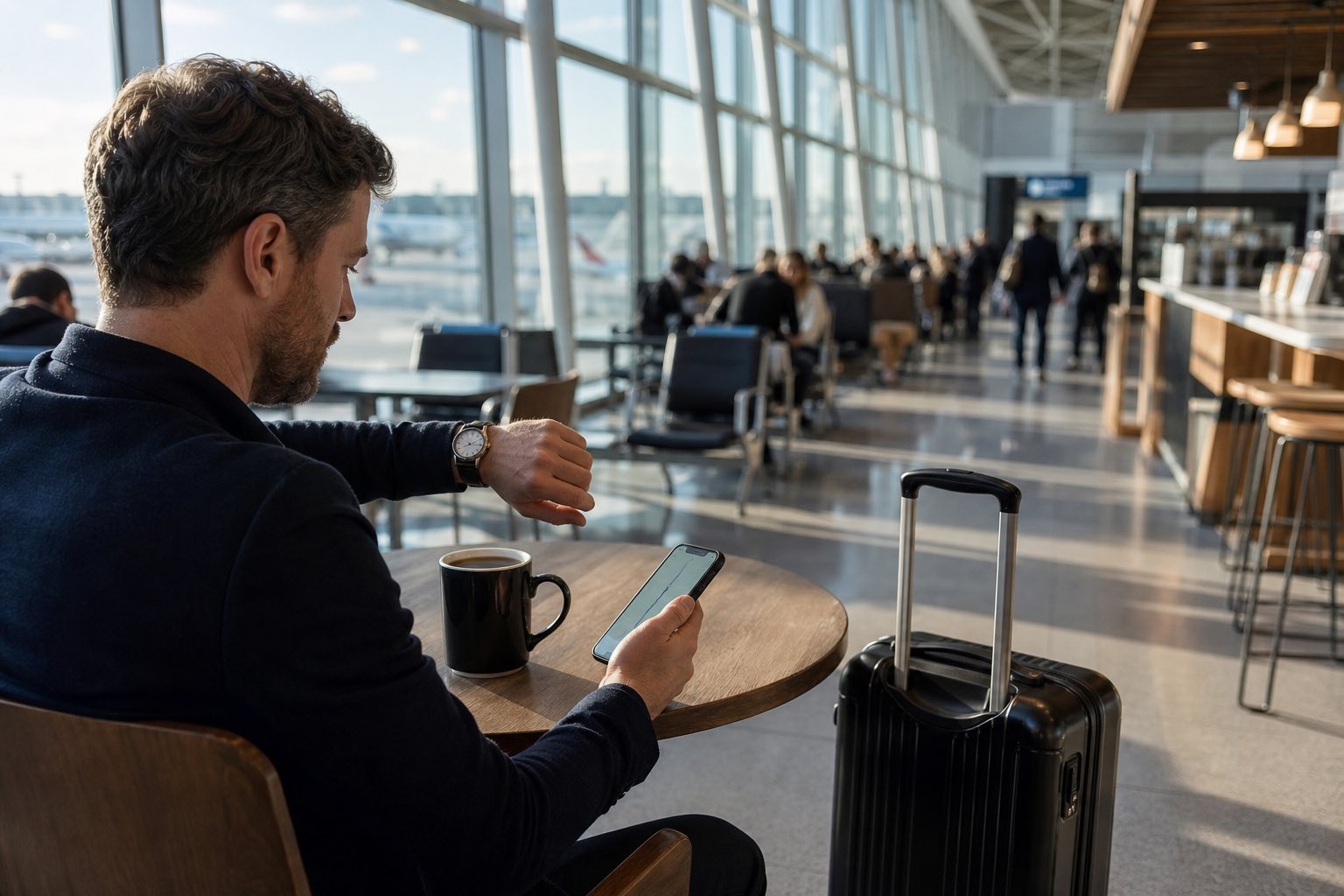
Start with scheduled departure and work backward, not with scheduled arrival and work forward. Mark the airline’s boarding and gate-close information. Add the airport’s recommended security arrival allowance, the time needed to reach the correct terminal, and a personal disruption buffer. Only the time left after those commitments is available for the meetup. If you cannot name the “leave the meetup” time before agreeing, the plan is not ready.
Official airport guidance should outrank generic internet formulas. Heathrow’s connections guide notes that self-connecting passengers may need to collect luggage and repeat check-in, bag drop, and security; it also advises connecting passengers not to leave the airport even during a long wait. In the United States, TSA travel tips encourage travelers to arrive two hours before departure. Those are planning inputs, not guarantees. Your airline, airport, ticket type, accessibility needs, and current operating conditions may require more time.
Use three clocks. The flight clock covers boarding and every airport process still ahead. The route clock covers walking, trains, shuttles, immigration, security, and finding the gate. The human clock covers food, bathrooms, medication, charging, sensory recovery, and fatigue. A date that fits the first two clocks can still be a bad decision if you are exhausted, hungry, or unable to concentrate.
A practical formula is: usable meetup window equals the connection interval minus arrival processing, necessary airport tasks, two-way meetup transit, return-security or border time, the boarding buffer, and a personal contingency margin. This is an assumption-based planning model, not a promise. Write the numbers down and recalculate after landing. If the inbound flight is late, the meetup shrinks or disappears automatically.
Illustrative scenario: Mateo, 28, has an eight-hour connection at Amsterdam Schiphol on one ticket. He originally offers a three-hour canal meetup. After the inbound flight arrives 50 minutes late and the gate changes, his written time budget leaves only 70 minutes outside the airport. He moves the plan to a terminal cafe and tells his match before leaving the secure area. They trade city ideas over lunch and he reaches the gate without rushing.
Choose a terminal meeting point that cannot drift

The best airport meetup venue is boring in the useful ways: public, staffed, easy to identify, close to clear signs, suitable for a short stay, and connected to multiple exits. A named cafe in the public arrivals hall, a hotel lobby connected to the terminal, or a busy food court can work. “By baggage claim” is often too vague, because baggage halls may be restricted or duplicated across terminals. “At the airport bar” is worse when the airport has twenty of them.
Confirm the terminal, level, landside or airside status, venue name, and a recognizable landmark. Share a static meeting point rather than continuous location access. Check opening hours on the airport’s own site, but have a second location in the same public zone in case the first is closed. Avoid parking garages, curbside pickup lanes, remote airport hotels requiring a shuttle, quiet observation areas, and any plan that starts with getting into the other person’s car.
Airport geography changes the feel of the date. A terminal-to-city train can make a distant neighborhood look close on a map while concealing platform waits, walking, ticket purchase, and the return journey. Airport hotels can be a five-minute indoor walk or a 25-minute shuttle away. Budget both time and money: rail tickets, lockers, baggage storage, meals, and unexpected rides can turn a “free” layover into an expensive date.
If you want a more adventurous second meeting later in the trip, save it for a day without a flight connection. Gallivanta’s first travel date planning guide offers formats that can expand once transport and accommodation are settled. During the layover, the airport is not a failure of imagination. It is the boundary that keeps the next adventure possible.
Protect documents, baggage, and the onward flight
Keep your passport, boarding pass, wallet, medication, phone, and essential charging cable on your body or in a bag you control. Do not ask a person you have just met to watch them while you visit a restroom or ticket desk. Do not leave a carry-on in a vehicle or move checked baggage outside the required airline flow just to simplify the date. If the airline cannot confirm whether a checked bag is transferred through, resolve that before meeting anyone.
Separate tickets deserve extra caution. They can create a self-connection in which the traveler bears the risk of delay, baggage collection, a new check-in deadline, and another security screening. Airport and airline rules vary, so verify with the operating airlines rather than relying on a booking screenshot or a stranger’s confidence. Your meetup companion does not need the full boarding pass, booking reference, passport image, or onward accommodation address. Share only the information needed to meet.
Protect the onward flight from social drift as well. Set two alarms: one for wrapping up and one for walking away. When the first alarm rings, pay, use the restroom, and close the conversation. When the second rings, leave. A new person may say security is quick or the gate is close. They do not own the consequences if that guess is wrong.
For a wider safety setup before travel, use Gallivanta’s solo travel dating safety plan alongside a public-first meeting plan before check-in. Both reinforce the same separation: your documents, transport, accommodation, and onward route stay independent from the person you are meeting.
Plan phone data, money, and an independent exit
Airport Wi-Fi is useful but should not be the only way the meetup works. Save the exact meeting point, terminal map, next-flight details, and the route back to security before you leave reliable service. Agree on what happens if messages fail: wait ten minutes at the fixed location, then cancel. That rule prevents both people from roaming across terminals while the clock disappears.
Check whether your roaming or eSIM works in the transit country, not only at the final destination. Keep enough battery for boarding passes, airline notifications, authentication codes, maps, and an emergency call. A compact power bank can help, subject to current airline and security rules. If you use digital boarding documents, save an offline copy when the airline permits it. Do not let a fading battery become a reason to hand your unlocked phone to someone else.
Loving This Travel Dating Safety? Don't Explore It Alone.
Real Gallivanta members are planning trips to Travel Dating Safety right now. Join the community and turn your solo travel dreams into shared adventures.
Join Gallivanta FreeBudget a firm maximum for the meetup. Airport prices, transit fares, luggage storage, and currency conversion can create pressure to accept a ride or let the other person pay for everything. A coffee or simple meal with separate payment is easier to end than a prepaid city tour. Keep a payment method that works independently and know the route to airline or airport staff if the plan changes.
Fatigue changes judgment. The CDC’s 2026 Yellow Book guidance on jet lag describes sleepiness, cognitive impairment, malaise, and gastrointestinal symptoms among possible effects, and recommends hydration while noting that excess alcohol can worsen the experience. That does not mean every traveler is impaired after a flight. It means you should treat your actual alertness as a go/no-go input, not something to push through for politeness.
Women and higher-risk travelers should use a stronger airport frame
Women, LGBTQ travelers, disabled travelers, people traveling with visible valuables, and anyone facing higher risk from harassment, discrimination, outing, or mobility barriers should strengthen the public frame. Use a location within sight of airport or hotel staff. Keep the date short and sober. Tell a trusted person the public meeting point and your scheduled return-to-security time. If sharing live location is useful, limit it to a trusted contact and turn it off afterward.
Accessibility can change the time budget materially. Security assistance, lifts, inter-terminal transport, medication needs, sensory breaks, and boarding support all deserve protected time. Schiphol’s transfer assistance guidance notes that assisted transfers take time and recommends more than 1.5 hours for that process. Use the specific airport and airline assistance guidance for your trip; never spend an accessibility buffer on the meetup.
Keep the first plan away from cars, parking structures, smoking areas, isolated lounges, and airport hotels that require private transport. Do not reveal the next hotel, home address, room number, full itinerary, or the fact that nobody expects you at a certain time. A public terminal can feel secure while still containing quiet zones and fast exits. The safer plan is defined by your access to help and your ability to leave, not merely by the airport label.
Pressure is a compatibility signal. If someone mocks the short window, asks you to ignore airline guidance, insists on picking you up, pushes alcohol, or argues about a public venue, cancel. Gallivanta’s guide to dating safely as a solo female traveler goes deeper on boundaries for women, while its broader principles remain useful to any traveler whose risk or visibility is higher in the destination.
Illustrative scenario: Aisha, 35, uses wheelchair assistance during a seven-hour Frankfurt connection. A person she met online proposes an airport-hotel drink. Aisha confirms that the hotel shuttle and security return would consume her protected assistance window, so she selects a staffed landside restaurant inside the terminal and limits the meeting to 40 minutes. When the other person arrives late, she leaves at the preset time. The concrete outcome is an on-time assisted transfer, not a rushed goodbye.
Scripts that keep a layover meetup clear and warm
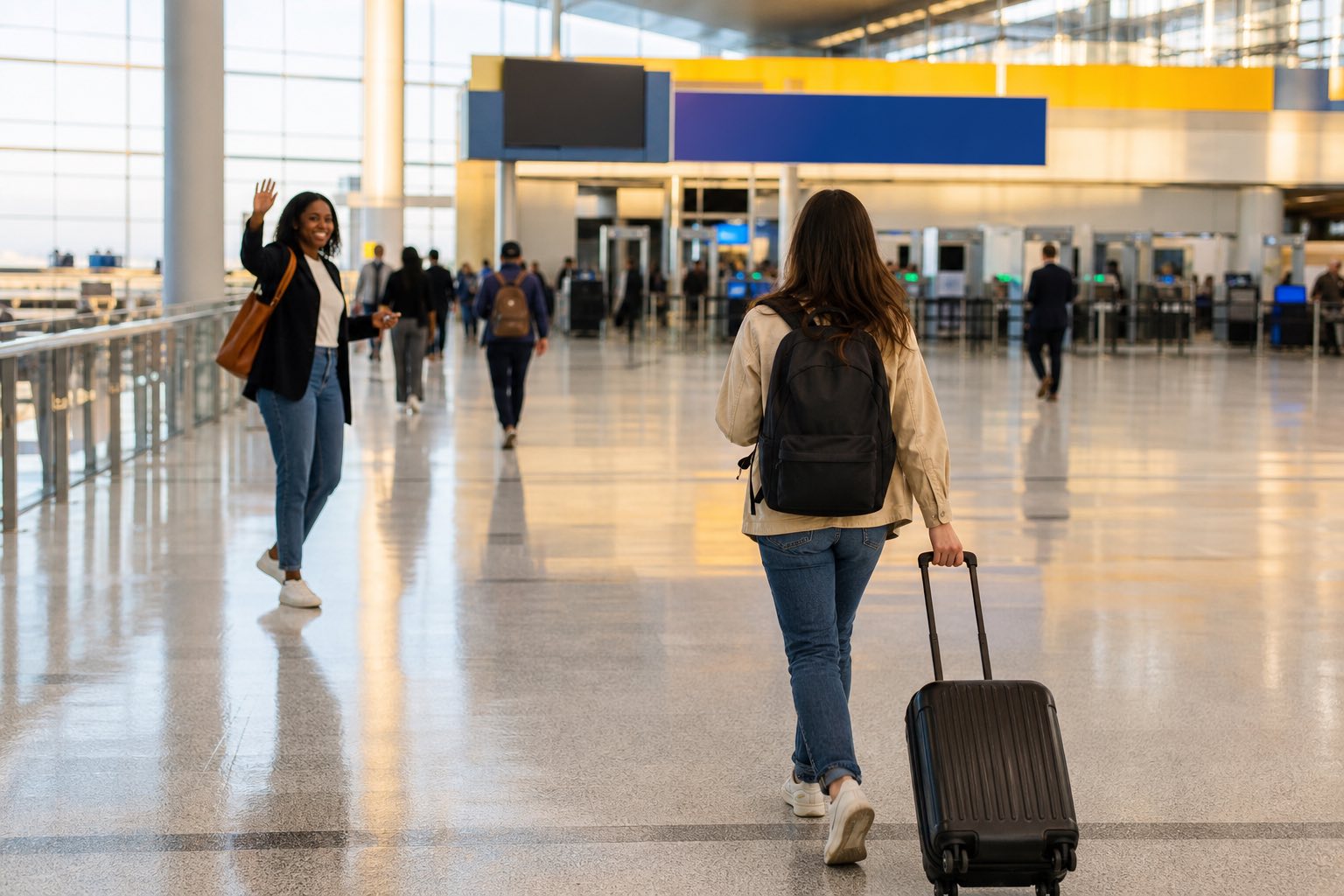
Good scripts name the opportunity and the limit in the same sentence. Try: “I have a long connection, but I will confirm only after I land and check the next gate. If the timing holds, I can do 45 minutes at the public arrivals cafe in Terminal 2.” This sounds interested because it is interested. It also prevents the other person from treating scheduled arrival as a promise.
For a landside plan, try: “I can meet only if immigration and security leave enough buffer. The flight wins if anything runs late.” For a local pickup offer: “Thank you, but I keep airport meetups inside the terminal and use my own transport.” For an airside mismatch: “It looks like our boarding passes do not give us access to the same zone, so let’s save it for another trip.” For a delayed arrival: “My usable window disappeared, so I am canceling rather than rushing the connection.”
If chemistry is strong, close with a future plan rather than extending the current one. “I need to go to the gate now, but I would like to meet properly when I am back in the city” protects both the flight and the spark. Gallivanta’s travel meetup exit strategy has more language for leaving cleanly, and its solo travel conversation starters can help a short meeting feel specific without turning into an interview.
Illustrative scenario: Eli, 26, has a ten-hour connection in Singapore and plans a public meal near the airport with a traveler whose route overlaps. The inbound flight is on time, but heavy rain slows ground transport. Eli sends the preset cancellation message instead of gambling on the city. They move the conversation online and arrange breakfast during a future two-night stop. The plan succeeds because cancellation was built into it.
Keep connection travel-first, even when the chemistry is real
A long layover meetup is successful when both people leave with their autonomy intact. That may mean a good conversation and no second date. It may mean a future plan. It may mean canceling before either person reaches the meeting point. Success is not measured by how much of the connection you fill. It is measured by whether the meetup adds to the trip without taking control of it.
Route and intent context help people make that decision early. If you are seeking connection specifically with travelers, Gallivanta’s solo travel dating approach keeps the adventure as the frame. If the connection is social rather than romantic, its guide to meeting people while traveling solo offers practical ways to connect without forcing every interaction into a date.
Do not promise access you may not have, time you have not calculated, or energy you may not feel after landing. Confirm late, meet publicly, leave early, and let a second meeting carry the possibility. A short airport coffee with honest limits can show more compatibility than a dramatic city sprint built on wishful timing.
Long layover meetup decision checklist
Run this checklist twice: once before the trip and again after the inbound flight lands. The second check is the one that authorizes the meetup. If a condition changes, shrink, move, or cancel the plan without debate.
- Entry: Am I legally allowed to go landside for this purpose, based on my nationality and itinerary?
- Ticket: Is this one protected connection or a self-connection with new baggage and check-in obligations?
- Terminal: Do I know the arrival terminal, departure terminal, meeting zone, and return route?
- Clock: Have I protected airline cutoffs, security, border control, accessibility needs, and a disruption buffer?
- Baggage: Do I know whether my checked bag transfers, and can I control every carry-on and document?
- Venue: Is the location public, staffed, easy to name, and easy to leave without a car?
- Phone: Do I have working data or an offline plan, battery, saved maps, and airline alerts?
- Money: Can I pay for the meetup and return route without depending on the other person?
- Safety: Does a trusted contact know the public location and my return-to-security time when appropriate?
- Energy: Am I alert enough to navigate, communicate boundaries, and handle a gate or terminal change?
- Exit: Have I set the wrap-up alarm and the non-negotiable walk-away time?
- Fallback: Is cancellation the automatic outcome if the inbound flight, border queue, weather, or venue changes?
Say yes only when every flight-critical item is resolved. Move the meeting inside the terminal when city transit or border steps make the plan fragile. Cancel when documents are uncertain, the useful window is short, the other person resists a public boundary, or your body is asking for food, water, medication, quiet, or sleep. The onward route is not competing with connection; it is the reason the connection exists.
Sources and review boundaries
This guide uses official and industry-primary information from the IATA Travel Centre, the U.S. State Department transit visa page, TSA travel guidance, Heathrow’s official connections guidance, Schiphol transfer assistance guidance, and the CDC Yellow Book jet lag chapter. These sources support the document, connection, security, accessibility, and fatigue considerations described above.
Airport operations, visa rules, security queues, terminal layouts, and airline cutoffs can change. This article is general planning advice, not immigration, legal, medical, airport, or airline authorization. Verify the current rules for your nationality, tickets, airlines, airports, and date of travel. The named traveler examples are invented composites and are labeled “Illustrative scenario”; they are not testimonials, customer stories, or firsthand reports.
FAQ: Long layover meetup plan
How long should a layover be before I plan a meetup?
There is no universal minimum. Calculate the usable window after arrival processing, baggage, terminal changes, immigration, two-way transit, return security, airline cutoffs, accessibility needs, and a disruption buffer. If the remaining time does not support a calm public meeting, do not schedule one.
Can I leave the airport during a long layover meetup?
Only if your documents and itinerary permit entry, your airline and baggage process allow it, and the time budget remains safe. Check official immigration, airline, and airport guidance for your exact route. A transit permission does not always authorize leaving to visit someone or sightsee.
Can a local person meet me airside?
Usually not without valid access to the same restricted zone, and ticketed travelers can still be separated by terminals or border controls. Confirm the airport layout and access rules. A public landside arrivals cafe is usually more practical when one person is not flying.
What is the safest place for a long layover meetup?
Choose a staffed, well-trafficked, easy-to-name venue in a public terminal zone or directly connected airport hotel lobby that does not require private transport. Keep documents and bags with you, control your return route, and set a fixed leave time.
Should I share my flight number with the person I am meeting?
You can share a limited arrival update if it helps coordination, but you do not need to share a boarding pass, booking reference, passport image, full itinerary, or accommodation details. A fixed meeting point and a confirm-after-landing rule are usually enough.
What should I do if my inbound flight is delayed?
Recalculate from the onward boarding time. Shrink the meeting only if a calm, public window remains; otherwise cancel automatically. Do not spend the security, border, accessibility, or contingency buffer to preserve the date.

Fact-checked | Safety reviewed | Updated August 10, 2026
Ready to Meet Your Next Travel Date?
You've got the destination, the vibe, and the courage to go solo. Now all you need is someone who gets it. Join Gallivanta and meet fellow travelers who believe the best chapters start with a one-way ticket.
Join Gallivanta Free