Your Next Adventure Could Change Everything
Join thousands of adventurous women who've discovered that the best travel stories often include a plot twist.
Start Your Adventure – Join Free
✓ Free to join ✓ No credit card required ✓ Join 50,000+ travelers
A travel date reporting and blocking plan is the rule that you save the thread, stop contact, and file the report from a safe place. It does not require another meetup to explain, apologize, or collect a refund. Coordination for a first hour needed a public pin and a time. A report needs a copy of what happened. It does not need a new pin.
Gallivanta’s travel-first position is adventure first, sparks welcome, traveler control intact. Reporting is one of the controls. A good hour can end in a simple goodbye. A bad hour can end in a saved thread, a block, and a report. It does not need to end in a second meeting.
Published and reviewed: October 21, 2026
This plan sits beside your message channel plan, your personal info boundary, your emergency and consular plan, your check-in protocol, and your follow-up plan. The message channel keeps the first thread in a place you can still report. The personal info guide says reporting is a practical step, and that it is not an apology. This page is the plan those lines belong to.
Keep four truths separate. Facts below are what official pages say about stopping contact, saving records, and where to report, checked for this article on October 21, 2026. Examples are illustrative composites for teaching, not testimonials and not reports about real guests. Assumptions are personal risk tolerances that differ by traveler, city, and passport. Advice here is operational hygiene after a short public meetup goes wrong, or before you agree to a meetup that already feels wrong. It is not a guarantee of safety, not legal advice, and not a substitute for local emergency services.
- → Why a reporting plan matters
- → Separate three kinds of ending
- → Save a copy before you block
- → Stop contact, and do not meet again
- → Report on the app, then block
- → Report money to the company and your government
- → Hang up on recovery callers
- → Tell a trusted contact, not the match
- → Strengthen the plan when risk is higher
- → Recognize reporting red flags
- → Use calm reporting scripts
- → Run the action checklist
- → Review sources and boundaries
- → Read the FAQ

Why a reporting plan matters on a travel date
Travel dating compresses the usual exits. You may have matched yesterday, had coffee this afternoon, and be holding a phone full of messages while you still need to find the metro. In that window, “one more meetup so I can explain” can sound polite. It can also be how a public hour becomes a private one, or how a money request gets a second chance.
Other Gallivanta guides mention the report in a sentence. The message channel plan says that after you are home you may block, report, or continue, and that you should do that from your lodging rather than the sidewalk. The verification checklist is the screen you run before you meet. The pre-landing safety plan says blocking and reporting tools are more useful before you hand over a phone number. None of them is the reporting plan itself. This page answers the practical question: what do you save, where do you send it, and what do you refuse while you do that?
Reporting here is not a speech. It is the same hygiene you already use for a closed cafe or a missed train. You can be warm on a good hour and finished on a bad one. A respectful person can hear “I am ending contact” and stop. Pressure to meet again so you can deliver the ending in person is information about access, not about closure.
Keep four layers separate. Safety now asks whether you need local emergency services before any form. The record asks whether you have a copy of the profile, the thread, and any receipt. The app asks whether the place you met still has a report and a block. Your government asks whether money, identity documents, or a crime also belong on an official report. A match does not get to manage any of those layers for you.
Separate an uncomfortable hour, a crime, and a money scam
One word, “report,” covers three different jobs. Mixing them up is how people either file nothing, or walk back into a bad plan in order to feel thorough.
- An uncomfortable hour. The person argued about the pin, mocked a boundary, or made you want to leave. You can end the date, block, and report the profile on the app. RAINN’s safer-dating guidance, updated on that page May 31, 2026, says that if something makes you uncomfortable, stop communicating, block the person, and report troubling behavior. It also says nothing you do, or do not do, can prevent another person’s predatory actions or guarantee your safety. An uncomfortable hour does not require a fraud filing to be a complete ending.
- A crime in progress, or a threat you believe. Leave if you can. Use staff at the venue. Contact the local emergency number. The emergency and consular plan is the card for that call. A website form comes after you are safe. The FBI’s Internet Crime Complaint Center says that if you or someone else is in immediate danger, call 911 or your local police. 911 is the number on that U.S. page. Outside the United States, use the local emergency number you already saved.
- A money scam. The ask is a wire, a gift card, a payment app, cryptocurrency, a visa fee, a medical bill, or a ticket. Stop. Save the thread. Tell the company that moved the money if it already moved. Then use the fraud report for your own country, below. The budget plan still pays for your own coffee. The follow-up plan treats a later money request as its own event. This page is what you do with the record.
The U.S. Federal Trade Commission’s romance-scam guide describes a common pattern: someone you met on an app wants to move off the platform, builds trust, and then asks for money for a ticket, a medical emergency, a visa, or an investment. The guide’s bottom line is specific: never send money or gifts to a sweetheart you have not met in person. A single public coffee does not retire that caution when the next message is a payment. Report the ask. Do not send the payment to seem fair.
The Competition Bureau of Canada, on its page about how to report fraud and scams in Canada, says the Canadian Anti-Fraud Centre estimates that less than 5% of the total number of fraud victims report their experiences to law enforcement agencies in Canada. That figure is the Centre’s estimate, as quoted by the Bureau. It is not a dating-app statistic, and it is not a promise that your report will be investigated. It is a reason to file anyway, so the pattern is on the record.
Save a copy before you lose the thread
Before you confirm any meetup, you already know the public pin, the start, and the end. If the hour goes wrong, that same note is the start of the report. Add the profile name, the app, and what the person asked you to do. Do the saving while you can still open the conversation.
| Enough for the record | Stays out of the packet |
|---|---|
| Profile name, app, and the date of the public pin | Your hotel, room, hostel, or door code |
| Screenshots of the ask, the threat, or the public plan | A new photo of your passport, visa, or boarding pass |
| Receipts if money moved, kept with the thread | A second payment “so they can refund the first” |
| A note to your trusted contact that the plan is off and you are safe | A new meetup pin sent so you can explain in person |
Canada’s reporting steps start the same way: write down the name, what the person wanted, and when it happened, and keep screenshots, messages, and receipts in a safe place. The Competition Bureau says that material may matter if there is an investigation. You do not need a legal opinion to save it. You need it before a block, a deleted app, or a dead battery takes the thread with it.
Store the copy where the match cannot see it. A note in the same dating thread is not a copy. A photo of your passport “to prove the story” is not a copy. Your photo privacy plan already keeps documents out of the frame. The reporting plan uses the same line: the record is about their conduct, not about your papers.
Illustrative scenario A, the refund that needed another pin: A traveler in Mexico City ends a first coffee after the match asks for a transfer to replace a stolen wallet. The match then offers to fix it at an apartment nearby. She does not send a new pin. She saves the thread, leaves on the metro she already planned, and files the report from her room. Dating in Mexico City can help you choose a public area before you go. It is not a reason to meet again so someone can explain a payment.
Stop contact, and do not meet again to deliver the report
The FTC romance-scam guide tells people who suspect a scam to stop communicating with the person immediately, and to talk to someone they trust. Use that order. The report can be filed without the match in the room. A second meetup to “clear the air,” return cash, or watch you press report is a new plan, with a new route and a new risk.
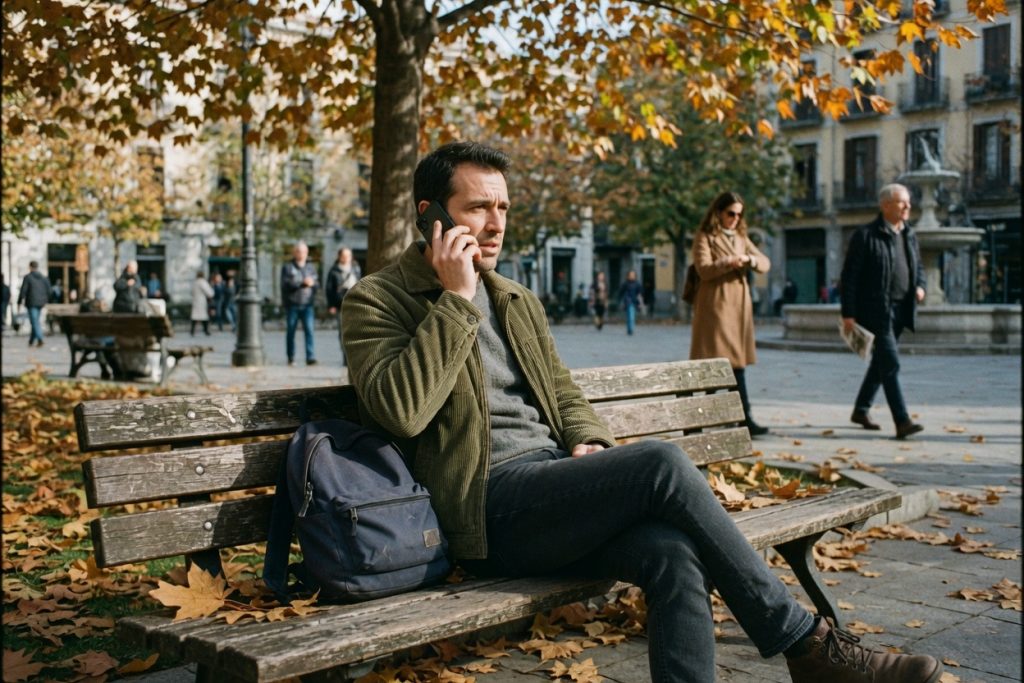
If you are still at the venue, leave the way your exit strategy already describes: a warm, short ending, then your own route. If the situation is past a short ending, skip the speech. Move toward staff, then toward the station or the ride you already paid for. Your transportation plan is why that ride does not depend on the person you are reporting.
Do not delete the thread to feel finished, and do not hand the phone over so they can “read what you will report.” The phone stays in your hand, which is the same rule as your phone and data plan. A link they send labeled as a report form is not the form. Open the app yourself, or type the official address yourself.
RAINN’s in-person guidance says you can end a date when you feel uncomfortable, that you do not owe politeness when your safety is at risk, and that if a date is pressuring you or scaring you, that is not your fault. You are not required to correct their behavior in person before you are allowed to report it.
Report on the app while you can still open the profile
Report on the service where you met, then block. The FTC says to notify the app or site where you met the person. RAINN says dating platforms typically offer protections and reporting tools you will not find on other channels, and it says to report requests for money to the app or website you are using. Australia’s eSafety Commissioner, in its online dating guide, says to check that your dating app has a straightforward way to report and block someone. The UK’s Report Fraud romance-fraud page says to report anyone who asks for money to the dating service immediately.
Save your copy first. You may not be able to open the profile after you block. If the app’s own help tells you to block before the report will send, follow that help, and keep the copy you already saved. Do not take the order from the match.
On Gallivanta, report and block are separate controls in the conversation. The report form asks you to choose a reason: inappropriate behavior, fake profile or scam, harassment, spam, or other. Details are optional. Use the reason that matches what happened, and put the public pin and the ask in the details if you want them on the record. A submitted report is stored for review and the site admin is notified. It is not a police report, and it does not move money back.
Travelers who use Gallivanta to find travel-first connections still keep this plan. The product can hold the first thread and the report. It does not need your hotel, your passport, or a second meetup to make the report real.
If the messages have already moved to a phone number, report on the original app anyway if the profile is still there, and stop answering the number. Your message channel plan is why the original thread mattered. Blocking on the app does not erase a number you already gave. That is a reason to keep the number off the first meetup, not a reason to meet in order to get it back.
If money moved, call the company, then your own government
A platform report does not reverse a transfer. If you paid, contact the company or bank that moved the money and say it was a scam. Ask whether a refund is possible. Do this before you spend the afternoon rewriting the story for the match.
United States. The FTC’s What to Do if You Were Scammed page says the money might already be gone, and that it is still worth asking the company you used. It separates the first call by how you paid: your bank or credit union for a bank transfer, the payment app for an app payment, the wire company for a wire, the card issuer for a card, the gift-card company for a gift card, and the exchange or ATM operator for cryptocurrency. If you mailed cash inside the United States, that page points you to the U.S. Postal Inspection Service at 1-877-876-2455, and it says that, for a fee, the service can intercept a domestic shipment that has not been delivered. Then report the scam at ReportFraud.ftc.gov. The FTC says those reports help it build cases against scammers, spot trends, educate the public, and share what is happening in your community. For internet-enabled fraud, the FBI’s Internet Crime Complaint Center says to file a report even if you are unsure whether your complaint qualifies, and that IC3 is the central hub for reporting cyber-enabled crime. IC3 also says it will never directly contact you for information or money.
United Kingdom. Report Fraud says that if you have made a payment, tell your bank as soon as possible so they can help you prevent further losses, and monitor your statements. Report romance fraud to Report Fraud on 0300 123 2040 or through its reporting hub. If you are in Scotland, report to Police Scotland on 101. The same page says you are not to blame, and it lists Victim Support at 08 08 16 89 111.
Loving This Travel Dating Safety? Don't Explore It Alone.
Real Gallivanta members are planning trips to Travel Dating Safety right now. Join the community and turn your solo travel dreams into shared adventures.
Join Gallivanta FreeCanada. The Competition Bureau’s order is concrete. Gather the record. Report to local police, and it says this matters especially if you lost money. Keep any file number. Contact the Canadian Anti-Fraud Centre’s fraud reporting system or call 1-888-495-8501. Tell the financial institution that transferred the money. Notify the website where it happened. The Centre’s own site, checked the same day, says it collects information on fraud and identity theft.
Any other passport. Use your own government’s fraud-reporting page, and use local police where a theft, a threat, or an assault happened. Do not borrow a U.S., UK, or Canadian form because it was easy to find. If you gave someone a U.S. Social Security number, the FTC points you to IdentityTheft.gov. If what you shared was a passport, follow your own government’s lost-passport steps and do not send another photo of it to the match. The emergency plan explains what a consulate can and cannot do. A consulate is not the fraud desk, and it is not a substitute for the local emergency call.
Illustrative scenario B, the fee that would release a refund: After a wire, a new account messages a traveler and claims to be a recovery agent who needs a fee before the refund can move. She does not pay, and she does not open the link. She tells the bank that sent the wire, and she reports the new message through the same official channel as the first ask. The fee was the second scam. The refund story was the bait.
Treat a recovery offer as a new scam
After a loss, a second stranger often arrives with good news. Official pages are blunt about that pattern.
- The FTC says it will never threaten you, tell you to transfer money to “protect it,” or tell you to withdraw cash or buy gold and hand it to someone. Report that contact at ReportFraud.ftc.gov.
- IC3 says it does not work with non-law-enforcement entities, such as law firms or crypto services, to recuperate lost funds or investigate cases. It says it will never directly contact you for information or money. If someone claims to work with IC3, file a complaint and include the website link.
- The Canadian Anti-Fraud Centre says fraudsters impersonate the Centre, promise to recover money, and then ask for personal and financial information. It says the Centre does not contact individuals to request money.
- Report Fraud says fraudsters sometimes contact previous victims and claim they can get the money back. Hang up on callers who say that.
A refund that requires a gift card, a crypto transfer, or your passport photo is not a refund. Save that message too. Do not send a reply that argues the point for an hour. Silence, plus the official report, is the whole response.
Tell a trusted contact that the plan is off
Someone who loves you and someone you are reporting do not get the same packet. Your check-in protocol already has a contact and a time. Send them a short update: the meetup is off, you are safe, and you do not need them to message the match. If you had shared a live dot, turn it off when you said you would, which is the split in your location sharing plan.
Do not forward the dating thread into a group chat the match can see, and do not include your lodging in the update. The contact may hold the property name from the earlier plan. The report does not require you to repeat it. If you are in immediate danger, contact local emergency services first. A trusted contact is not that call.
RAINN tells people who experience sexual violence that it is not their fault, and its U.S. page says to call 9-1-1 for emergency responders and to reach RAINN’s National Sexual Assault Hotline. That hotline is a U.S. resource. Travelers elsewhere use the local emergency number and local support, then a consular contact only for the help that office actually provides.
Strengthen the plan for women and higher-risk travelers
The same rules apply to every traveler. Women, LGBTQ+ travelers, and anyone whose identity or mobility draws more harassment often meet the “come back and explain” demand sooner, because a report threatens the access they were testing. Gallivanta’s guides on dating safely as a solo female traveler and solo travel safety for women expand the wider context. The reporting layer is specific:
- Do not confirm that you are alone, where you are sleeping, or that you are scared to file. “The meetup is over” is enough.
- Do not agree to a shorter meeting at their lodging as the price of not reporting. A skipped report is allowed. A private door is not the fee for it.
- Keep the walk to transit inside the route you already chose, in the daylight window you already set, as in the travel dating safety overview.
- If a threat names a photo, do not pay, and do not send a clearer one. Save the message. The photo privacy plan is the companion for that threat.
- If saying a long explanation feels unsafe, send one line, or send none. You do not have to win the thread.
Higher risk changes the margin. It does not change the right to stop. A match who mocks the report is showing you how they handle a no.
Illustrative scenario C, the threat after a no: A traveler in Bangkok declines a walk to a residence. The next messages threaten to post a photo and to show up. She does not answer with her hotel. If she is still at the cafe, she moves toward staff, then to the station she already mapped, and she contacts local emergency services if she believes the threat is happening now. The report is filed after she is off that sidewalk. Dating in Bangkok is a list of public ideas. It is not a place to negotiate with a threat.
Recognize reporting red flags
Leave the conversation when the ending becomes another ask. Concrete versions:
- A demand to meet once more so they can explain, apologize, or return money in person
- A second payment, gift card, or crypto transfer that would “unlock” a refund
- A new account offering recovery, especially one that claims to be the FTC, IC3, a law firm working with IC3, or the Canadian Anti-Fraud Centre
- Pressure to delete the thread before you have saved it, or to open a report link they sent
- A request for your passport, a booking screenshot, or your bank login as part of the report
- Anger, guilt, or a threat when you say you will block and report
- A plan that only works if you stay on the sidewalk and keep talking
One awkward apology can be a miss. A pattern after a clear stop is the signal. You do not owe a second explanation. The verification checklist already treats respect for a boundary as part of the screen. Use it before you are standing outside a door you agreed to visit “just to finish the conversation.”
Scripts that end the thread without a new pin
Short lines are easier to send when you are tired. Adapt nothing about the boundary. You can send one line and then stop reading.
- The stop: “I am ending contact. I will not meet again, and I will not send money.”
- The second pin: “I do not have another meeting point. This conversation is over.”
- The recovery fee: “I do not pay anyone to recover a payment. I am using the official report.”
- The photo threat: “I do not pay for photos. I am keeping this message.”
- The trusted contact: “The meetup is off. I am safe. I am not sending a new location.”
- The silence: After that line, you do not debate it. The message channel plan already treats silence as a complete answer when someone punishes a boundary.
If you want introductions with people who already expect a public first hour, look through Gallivanta’s meet-travelers path. The product does not replace the saved thread, the block, or the decision to skip a second meetup.
Travel date reporting and blocking action summary
Run this before you answer a message that feels wrong, and again before you leave the venue if the hour already went wrong.
- If you are in immediate danger, call the local emergency number before any form. Outside the United States, do not assume 911 is that number.
- Stop contact. Do not agree to another meetup to explain, apologize, or collect money.
- Save the profile name, the app, the date, the public pin, screenshots, and any receipt in a note the match cannot see. Leave out your hotel, passport, and door code.
- If money moved, contact the company or bank that moved it and ask about a refund. Do not send a second payment.
- Report on the app while you can still open the profile. On Gallivanta, choose the reason and add details if you want them, then block.
- File the report your own country publishes. U.S. travelers can use ReportFraud.ftc.gov and IC3. In the UK, use Report Fraud on 0300 123 2040, or Police Scotland on 101. In Canada, use local police if money was lost and the Canadian Anti-Fraud Centre at 1-888-495-8501. Other travelers use their own government’s page.
- Tell a trusted contact that the plan is off and that you are safe. Do not send your lodging, and do not ask them to argue with the match.
- If someone later offers to recover the money, do not pay. Save that message and report it through the same official channel.
- If the hour was uncomfortable, you are safe, and no money and no crime are involved, you can block, report on the app, and stop.
Then use the rest of the day for the trip you already had. A saved thread and a closed conversation can exist on the same afternoon. That is the whole plan.
Sources, facts, and review boundaries
This guide is practical planning for solo travelers who need to end a contact, save a record, and report. It is not legal advice, a criminal investigation, or a guarantee of safety. Reporting tools, emergency numbers, and refund rules vary by country, app, and payment type, and they change. Verify the form, the phone number, and your bank’s process on the day you need them.
The images in this package are illustrations created for this Gallivanta article. They are not photographs of a real meetup or a real traveler.
Gallivanta encourages traveler control, public-first first meetings, and proportionate boundaries. No checklist can certify another person’s intent, and no report can undo an hour that already happened. Use this plan so adventure and connection remain choices you can revise. Editorial standards for how Gallivanta separates reporting, composites, and product mentions are on the editorial standards page and the why trust us page.
Official guidance worth reading before you treat “meet me once more” as the way to file a report:
- U.S. Federal Trade Commission: What to know about romance scams
- U.S. Federal Trade Commission: What to do if you were scammed
- ReportFraud.ftc.gov
- FBI Internet Crime Complaint Center (IC3)
- IdentityTheft.gov
- Report Fraud (UK): Romance fraud
- Competition Bureau of Canada: How to report fraud and scams
- Canadian Anti-Fraud Centre
- RAINN: Tips for safer dating, online and in person
If you are in immediate danger, contact local emergency services. Platform reporting and official consumer reporting channels matter after you are safe. A recovery caller who asks you to pay is a new report, not a shortcut.
Editorial review date: October 21, 2026.
FAQ: travel date reporting and blocking
Should I meet them again so I can report it in person?
No. Stop contact once you are safe. A second meetup to explain, apologize, or collect a refund gives them another hour and another place to find you. Save the thread, report it from where you already are, and do not send a new pin.
Should I block someone before I report them?
Save a copy of the profile name, the thread, and any receipt before you block. Report on the app while you can still open the profile, then block. If that app’s own help says to block first, follow the help, and keep the copy you already saved.
What if I already sent money?
Contact the company or bank that moved the money and ask whether a refund is possible. The U.S. Federal Trade Commission says the money may already be gone, and it tells you to report the scam at ReportFraud.ftc.gov. Do not send a second payment to unlock a refund. In the UK, Report Fraud says to tell your bank as soon as possible. In Canada, the Competition Bureau says to tell the institution that transferred the money and to contact police if you lost money.
What if they threaten to share my photos?
Do not pay for silence, and do not send a more private photo. Save the threat, report it on the app, and block. The photo privacy plan covers what to keep out of the frame. If you are being threatened right now, contact local emergency services before you fill out a form.
Who do I report to if I am outside my home country?
If you are in immediate danger, use the local emergency number. The FBI’s IC3 page says that if you or someone else is in immediate danger, call 911 or your local police. 911 is the U.S. number on that page. U.S. travelers can also report a romance scam at ReportFraud.ftc.gov and file a cyber-enabled complaint at ic3.gov. In the UK, Report Fraud takes reports on 0300 123 2040, and people in Scotland report to Police Scotland on 101. In Canada, the Competition Bureau points you to local police when money was lost and to the Canadian Anti-Fraud Centre at 1-888-495-8501. If your passport is from somewhere else, use that government’s fraud-reporting page. A consulate does not replace the local emergency call.
What if the date was uncomfortable, but nothing illegal happened?
You can still leave, block, and report the profile. RAINN says that if a date is pressuring you or making you feel unsafe, you can end the date, and that this is not your fault. A fraud report is for a scam or a payment. An uncomfortable hour can be an app report without becoming a police case. You do not owe anyone a second coffee to justify stopping.

Fact-checked | Safety reviewed | Updated October 21, 2026
Ready to Meet Your Next Travel Date?
You've got the destination, the vibe, and the courage to go solo. Now all you need is someone who gets it. Join Gallivanta and meet fellow travelers who believe the best chapters start with a one-way ticket.
Join Gallivanta Free