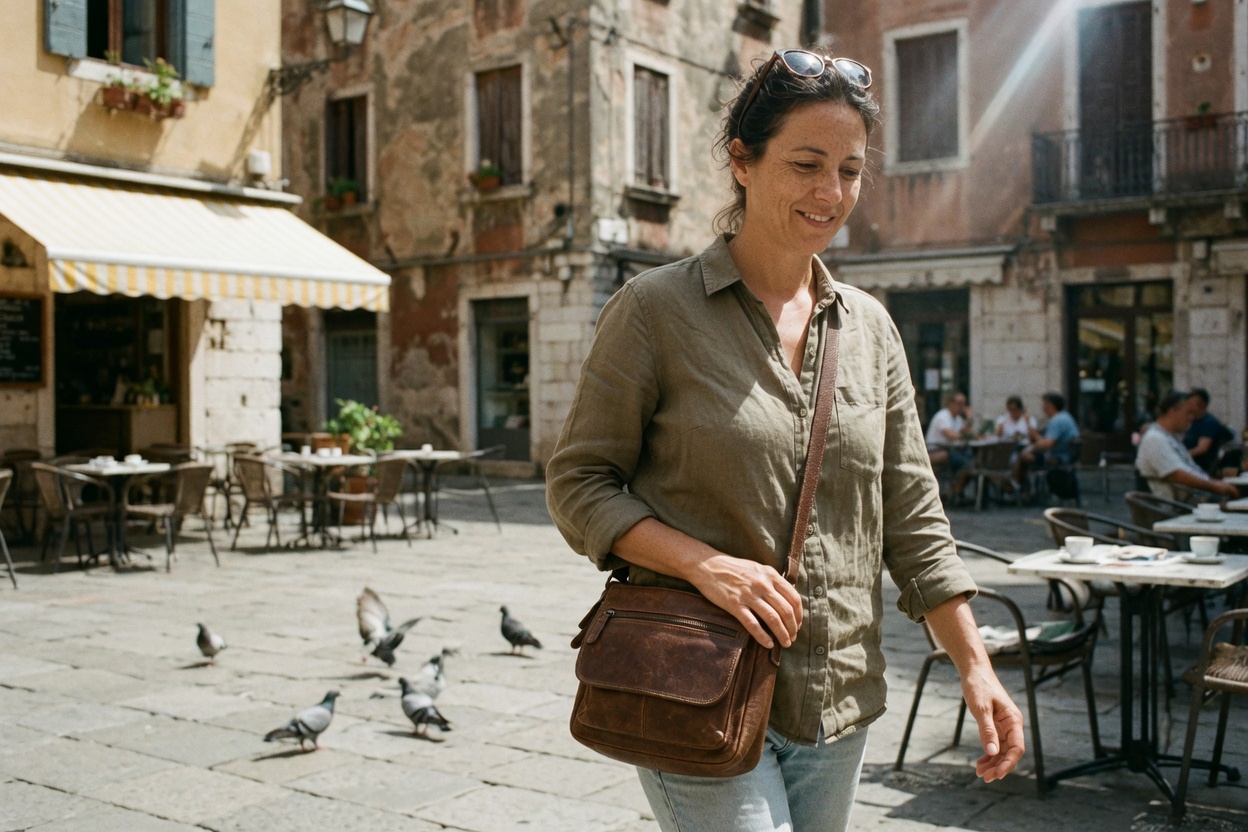
Your Next Adventure Could Change Everything
Join thousands of adventurous women who've discovered that the best travel stories often include a plot twist.
Start Your Adventure – Join Free
✓ Free to join ✓ No credit card required ✓ Join 50,000+ travelers
A travel date passport and bag plan is the rule that your passport, the copies of it, your wallet, and your day bag stay with you. Coordination needs a public pin and a time window. It does not need your documents, and it does not need someone else to hold the bag while you step away.
Gallivanta’s travel-first position is adventure first, sparks welcome, traveler control intact. The bag is one of the controls. A good conversation can happen at a staffed cafe with your strap in your hand. It does not need to begin with a passport photo, a wallet on the table, or a stranger watching your things.
Published and reviewed: October 19, 2026
This plan sits beside your pre-landing safety plan, your phone and data plan, your budget plan, your photo privacy plan, and your emergency and consular plan. The pre-landing guide already says, in one sentence, not to let a stranger hold your passport, bag, phone, or wallet while you step away. The phone plan owns the phone. This page owns the passport, the bag, and the wallet.
Keep four truths separate. Facts are what official pages actually say about copies, stolen passports, distraction theft, and safer dating, with the sources linked below. Examples are illustrative composites for teaching, not testimonials and not reports about real guests. Assumptions are personal risk tolerances that differ by traveler, city, and whether that day’s destination page says to carry the original. Advice here is operational hygiene for a short public meetup. It is not a guarantee of safety, not legal advice, and not a substitute for your destination’s local rules or for local emergency services.
- → Why the passport and bag plan matters
- → Decide what stays with you
- → Separate copies from the original
- → Keep the bag and wallet when you step away
- → Refuse distraction tricks and other people’s bags
- → Do not trade documents for a bill or for proof
- → Split what a trusted contact may hold
- → Strengthen the plan when risk is higher
- → Recognize passport and bag red flags
- → Use calm passport and bag scripts
- → Run the action checklist
- → Review sources and boundaries
- → Read the FAQ
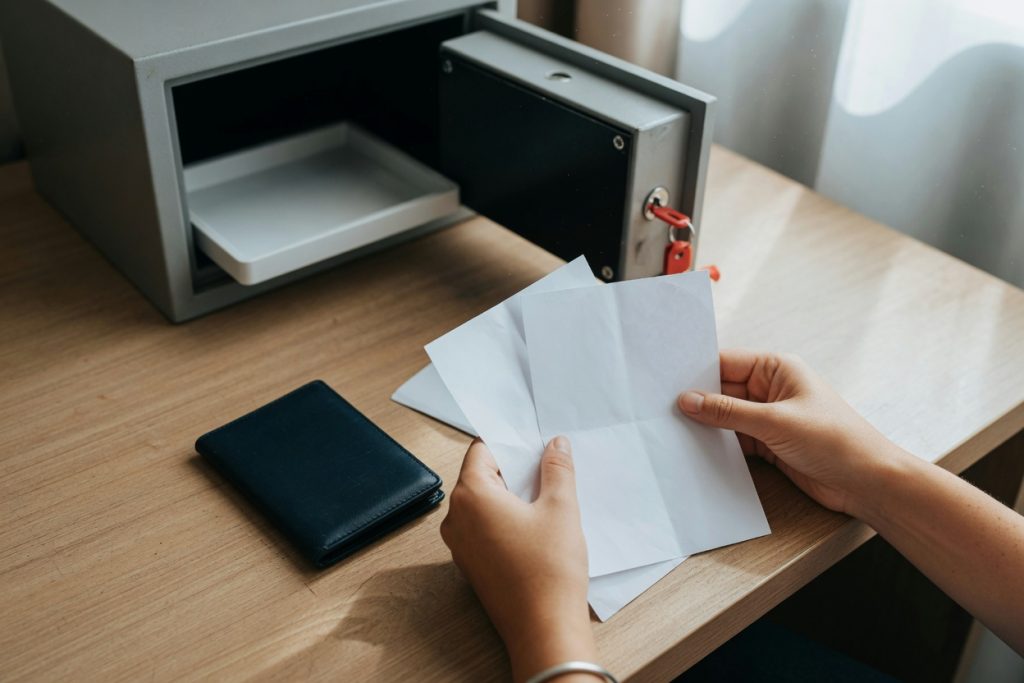
Why a passport and bag plan matters on a travel date
Travel dating compresses the usual checks. You may have matched yesterday, landed this morning, and agreed to coffee before you have decided whether the original passport even comes out of the room. In that window the bag is doing two jobs. It holds the documents that get you home, and it is the object a new person may offer to “watch” so you can step away.
Other Gallivanta guides mention the bag in a sentence. The verification checklist says you do not owe a passport scan. The photo plan says a passport page does not belong in the frame. The budget plan says to keep passports and wallets in your control while you pay. The emergency plan is what you do after a passport is already lost. None of them is the plan for the hour itself. This page answers the practical question: where do the documents and the bag live while you are sitting with someone you just met?
Privacy here is not coldness. It is the same hygiene you already use for your key card and your route home. You can be warm, specific, and easy to meet while the bio page stays closed. A respectful match can use a square, a station cafe, or a staffed counter. Pressure to hold your bag, see your wallet, or photograph your passport is information about access, not about chemistry.
Keep four layers separate. The original asks whether the passport that border officers scan is on your body, in a secure place you chose, or in someone else’s hands. The copies ask whether a lost bag also takes the only photocopy and the only phone photo. The bag asks whether you can stand up, use the restroom, or leave without negotiating for your own strap. The wallet asks whether cards and cash stay in your hand while you pay, instead of on the table as a display.
The U.S. State Department’s crime-abroad page puts the general line in a short list for lodging: secure your keys, IDs, and personal items, and do not tell strangers where you are staying. A first meetup is not your hotel room. The same two habits still apply at the table. Your accommodation privacy plan keeps the building off the chat. This plan keeps the documents that could lead back to that building off the table.
Decide what stays with you before you say yes
Before you confirm a meetup, write a private line for yourself: whether today’s destination page says to carry the original, where the original will actually be, and which bag you will bring. Then mark the handoffs you will not make.
| Enough to coordinate | Stays in your hands |
|---|---|
| A staffed public pin, a start time, and an end time | Your passport, visa, or national ID card |
| The fact that you will arrive and leave on your own | A photo or scan of the bio page, sent “so I know you’re real” |
| Cash or a card you control, enough for your own share and the way back | Your wallet on the table, or opened so someone can “see you’re not hiding cash” |
| A day bag that stays on your lap, your shoulder, or in your hand | A match, a stranger, or a chair back holding that bag while you step away |
What you can say is smaller than what a restless chat asks for. “The station cafe at 4 works. I’ll get there on my own, and I’ll keep my bag with me.” That is a complete plan. Your meeting-point guide still chooses the pin. Your public-first arrival habit still says the meetup is not the first thing you do with your suitcase. Neither one requires the bio page.
Pack the day bag before you leave the room, not at the table. A small zipped bag is enough: the copy you are carrying, if you are carrying one, a card, the cash for your own share, and nothing that names the hotel on the outside. Leave the suitcase, the luggage tag, and the boarding pass where your itinerary privacy plan already put them. A meetup is a bad place to sort a backpack. If the only bag you own is the one with the flight tag, store that bag first or cover the tag, and do not make the match your luggage partner.
Illustrative scenario A, the helpful bag hold: A traveler in Lisbon is halfway through a coffee when she needs the restroom. The match reaches for the day bag and says they will watch it. No one has asked for a passport. With this plan, the bag goes with her, strap in hand, and the coffee can wait. If you are choosing that cafe, the Lisbon date-spot guide is a list of public ideas, not a reason to leave a bag on a chair. The restroom was ordinary. The handoff was the ask.
Separate the copies from the original
The original and the backup are not the same object, and they should not live in the same place. Losing one should not mean losing both.
The U.S. State Department’s international travel checklist, reviewed for this article on October 19, 2026, tells travelers to gather required documents and make multiple copies, because those copies help replace originals if they are stolen or lost. It then gives three placements:
- Give a set of copies to a trusted friend or family member.
- Keep a set of copies with you, separate from your originals.
- Take photos of your travel documents using your mobile phone.
The UK Foreign, Commonwealth & Development Office says something close for British nationals: consider telling someone you trust when and where you are going, and leave them with copies of important documents, such as your passport and insurance details. The person who holds that set is your trusted contact. It is not the match.
Do the copy work before you fly, while you still have a printer or a quiet hour. Photograph the bio page, any visa, and the emergency contacts you already saved. Then close the photo. A dating thread is the wrong album. Your photo privacy plan already refuses passport pictures in chat, including pictures sent “to verify” you. The checklist photo is a recovery file. It is not an introduction.
Where the original sleeps depends on the destination page, not on a universal slogan. Two current U.S. Travel Guidance pages show why you read the one for the country you are actually in, and why you read it again if the page changes:
- Spain’s Travel Guidance says to avoid carrying your passport unless you need it for travel, especially in tourist areas, and to carry a copy or a photo of the bio page instead. It also says to consider leaving the passport in a secure place, such as a hotel safe, and it says you will need the passport to check into any hotel in Spain and may need it for trains. The same page says not to leave bags unattended, to keep passports, cash, and phones out of outer pockets and off tables and floors, and not to leave bags out of your control in restaurants.
- Argentina’s Travel Guidance says the U.S. embassy receives many reports of stolen passports, and it says to consider leaving passports and other valuables in a hotel safe and to carry a photocopy. In the crime section it says not to place handbags or backpacks on the back of a chair or on the floor at a restaurant, and to keep them on your lap.
Those are examples of what a destination page can require, checked on October 19, 2026. They are not a ranking of cities, and they are not instructions for a country the page does not name. Open the Travel Guidance, or your own government’s equivalent, for the place you are in. Some pages tell you to carry a copy and secure the original. Some days you still need the original for a hotel desk, a train, or a local rule. If the original is coming to the meetup because that day requires it, it stays on you: an inner pocket or a zipped bag on your body, not an outer pocket, not the table, not the chair.
Apply the checklist’s “separate from your originals” line inside the cafe, not only at the airport. If the original is in the day bag, the paper copy is not in that same bag. It can be in a different pocket, or it can stay with the trusted contact who already has a set. The phone photo stays closed. Opening it to be polite puts your name, date of birth, and document number on a screen that tilts toward the table. Your personal info boundary already decides which facts stay offline. A “quick look” at the bio page does not move that line.
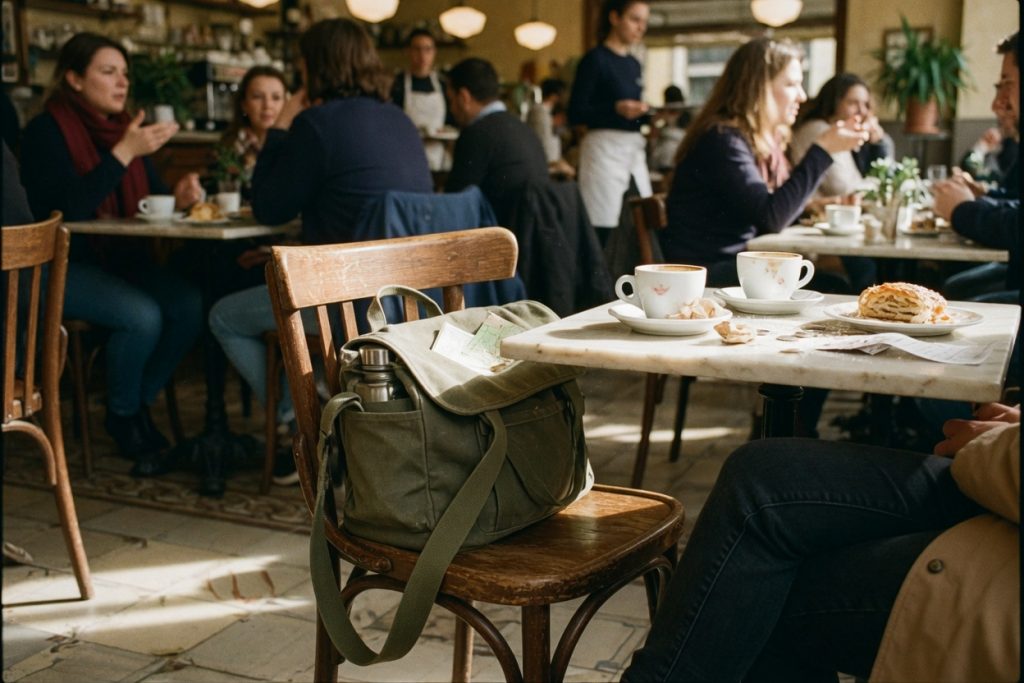
Keep the bag and the wallet when you step away
The risky minute is often the ordinary one. You stand up for the restroom, you take a call, or you walk to the counter to pay. That is when a bag on a chair back becomes somebody else’s decision.
Use Argentina’s restaurant line as the default for a first meetup, even when you are not in Argentina: the bag is on your lap or on your shoulder, not on the back of the chair and not on the floor. Spain’s page adds the table and the outer pocket to the list of places valuables do not sit. A staffed cafe is not a cloakroom. If you would not leave the bag alone in an empty room, do not leave it alone with a person you met today.
RAINN’s safer-dating guidance, updated on the RAINN site May 31, 2026, says you can leave a date when you are uncomfortable, and that you do not owe anyone your time or politeness when your safety or comfort is at risk. It also says you can take a restroom break and then leave. The bag plan adds one motion to that exit: the bag leaves with you. A restroom break that abandons the strap is a handoff, not an exit. RAINN also says never to leave food or drink unattended, and to have some cash so you can pay and go. Your alcohol boundary still sets the drink cap. Your budget plan still holds the exit fund. This page only insists that standing up does not split the bag from your body.
The wallet follows the same rule as the passport. You can pay your own share. You do not pass the wallet across the table, set it beside the sugar, or unlock a payment app on a phone you have handed over. The phone plan already refuses the unlocked phone. The budget plan already covers who pays for the coffee, cards, and payment apps. Paying is a few seconds at the counter with the card in your hand, then the wallet goes back to an inner pocket.
If you are using a card, keep the terminal where you can see it. Do not let a new acquaintance “help” by taking the card to the bar. Do not read the card number aloud so someone can type it. A helpful hand on your wallet is still a hand on your wallet.
Travelers who use Gallivanta to find people with overlapping cities can keep the first coordination at a public pin and a time window. The product does not need your passport, and neither does the match.
Refuse distraction tricks and other people’s bags
Some theft does not look like a demand. It looks like a favor, a stain, or a wallet on the ground. The State Department’s scam page, last updated August 11, 2025, describes three patterns that touch a day bag. Read them as patterns, not as a script you have to diagnose in the moment. The response is the same: keep your bag, do not display your money, and do not take custody of a bag that is not yours.
- Mustard or bird-poop distraction. The page says two people work together. One tells you there is something on you, even if there is not. The other steals your bag or other items while you are distracted. If someone points at your sleeve, your shoe, or your back, keep the strap in your hand and keep moving toward staff or toward the door. You can look later. You do not need to set the bag down to inspect a stain.
- Airport or bag-watching scam. A stranger asks you to watch their bag or purse, leaves, and comes back with someone posing as a police officer. The page says the bag may contain drugs or other illegal items, and the pair then demand money to avoid arrest. Do not watch a stranger’s bag at a station, a cafe, or on the walk to the pin. The same refusal covers the match. “Hold this for one minute” is still custody of someone else’s property.
- Wallet and money-drop scam. In one version on the same page, scammers ask to see your money to prove they did not steal it, and when you take the money out they grab it and run. Do not take your wallet out to prove you are honest, to prove you can pay, or to compare cash. Pay the server yourself, or do not pay yet. A proof display is how the wallet leaves.
You also do not need a stranger’s story to be false before you refuse it. A real spill can still be the moment a bag moves. Thank them if you want, keep the strap, and deal with the spill after you are holding your own things. Politeness is a sentence. It is not a transfer.
Your own route away from that moment is still yours. The transportation plan is how you leave without their car. The exit strategy is the goodbye. This plan is the reason the goodbye includes your bag. If the pin falls through, the backup plan uses another public place. It does not use their apartment “so your bag is safe.”
Illustrative scenario B, the proof photo: A traveler in Mexico City has already named a public market counter and a time. Before he leaves his room, the match asks for a photo of his passport “so I know you’ll actually show.” With this plan, the photo stays in the recovery file, and the reply stays on the counter and the hour. The Mexico City date-spot guide can help you pick that counter earlier. It is not a file you attach to a bio page. The proof was the ask. The coffee was optional.
Do not trade a document for a bill or for proof
A passport does not settle a tab, and it does not prove you are a real person. Those are different pressures. They get the same answer.
Loving This Travel Dating Safety? Don't Explore It Alone.
Real Gallivanta members are planning trips to Travel Dating Safety right now. Join the community and turn your solo travel dreams into shared adventures.
Join Gallivanta FreeThe State Department’s scam page describes a teahouse, restaurant, or bar pattern that starts with a tour. Someone, often presenting themselves as an “English student,” offers to show a visitor around and then invites them to a meal. The setting may be a dim back room or a menu in small print. The page says drinks may be spiked, the host may leave, the bill may be far beyond what the visitor expected, and the business may threaten a visitor who does not pay. That page does not say to hand over a passport. Your plan is stricter than the silence: you do not leave a passport, an ID card, or a phone as a deposit while you “go get cash,” and you do not follow the host into the back room to sort it out.
Read the itemized total before you pay, which is also the budget plan’s job. If the total does not match what you ordered, ask the staff or a manager to look at it. Avoid a fight over pride. If you are threatened, leave if you can and contact local emergency services. Your emergency plan has the number you saved before the trip. A document on the bar does not make the threat smaller. It adds identity theft to a bill dispute.
The State Department’s lost-or-stolen passport page says to report a lost or stolen U.S. passport immediately to protect yourself from identity theft. Reporting can be done with the Department’s online form, which the page says cancels the passport within one business day. After you report it, the page says the passport is not valid for international travel. That is the cost of a bio page in the wrong hands. You do not need to wait for a theft to treat the page as private. You can refuse the photo before anything is missing.
Verification stays proportionate. The verification checklist already draws the line: a short live conversation is not a passport scan, a booking code, or an employer’s phone number. Reciprocity does not change the line. If they show you their ID, you still do not show yours. A face at a public pin is the check. A document is a different kind of disclosure, and it outlives the hour.
The scam page also says never to send money to someone abroad if you have not met them in person, especially if you met online, and not to share personal details over the phone or online. The FTC’s scam-avoidance page adds that you should not give personal information in response to a request you did not expect. A passport number, a visa photo, and a card number are personal details. RAINN’s online-dating section says never to send money or financial information to someone you have only met online, and to report money requests to the app. Your message channel plan is where files and surprise links stay out of the thread. A passport image is one of those files. Your follow-up plan is where a later money request stays a separate event. This page covers the object in your bag during the first hour.
Illustrative scenario C, the deposit: A traveler in Amsterdam has paid attention to a bill that is larger than the two coffees she ordered. The match suggests she leave her passport at the bar and walk to an ATM. She does not debate the bill beside her documents. She asks the server to read the items, pays only what she ordered if she can do that calmly, and leaves with the bag if the ask continues. Dating in Amsterdam can help you choose a staffed public area before you go. It is not a reason to use a passport as collateral. The ATM walk was the ask. The coffee was optional.
Split what a trusted contact may hold from what the match may see
Someone who loves you and someone you just matched do not get the same packet. A trusted contact can hold a set of copies, know that the original is in a hotel safe or on your body, and know the public pin, the start, and the planned end. The match gets the pin and the time window.
Tell the contact what you are withholding, so they do not “helpfully” text a passport photo into a thread the match can see. Use the cadence you already set in the check-in protocol: an arrive note and a leave note for the meetup. The note can say you still have your bag. It does not need to include the document number. Live location, if you share a dot at all, goes to the contact for a bounded window. It does not go to the match, and it does not ride along with a photo of your passport. Read that tradeoff in the location sharing plan before you turn a feature on.
Do not add the match to a group message with the contact. That introduction gives the match a direct line, and it can also put your document photos one tap away from the wrong person. If you miss the end window, the contact follows the protocol you agreed. They do not need the match to “check the bag.”
If the original is lost or stolen anyway, the order is still local safety first, then your own government. If you are in immediate danger, contact local emergency services before you start a replacement application. In the United States, RAINN’s page tells people to call 911. Outside the United States, use the local number you saved in the emergency plan. Do not ask the match which number to dial, and do not hand them the phone to make the call while you cannot see the screen.
For U.S. citizens, the lost-passport page says to contact the nearest U.S. embassy or consulate, and that you will have to appear in person to apply for a replacement. It says police reports are not mandatory, and that they can help confirm what happened. If you filed one, the page says to bring a copy. It also lists a passport photo, identification, proof of citizenship such as a photocopy of the missing passport, your travel itinerary, and the DS-11 application. The page says that if there is not enough time for a regular passport, a consular section can offer an emergency passport valid for up to one year, and that in most cases a replacement is issued the next business day. It also says most embassies and consulates cannot issue passports on weekends or holidays, while after-hours duty officers can help with life-or-death emergencies, a need to travel, or when you have been the victim of a serious crime. Bring what you have. The page says consular staff will still try to help if you cannot present every document.
British nationals start with the FCDO page already linked, which says UK missions can help people who have lost a passport, and with the embassy directory. Canadian travelers can start with Travel Canada’s advisories and the lost-document instructions their own government publishes. If you travel on a passport this paragraph does not name, use that government’s page. The pattern is the same: the match does not file the report for you, hold the replacement, or keep your copies “until you get a new one.”
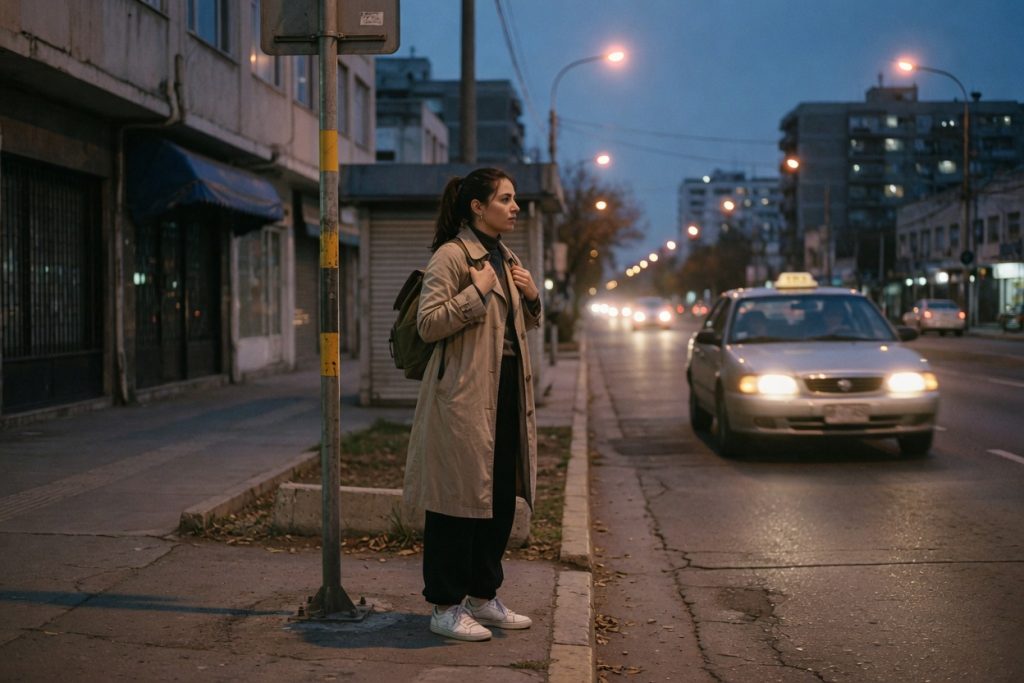
Strengthen the plan for women and higher-risk travelers
The same rules apply to every traveler. Women, LGBTQ+ travelers, and anyone who is visibly a visitor often meet the “I’ll hold it, I’ll watch it, I’ll keep it safe” offer earlier, because a bag on a chair is an easy way to test whether you will hand over the thing that gets you home. Gallivanta’s guides on dating safely as a solo female traveler and solo travel safety for women expand the wider context. The document layer is specific:
- Wear the bag across your body or keep it on your lap before you sit down, not after someone has already moved it.
- Do not announce that the passport is in the bag, in the room, or “back at the hotel.” “I have what I need” is enough.
- Prefer a pin with staff you can see, inside your daylight window, on your own route, as in the travel dating safety overview.
- If someone picks up your bag, follows you when you take it to the restroom, or will not give it back, treat that as a reason to involve staff and, if you feel unsafe, local emergency services. Do not renegotiate the boundary in the street.
- A second public meetup can still happen later. It does not get a looser document rule because the first hour felt fine. Your second-meetup plan is the calendar. This plan stays on the bag.
Higher risk changes the margin. It does not change the right to a public plan. A match who mocks the margin is showing you how they handle a no.
Recognize passport and bag red flags
Leave or cancel when the conversation turns into your documents or your strap. Concrete versions:
- A request for a passport photo, a visa scan, or an ID picture “so I know you’re real,” before or during the first meetup
- An offer to hold, watch, or carry your bag, including for a restroom break or a walk to the counter
- A request that you watch their bag, their suitcase, or a package you did not pack
- A demand to see your wallet or your cash to prove you can pay or to prove you are honest
- A suggestion that your passport, phone, or ID stay at the bar, the table, or their apartment while you get money
- Anger, guilt, or a safety lecture when you keep the bag on your body
- A move into a back room, a car, or a flat that is explained as the only place the bag will be safe
- Someone pointing at a stain, a spill, or a mark on you and moving closer while your bag is not in your hand
One awkward offer can be a miss. A pattern after a clear answer is the signal. You do not owe a second explanation, and you do not owe a document to prove the boundary is reasonable. The first travel date guide still covers a short public hour. A missing passport photo does not make that hour incomplete.
Scripts that keep documents private without killing warmth
Short lines are easier to send when you are jet-lagged. Adapt the place names. Keep the boundary.
- The window: “I keep documents off a first meet. The market hall at 4 works, I’ll arrive on my own, and my bag stays with me.”
- The bag hold: “That’s kind, and I don’t hand my bag over. I’ll bring it with me and be right back.”
- The proof ask: “I don’t send passport or ID photos. A short public meetup is the check I use.”
- The deposit: “I can pay for my own coffee. My passport stays with me. If the bill looks wrong, we can ask the server.”
- The wallet display: “I don’t take my wallet out to prove anything. I’ll pay at the counter myself.”
- The stain: “I’m all right, thanks.” Keep the strap in your hand and move toward staff. Look at the sleeve after you are clear.
- The second meet: “I’d like another hour later this week. Same rule: a public place, my bag with me, documents offline.”
If you want introductions with people who already expect a public first hour, look through Gallivanta’s meet-travelers path. The product can show a city and a date span. It does not replace the pin, the end time, or the decision to keep the bio page in your bag.
Travel date passport and bag action summary
Run this before you say yes, and again before you leave for the pin.
- Read the destination page for whether to carry the original, a copy, or both. Do not borrow the rule from a country you are not in.
- Make copies before you fly. Give a set to a trusted contact. Keep your own set separate from the original. Photograph the documents on your phone, then close the photo.
- If a hotel safe is what the destination page suggests, use it before the meetup. If you must carry the original, keep it in an inner pocket or a zipped bag on your body.
- Bring a small day bag with no luggage tag and no hotel name on the outside. Leave boarding passes and the suitcase out of the frame.
- At the table, the bag is on your lap, your shoulder, or in your hand. It is not on the chair back, the floor, or the table.
- Take the bag with you to the restroom, the counter, and the exit. Do not watch anyone else’s bag.
- Pay your own share with cash or a card you can see. Do not display the wallet, and do not leave a passport as a deposit.
- Refuse passport photos, ID scans, and “hold this for a minute.”
- If the bag is taken or you feel unsafe, involve staff and contact local emergency services. Then use your own government’s lost-passport steps. Do not ask the match to do them for you.
Then go have the hour. A closed passport and a public pin can exist on the same afternoon. That is the whole plan.
Sources, facts, and review boundaries
This guide is practical planning for solo travelers arranging short public meetups. It is not legal advice, threat assessment, or a guarantee of safety. Destination rules, hotel-safe policies, and street conditions vary by city and change over time. The Spain and Argentina pages are examples of U.S. Travel Guidance checked on October 19, 2026, not a complete list and not a comment on those countries’ dating scenes. Verify the page for the country you are actually visiting before you decide where the original passport sleeps. Nothing here asks you to hide your documents from a trusted person. It asks you to keep them off a first meetup.
The images in this package are illustrations created for this Gallivanta article. They are not photographs of a real meetup, a real traveler, or a real document.
Gallivanta encourages traveler control, public-first first meetings, and proportionate boundaries. No checklist can certify another person’s intent. Use this plan so adventure and connection remain choices you can revise. Editorial standards for how Gallivanta separates reporting, composites, and product mentions are on the editorial standards page and the why trust us page.
Official guidance worth reading before you treat a bag offer as harmless:
- U.S. Department of State: International travel checklist, including the instruction to copy documents, give a set to someone you trust, keep a set separate from the originals, and photograph them on your phone. Page last updated August 11, 2025.
- U.S. Department of State: Lost or stolen passport abroad, including immediate reporting, in-person replacement, and the note that police reports are not mandatory. Page last updated September 25, 2025.
- U.S. Department of State: Scams, including distraction theft, bag-watching, the wallet grab, and the teahouse, restaurant, or bar pattern. Page last updated August 11, 2025.
- U.S. Department of State: Crime abroad, including the guidance to secure keys, IDs, and personal items, and not to tell strangers where you are staying.
- U.S. Department of State: Spain Travel Guidance, crime and passport-carrying notes checked October 19, 2026.
- U.S. Department of State: Argentina Travel Guidance, including the embassy’s note on stolen passports and the restaurant bag guidance, checked October 19, 2026.
- UK FCDO: Consular assistance, including copies left with someone you trust, and help for British nationals who have lost a passport.
- Government of Canada: Travel advice and advisories
- RAINN: Tips for safer dating, online and in person, page updated May 31, 2026.
A bag plan does not detect every scam, and it does not replace a police report or a consular visit after a theft. It keeps the first hour from disclosing the document that gets you home, and it keeps that document on your body while you still have your own judgment. If you are in immediate danger, contact local emergency services. Platform reporting and official consumer reporting channels matter after you are safe.
Editorial review date: October 19, 2026.
FAQ: travel date passport and bag plan
Should I bring my passport to a first travel date?
Not by default. Read the destination page first. Spain’s current U.S. Travel Guidance says to avoid carrying the passport unless you need it, to carry a copy or a photo of the bio page, and to consider a hotel safe, while also noting that hotels in Spain require the passport at check-in and trains may require it. Argentina’s page says the U.S. embassy receives many reports of stolen passports and suggests a hotel safe plus a photocopy. If you are carrying the original because that day requires it, keep it on you. It does not go on the table, into someone else’s bag, or to the bar as a deposit.
Can I send a photo of my passport to prove I am real?
No. A passport photo is a document, not a greeting. The State Department’s travel checklist says to photograph your documents so you can replace them if they are lost. That photo stays with you and with a trusted contact. It does not go into a dating chat. A short public meetup is the verification to use.
Should I let a match watch my bag?
No. The bag goes with you, including to the restroom. The State Department describes a scam in which a stranger asks you to watch their bag and later demands money, and another in which a distraction is used to steal your bag. A match does not become your cloakroom. You also do not watch a bag that is not yours.
Should I leave my passport until I pay the bill?
No. You can pay your own share from cash or a card you control, then leave. A passport is not a deposit. If the bill does not match what you ordered, ask staff or the manager. If you are threatened, leave if you can and call the local emergency number. The State Department’s restaurant and bar pattern is a reason to read the bill before you pay, not a reason to hand over a document.
Where should copies of my passport live?
The State Department checklist says to make copies, give a set to someone you trust, keep a set with you separate from the originals, and photograph the documents on your phone. The UK FCDO likewise says to leave copies of important documents, such as your passport, with someone you trust. The copy you carry is not in the same pocket as the original, and you do not open either one at the table.
What if my passport is lost or stolen during the meetup?
If you are in danger, contact local emergency services first. Then follow your own government’s instructions. For U.S. citizens, the State Department says to report a lost or stolen passport immediately and to appear in person at the nearest U.S. embassy or consulate for a replacement. Police reports are not mandatory, and if you filed one the page says to bring a copy. Do not ask the match to hold a replacement, file the report for you, or keep your copies.

Fact-checked | Safety reviewed | Updated October 19, 2026
Ready to Meet Your Next Travel Date?
You've got the destination, the vibe, and the courage to go solo. Now all you need is someone who gets it. Join Gallivanta and meet fellow travelers who believe the best chapters start with a one-way ticket.
Join Gallivanta Free