
Your Next Adventure Could Change Everything
Join thousands of adventurous women who've discovered that the best travel stories often include a plot twist.
Start Your Adventure. Join Free
✓ Free to join ✓ No credit card required ✓ Join 50,000+ travelers
A travel date home city visit plan is the set of decisions you make before a match comes to the city where you live: their own hotel, a public first day, and your address, workplace, and spare room kept off the thread. A visit can be sincere. It is still a new city for them and a mapped routine for you, and those are not the same kind of risk.
Gallivanta’s travel-first position is adventure first, sparks welcome, traveler control intact. You already know how to be the guest. The return visit plan keeps your ticket, your lodging, and a public first day when you fly to someone else. This page is the mirror. They are the ones booking the trip. Your home does not become the hotel because the affection is real.
Published and reviewed: October 23, 2026
This plan sits beside your personal info boundary, your accommodation privacy plan, your follow-up plan, your budget plan, and your check-in protocol. Follow-up decided what the screen could hold after you left their city. A home visit starts when that screen becomes a date on your calendar. The feeling can be welcome. The door code still is not a greeting.
Keep four truths separate. Facts are what official pages say about romance-scam travel asks, about sharing an address or a workplace, and about meeting in public. Those pages are cited below. Examples are illustrative composites for teaching, not testimonials and not reports about real guests. Assumptions are personal risk tolerances that differ by traveler, housing, and how well you already know this person. Advice here is operational hygiene for a short visit to your city. It is not a guarantee of safety, not legal advice, and not a substitute for local emergency services.
- → Why a home city visit is different
- → Decide the visit before you share a place
- → Keep the address, workplace, and routine off the thread
- → Their lodging is theirs
- → Keep the first day public
- → Handle friends and the stop-by
- → Keep money and tickets on their side
- → Run check-ins when they know your streets
- → Tighten the plan when risk is higher
- → Recognize home visit red flags
- → Use calm scripts
- → Run the action checklist
- → Review sources and boundaries
- → Read the FAQ
Why a home city visit is a different problem
When you travel to them, the unfamiliar streets are yours to manage, and the return visit plan is built for that. When they travel to you, the streets are familiar, and familiarity is the hazard. You know which cafe is busy, which platform is staffed, and which walk home is quiet after dark. They are asking to enter a map you use for work, groceries, friends, and sleep. A kind visit and a mapped life can be true in the same week. The plan is what keeps them from becoming the same place.
Other Gallivanta guides mention the host problem in a sentence. The return visit plan says a spare room is not the arrival plan when you are the guest. The personal info boundary says a city and a neighborhood are meetup facts and a door code is not. The accommodation plan kept your room off the thread when you were the traveler. None of them is the plan for the week they land in your city. This page answers the practical question: what do you agree to before a suitcase is aimed at your door?
Privacy and hospitality are easy to tangle because both can sound like warmth. “Send the address so the car knows where to go” is logistics. It is also a key. “I’ll just stay with you, hotels are silly between us” is affection. It is also access to the hour you are asleep, to your documents, and to the neighbors who will now recognize their face. You can be glad they are coming and still keep those hours separate.
Keep four layers separate. The trip is their ticket, their dates, and their lodging, booked in their name. The pin is a staffed public place you both can find and leave. The life is your address, your workplace, your gym, your usual Saturday market, and the friends who live those routes with you. The exit is the way each of you leaves the pin on transport you control. A match can sit inside the trip and the pin. They do not inherit the life because the messages have been good.
Decide the visit before you share a neighborhood
Before you say yes to dates, write a private line for yourself: whether you want this visit at all, which public neighborhood you will use, and what you will not offer. Then tell them the part that coordinates the day. Leave the rest off the thread.
| Enough to coordinate | Stays off the thread |
|---|---|
| Dates they are in town, a public neighborhood, and a staffed pin | Your building name, unit, buzzer, or door code |
| A first meeting the day after they land, in daylight | Airport pickup that ends at your home |
| Their hotel, booked and paid in their name | Your spare room, couch, or a night “just to drop the bag” |
| A trusted contact who knows the plan and the time you will message | Your workplace, your gym, or the cafe you use every morning |
A complete yes is short. “Come the second weekend. Book a hotel near the museum. We’ll meet at the cafe on the plaza the next afternoon. I won’t do airport pickup.” That is a visit. Your meeting-point guide still chooses a pin you can leave. This plan chooses what the visitor never needs in order to find that pin.
If an earlier message already offered the couch, freeze that offer. Tell them the hotel is the plan and that you are glad they are coming. A revised yes is cleaner than a weekend you spend defending a door you already opened in writing. Use the public-first arrival habit even though you are not the one who just landed. The first hour is still a first hour in a place with staff.
Illustrative scenario A, the ticket that arrived before the yes: A traveler who lives in Chicago gets a screenshot of a booked fare and a request for the building address so a car can come “straight to you” from the airport. No hotel is named. With a home city plan, the reply keeps the visit and moves the landing: they book their own hotel, the first meeting is the next afternoon at a staffed cafe, and the car does not need a home address because it is not coming to one. The screenshot was the pressure. The coffee can still happen.
Keep the address, the workplace, and the routine off the thread
RAINN’s safer-dating guidance says not to share private details such as a home address, a phone number, a workplace, or a daily routine until trust is built, and not to invite someone to your home until that trust exists. A home city visit is the week those lines get tested, because the person is no longer abstract. They are about to be on your transit map. Treat the address, the job, and the habits as three different facts, and decline all three for the first visit.
The address is the simplest. A neighborhood is enough to pick a hotel and a pin. A building name lets a rideshare stop at the door. A unit number and a buzzer code let someone arrive when you are not ready, or when you are not home. You do not owe the building in order to be a good host. A host who meets at a public pin is still a host.
The workplace is the fact people hand over by accident. “Let’s grab lunch by your office” sounds efficient. It also tells a visitor the block you use five days a week, the badge line, and the coworkers who will see you together. Pick a different neighborhood from the one where you work. If your work is remote and the apartment is the office, that is a reason to be stricter about the door, not a reason to blur the visit into the workday. Your personal info boundary already treats a workplace as more than small talk. This visit is where that rule earns its keep.
The routine is the slow leak. The Saturday market, the gym, the church, the dog park, the cafe where the barista knows the order: each one is a place a visitor can “happen” to be next time, with or without another invitation. For this visit, choose pins you do not use every week. You can show a city you love without handing over the loop you live. Travelers who use Gallivanta to meet people on the road can keep that first coordination on a public pin. A neighborhood and a time do not require a home address.
Photos follow the same split. Your photo privacy plan already keeps documents and doorways out of the frame. A shot of the stoop “so you know which building” is an address with better lighting. Send a picture of the plaza fountain instead.
Their lodging is a hotel they book, not your spare room
The spare room will be offered as sense. Hotels cost money. You have a couch. You have stayed in the same city in your head for months of messages. Hospitality and access are still different. Access means they can see your mail, your medication, your roommate’s schedule, and the moment you are asleep. It also means the exit from a bad hour is a hallway in your own home, which is a poor place to negotiate.
They book the room in their name, with a lock they control and a desk or a host they can reach without you. A hotel, a guesthouse, or a short rental they chose all work. Your couch does not, not for the arrival night and not for “just the first night until we see.” If the only way the trip works is your spare room, the trip waits. That is the same line the return visit plan uses when you are the guest, turned around so you are allowed to be the one with the key.
You do not need to approve the hotel beyond two checks you can do without visiting it. It is in the neighborhood you already named, or a reasonable transit ride from the pin. It is not your building. You do not need the room number. You do not need to be the second name on the booking. A sincere visitor can send a confirmation that shows a hotel name and dates. You can be glad. You still do not need to sleep down the hall.
If they land late, the plan is their hotel, a message that they arrived, and coffee the next day. Tired, new, and standing on your street at night is a poor moment to invent a couch. Your daylight window still applies to the first meeting even though you slept in your own bed. Familiar streets do not make a midnight arrival into a public plan.
Illustrative scenario B, the office lunch and the couch: A visitor writes that the hotel is expensive and that lunch near the office would be easier, then the evening on the couch. Nothing unkind has been said. With this plan, the reply names a different neighborhood, a staffed pin away from work, and a hotel they book themselves. The guide to dating safely as a solo female traveler is one place to scale that no to the housing you actually have. The couch was the ask. Lunch in public can still be the day.
Keep the first day in public, including the ride
The first day they are in your city is not a reunion of people who already share a kitchen. It is a first meetup with better memories. Use a staffed, public place, easy to find, easy to leave, with other people around and a transit stop you have both looked up. Meet there. Leave from there. Do not start the day at the airport curb if the next stop is your neighborhood.
RAINN’s in-person guidance says to meet in a busy public place, to avoid private locations for the first dates, and to stay in control of transportation: your own car, your own rideshare, or a trusted friend, and not a pickup that puts you in their car or them in yours. In your own city that advice is easy to waive because you know the roads. Do not waive it. You still arrive and leave on your own ticket, your own rideshare, or your own walk. They do the same from their hotel. Your transportation plan does not retire because the meetup is on streets you could navigate half asleep.
Airport pickup is the offer that sounds most like manners and behaves most like a private transfer. If you want to see them sooner, meet in the airport’s public hall for a short hello, then each of you goes to the place you already named: they to the hotel, you back to your day. A car from the terminal to your door collapses the hotel, the pin, and the address into one ride. Decline it without a speech about trust. “I’ll see you at the cafe tomorrow” is a complete sentence.
Keep the message channel the same one you used to plan the visit. A last-minute switch to a new number, a new app, or “my friend will bring you to me” is a change of venue at the moment you are most likely to comply because you are the local. You can decline a substitute person. You can wait at the public place you named. You can go home alone and try again the next day. A missed coffee is cheaper than a car you did not choose on streets you did not mean to reveal.

Handle friends, coworkers, and the uninvited stop-by
A visit gathers spectators. They may want to meet your friends, see the office, or “surprise” you at home because the city finally made it possible. Each of those is a separate yes. None of them is included in the ticket.
Friends can wait. A group dinner on night one turns your people into an audience and a safety net at the same time, which is an unfair job to give them without warning. If you want a friend present, tell that friend the plan in advance and meet in public, and tell the visitor the friend is coming. Do not spring a group, and do not let the visitor spring one. “My friend is also in town and needs a couch” is a second guest you did not invite. The answer is a hotel, not your living room.
Coworkers are not a venue. A badge, a lobby, and a lunch line identify the job more clearly than a job title in a chat. Keep the visit off the work calendar. If a coworker happens to see you at a public pin, that is ordinary city life. It is not a reason to move the next hour upstairs to the office.
Loving This Travel Dating Safety? Don't Explore It Alone.
Real Gallivanta members are planning trips to Travel Dating Safety right now. Join the community and turn your solo travel dreams into shared adventures.
Join Gallivanta FreeThe stop-by is the line you enforce because you never gave the address. If they find the building anyway, through a photo, a mutual, a rideshare history, or a guess, that is new information. You do not have to open the door to discuss it. You can leave the building by a route you choose, meet only if you still want to and only at the original pin, or end the visit. Your reporting plan is what you use after you are safe if the contact continues, including a save of the thread and a block. A surprise at the door is not a romantic gesture you are obliged to reinterpret.
Keep the ticket and the bill on their side of the trip
The Federal Trade Commission’s romance-scam guidance describes a pattern in which someone you met online says they live far away and then asks for money, including for a plane ticket to visit you. The same page’s avoidance line is specific: never send money or gifts to a sweetheart you have not met in person. If you have not met, a fare, a gift card, a wire, or a “hold the hotel” transfer is the pattern that page is warning about. Stop, and use the reporting plan and the FTC’s own report channel after you are safe.
If you have met once, in public, in another city, the FTC sentence does not automatically label every later ticket a scam. The advice in this plan is stricter than that sentence, and it is labeled as advice. You still do not pay for their fare. You still do not reimburse a booking you did not ask them to make. You still do not send money to “hold” a weekend you have not agreed to host. A surprise ticket with a deadline is pressure even when the person is real. Your budget plan still pays for your own coffee. Their transport and their hotel stay on their account.
Read any bill you share in person the way you would on the road. Your language plan is for cities where you cannot read the menu. At home you can read it, so do. Split what you ordered, or pay your own, and leave when you said you would. A visit that only works if you cover the fare was asking your account to do the work of certainty.
Gifts that need a signature at your door are an address request with wrapping. Ask them to keep the gift for the public meetup, or decline it. A package is not a reason to give a buzzer code.
Run check-ins even though you know the streets
Your check-in protocol was built for the hours of one meetup away from home. A visitor in your city needs the same protocol, because the risk has moved from getting lost to being found. Before they fly, tell a trusted contact the dates, the visitor’s name as you know it, the hotel neighborhood, the public pin, and the time you will message after the meetup ends. Agree what silence means. A missed check-in is a cue for them to call you, not to call the visitor, and then to use local emergency services if they still cannot reach you.
Do not hand that contact your live location and also hand it to the visitor. Your location sharing plan still keeps any live pin with the trusted contact and with nobody else. A drop pin “so they can find your place for dinner” reveals the building. They can find the cafe you already named. Your contact can know you are home after. Those are different audiences.
Tell the contact what you will not do, so they are not surprised into helping the wrong plan. You will not do airport-to-home pickup. You will not host overnight. You will message when the meetup ends, from transit or from home, and you will not bring the visitor along for that call. RAINN’s guidance to share the plan with someone you trust is the minimum. The content of the plan is yours to define before the wheels are down.
Alcohol follows your alcohol boundary on the first night even at a bar you know. A drink in a familiar room can make the walk to your building sound reasonable. Decide the cap before you sit down. Leave on the transit you already named. The visitor goes to their hotel on their own. You do not escort them to a lobby that then needs to know where you live, and you do not let the evening migrate to the apartment “because it is close.”

Tighten the default when the housing or the stakes are higher
Some weeks need a smaller yes. You live with roommates who did not agree to a guest. You work from the apartment. You have a child, a parent, or a schedule that a visitor should not meet. You have met this person once, or only on a screen. The broader look at whether travel dating can be safe is about scaling controls to the trip you are actually taking. A home visit scales them the other way: the trip is in the place you cannot leave behind when the weekend ends.
A tighter default looks like this. They book a hotel in a busy neighborhood you do not live in. No airport pickup. First meeting the next day, in daylight, in a staffed place you do not use every week. No workplace, no gym, no standing market. Your trusted contact has the dates, the pin, and a check-in that fails closed. No drinking that changes the walk home. No documents, no spare key, no live location shared with the visitor, no introduction to roommates or coworkers. A second public meetup the next day is the reward for a good afternoon. The apartment is not.
If you want closeness and you also want a lock that is yours alone, both can be true. You can end the evening and meet again tomorrow. A visit that cannot survive one night in separate beds was asking the bed to do the work of trust. Your exit strategy was written for leaving a date without a speech. It still works when the date is in your city and the exit is a train you board alone.
Illustrative scenario C, the walk upstairs: The museum cafe went well. They offer to walk you home and come up for a minute. You like them. With this plan, the ending stays at the pin: you each take your own transit, you message your contact when you are home, and tomorrow’s public pin is the next invitation if you both want it. The minute upstairs was the ask. The good afternoon can remain a good afternoon.
Recognize home visit red flags
A red flag is a change in the plan that pulls your address, your money, or your sleep into the visit. You do not need a theory of their character. You need a reason to stop the change.
- They book a ticket before you have agreed to the visit, then set a deadline for your address.
- They ask you to pay, reimburse, or “hold” the fare, the hotel, or a gift card.
- They ask which building, which buzzer, or which desk the rideshare should use.
- They want the first stop to be your home, your office, or a friend’s apartment.
- They treat a hotel as an insult and the couch as the only acceptable affection.
- They add another person who also needs a place to sleep.
- They want a photo of the door, the mailbox, or the view from your window.
- They arrive at the building after you declined to share it.
- They push the meetup off the original channel at the hour they land.
- They frame a boundary as a lack of love, and the clock as proof.
One of these can be awkwardness. A stack of them is a reason to cancel the pin and keep the door. You can say the visit is off without a trial. If money already moved, contact the company that moved it and use the reporting steps you already saved. The State Department’s page on scams aimed at travelers is worth reading before you treat urgency as romance. The pattern you are watching at home is the same family of pressure, pointed at your address instead of a foreign restaurant.
Use calm scripts that do not debate the relationship
Scripts are for the moment you are tempted to explain your whole housing situation. You do not need to. Short lines are easier to repeat, and they do not add new facts.
- “I’m glad you’re coming. Book a hotel near the museum. We’ll meet at the plaza cafe the next afternoon.”
- “I don’t share my address on a visit. The cafe is enough.”
- “I can’t do airport pickup. I’ll see you at the pin we named.”
- “I won’t be able to host you. The hotel is the plan, and I’m still looking forward to coffee.”
- “Lunch won’t be by my office. Let’s keep the neighborhood we already chose.”
- “Tonight ends here. If we both want tomorrow, we’ll pick another public place in the morning.”
- “Please don’t come to the building. If you’re already there, I’m not available. We’ll talk on the channel we already use, or not.”
- “I don’t send money for tickets. If the trip only works that way, let’s leave the trip.”
If the reply is anger, a guilt clock, or another request for the code, you are done negotiating. Leave the pin if you are out. Stay inside with the door unanswered if you are home. Message your contact. Use your local emergency number if you believe you are in danger. Platform reporting comes after you are safe, which is the order in the reporting plan.
Run the action checklist before they buy the fare
Do this while the visit is still a maybe. A checklist on the sidewalk, after they have landed, is a rescue. This one is a plan.
- Decide, in writing to yourself, whether you want the visit.
- Name a public neighborhood that is not your home block and not your workplace.
- Name a staffed daylight pin and a time the day after they land.
- Tell them to book their own hotel, in their name, in that area.
- Decline airport-to-home pickup, the couch, and the spare key.
- Keep the address, unit, buzzer, workplace, and weekly routine off the thread and out of photos.
- Tell a trusted contact the dates, the visitor’s name, the hotel neighborhood, the pin, and the check-in time.
- Agree that silence means they call you, then emergency services, and that they do not call the visitor first.
- Keep any live location with that contact only.
- Pay your own coffee. Do not pay their fare.
- Leave the pin on your own transit. They leave on theirs.
- If they appear at the building, do not open a debate in the doorway. Use the reporting plan once you are safe.
I built Gallivanta around destination and travel-window matching, verification, and public-first planning, as the About Gallivanta page describes. An app thread can hold a pin and a time. It cannot notice that a kind visit became a buzzer code. That notice is the plan.
Sources, facts, and review boundaries
This guide is practical planning for people who live in a city and are considering a visit from someone they met while traveling or online. It is not legal advice, threat assessment, or a guarantee of safety. Housing, emergency numbers, and platform tools vary, and they change. Verify your local emergency number and your own building’s entry rules before you need them.
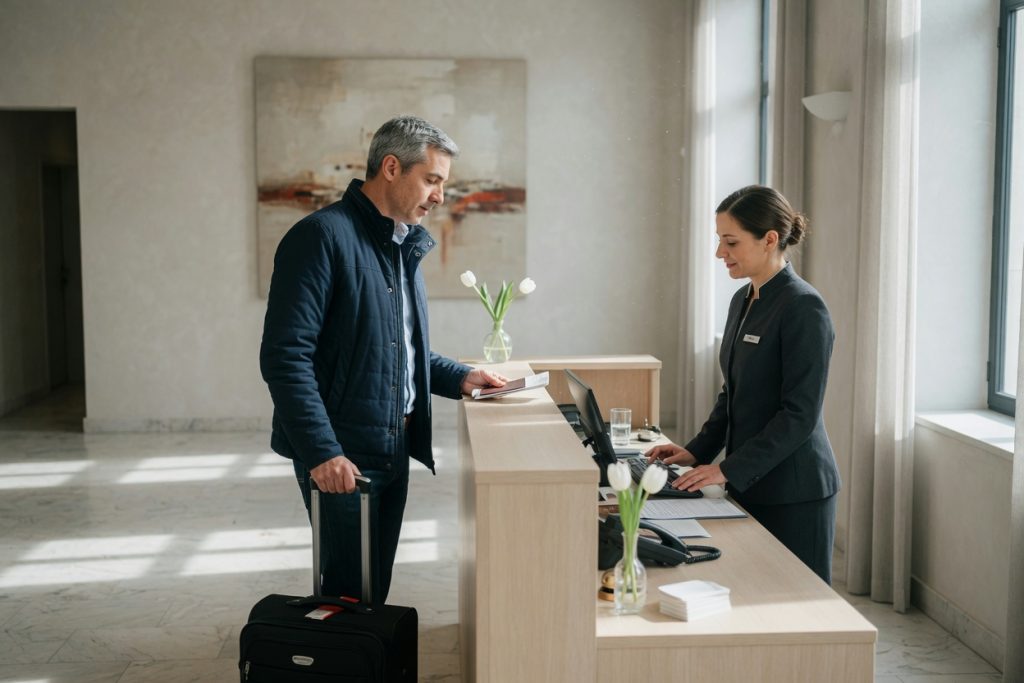
The images in this package are illustrations created for this Gallivanta article. They are not photographs of a real visit or a real traveler.
Gallivanta encourages traveler control, public-first meetings, and proportionate boundaries. No checklist can certify another person’s intent. Use this plan so a visit remains a choice you can revise after they go home. Editorial standards for how Gallivanta separates reporting, composites, and product mentions are on the editorial standards page and the why trust us page.
Official guidance worth reading before you send a building address:
- U.S. Federal Trade Commission: What to know about romance scams, including the warning about money for a plane ticket to visit you, and the line never to send money or gifts to a sweetheart you have not met in person
- RAINN: Tips for safer dating, online and in person, including guidance on home addresses, workplaces, routines, public meetings, and keeping control of transportation
- U.S. Department of State: Scams
- U.S. Department of State: Communication abroad, useful if your trusted contact is the one who is overseas while the visitor is in your city
If you are in immediate danger, contact local emergency services. In the United States that is 911. Platform reporting and the FTC’s ReportFraud.ftc.gov channel matter after you are safe. If you are harmed or assaulted, RAINN’s National Sexual Assault Hotline is available at 800-656-HOPE (4673), and RAINN says you can also reach it by chat at rainn.org. That harm is not your fault, and it is not a reason you failed this plan.
Editorial review date: October 23, 2026.
FAQ: travel date home city visits
Should a travel date stay at my place?
No, not on this visit. They book a hotel in their own name. You meet at a public pin. RAINN’s safer-dating guidance says not to invite someone to your home until trust is built. A good message history and one coffee in another city are not that threshold. A second public meetup is available tomorrow if you both want it.
How much of my address do they need?
A neighborhood, so they can book a hotel and find the pin. Not the building, the unit, the buzzer, or a photo of the door. RAINN also says to hold back a workplace and a daily routine until trust exists. Choose a pin you do not use every week, and keep lunch away from the office.
Should I pay for their ticket to visit me?
No. The FTC describes romance scammers who ask for money for a plane ticket to visit you, and it says never to send money or gifts to a sweetheart you have not met in person. If you have met, this plan’s advice is still that their fare and their hotel stay on their account. A ticket you did not agree to fund is not a debt.
Is airport pickup rude to decline?
It is reasonable to decline. A hello in the public arrivals hall can be kind. A car from the terminal to your door is a private transfer that reveals the home. Tell them you will see them at the cafe the next day. RAINN’s transportation guidance is to avoid letting a date pick you up or drive you, and to avoid putting them in your car. That line still applies on streets you know.
What if they show up at my building anyway?
Do not open the door to renegotiate. Leave by a route you choose if you are out, or stay inside if you are home. Message your trusted contact. Use your local emergency number if you believe you are in danger. After you are safe, save the thread and use your reporting plan, including a block. A surprise at the door is a boundary event, not a compliment you must host.
What if the visit goes well?
Keep the ending you set. Each of you leaves the pin on your own transit. You message your contact when you are home. If you want to see them again, name another public place tomorrow. The apartment can stay off the itinerary for this trip and still be a possibility you choose later, on a timeline that is not their departure date.
Ready to Meet Your Next Travel Date?
You've got the destination, the vibe, and the courage to go solo. Now all you need is someone who gets it. Join Gallivanta and meet fellow travelers who believe the best chapters start with a one-way ticket.
Join Gallivanta FreeFact-checked | Safety reviewed | Updated October 23, 2026