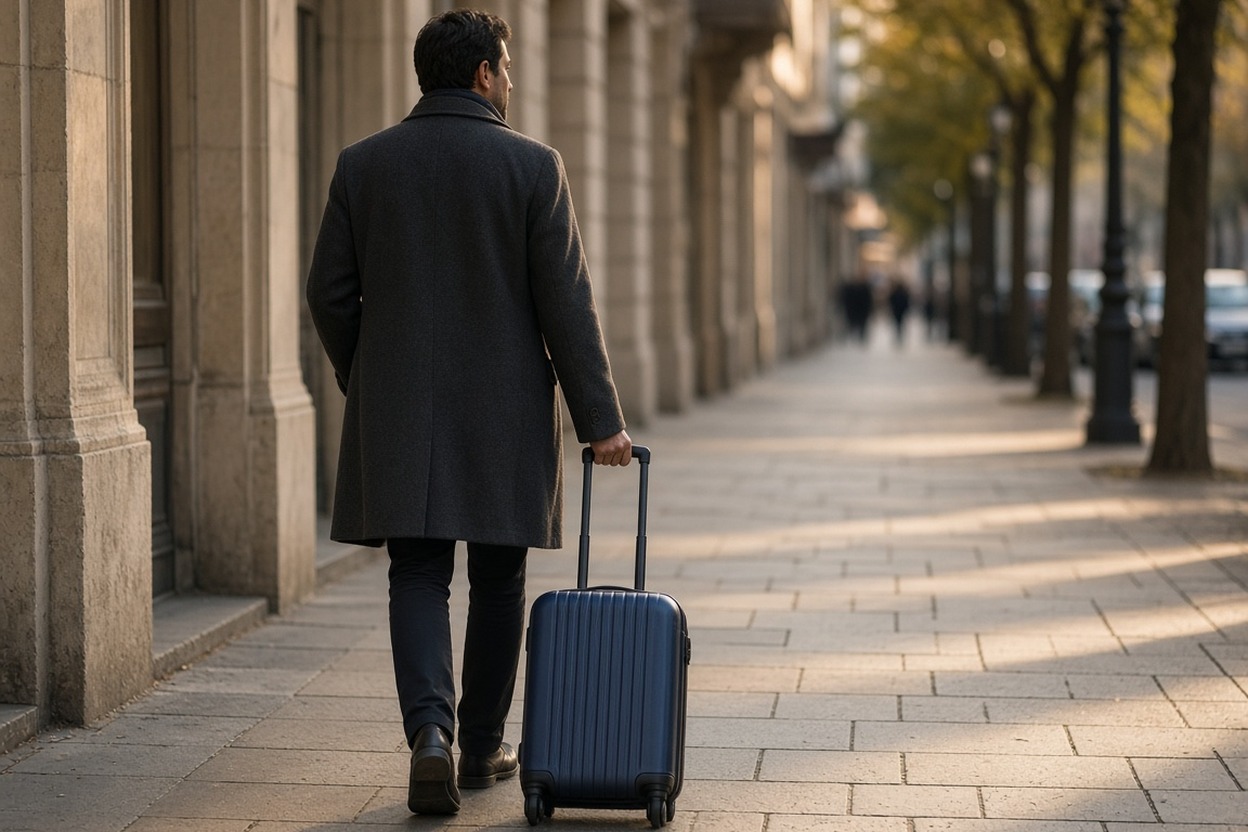
Your Next Adventure Could Change Everything
Join thousands of adventurous women who've discovered that the best travel stories often include a plot twist.
Start Your Adventure. Join Free
✓ Free to join ✓ No credit card required ✓ Join 50,000+ travelers
Dating while traveling for work works best when the work trip comes first and the meetup stays optional: one public hour, short and easy to leave, with the hotel, the room, the badge, the client, the laptop, and the work files kept off it. That is my business travel dating plan, and it is the rule I use whenever the reason I am in a city is work.
I am Rico Roger. I founded Gallivanta, and I write the destination and safety guides on this blog. A work trip needs a tighter plan than a vacation, because the calendar belongs partly to an employer and the devices in the bag hold more than personal photos. Some readers arrive here after searching for a "business travel hookup app" because the trip is short and the city is new. This is not a guide to casual hookups. It is a safety plan for meeting someone respectfully, in public, on terms you can both leave. An app can tell two people they are in the same city. It cannot keep a room number, a client name, or a work laptop out of the hour. This page is that separation. If you have not picked an app yet, compare the best travel dating apps for meeting people on a trip first, and see how Gallivanta lets you meet travelers heading to the same city.
Published October 28, 2026. Updated November 13, 2026.
Read this beside the pre-landing safety plan, the accommodation privacy plan, the phone and data plan, the itinerary privacy plan, and the alcohol boundary plan. If the trip is a month of remote work rather than a few days on a client, use digital nomad dating. Those are different shapes. I am not going to fold them into this one.
Keep four things separate. Facts are what a government or an official page said, with the link in the sentence. Examples are illustrative composites for teaching. They are not my diary and not reports about a real guest or a real company. Assumptions are risk tolerances that change with your passport, your employer, your health, and the city. Advice is the method I use when I edit a work-trip meetup. Advice is not a guarantee of safety, not legal advice, not employment advice, and not a substitute for your company’s travel rules or for local emergency services.
- → See why a work trip is a different date
- → Read the work-travel page first
- → Keep the hotel, the badge, and the client offline
- → Keep the laptop and the work phone in your hands
- → Skip hotel Wi-Fi and borrowed cables
- → Treat drinks, packages, and blackmail as work risks
- → Pick a public pin that is not the conference
- → Split what a trusted contact and a company may know
- → Tighten the plan when the risk is higher
- → Know who to call if something happens
- → Recognize work-trip red flags
- → Use short scripts
- → Run the checklist
- → Review sources and boundaries
- → Read the FAQ
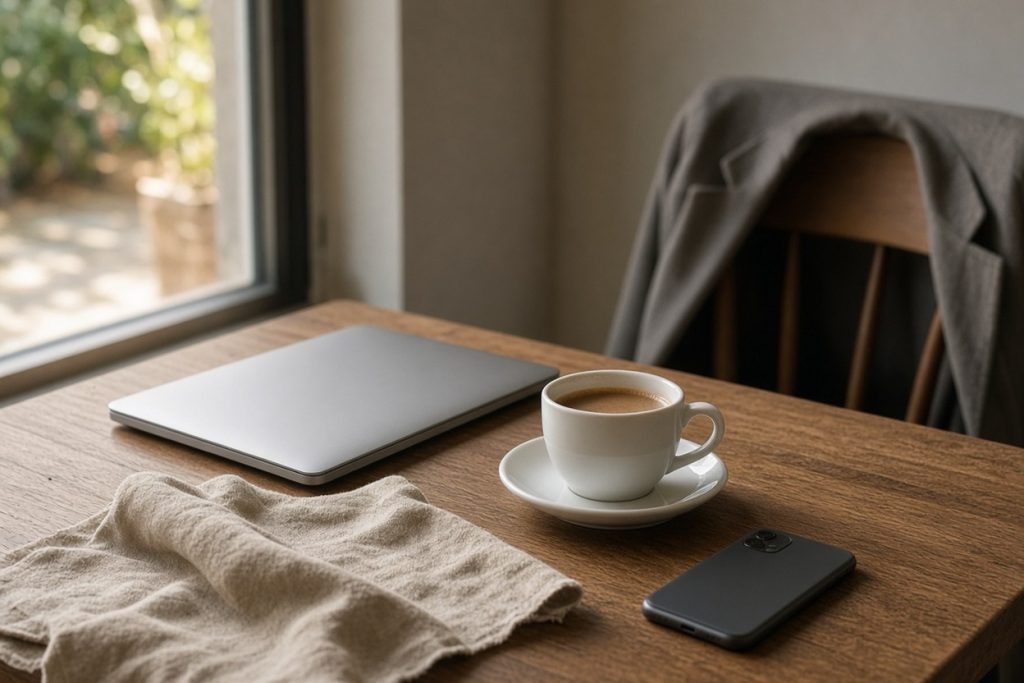
Why dating while traveling for work is not a normal first date
A hometown first date and a meetup on a work trip fail in different places. At home, the risk I write about most is privacy and a way to leave. On a work trip, those still matter, and three more things sit on the table: an employer who may already know the hotel, a badge or an email signature that names your company, and devices that hold client files. A pleasant hour can still happen. It does not need any of those three.
The U.S. Department of State page on business travel and work abroad is written for U.S. citizens working outside the United States. It says to make sure you have the appropriate visa and permissions to work, and to protect yourself and your company information. It is not a dating page. I use it because a meetup during a work trip is still a work trip. The personal hour does not suspend the work-travel rules.
I also keep the trip length honest. A conference Wednesday is not a nomad month. You may land, sit in meetings, and fly out before you understand the neighborhood. The first travel date guide already says a first meeting should be short enough to end. On a work trip I make it shorter still, because the next morning belongs to the calendar that paid for the ticket. If the only free window is after the last session, in the dark, I move the meetup to another day or I skip it. The daylight window plan is the page for that choice.
A search for a faster way to meet someone on a short trip is really a question about speed. Speed is the part I refuse to optimize. The CDC Yellow Book 2026 chapter on sex and travel says travel is often accompanied by a desire for new social interactions, that being away from home can lower inhibition, and that alcohol or drugs can lower it further. It says geosocial apps can make it easier to meet partners and can amplify the chance of risky exposures. That chapter is written for clinicians. I am not a clinician, and this page is not a medical visit. The fact I take from it is narrower: a short trip plus an app plus a drink is a known risk pattern in the public health literature, so my plan slows the hour down instead of speeding it up.
Read the official work-travel page before you open an app
Before I agree to any meetup, I open the destination advice for the passport I am actually traveling on. The State Department says a Travel Advisory describes risks and recommended precautions for U.S. citizens, not for foreign nationals, and that conditions in any destination may change at any time. If your passport is not American, that list is context, not your consular service. Start with your own foreign ministry. I still want U.S. readers to open the destination page, because the business-travel guidance says to review the travel information page for the destination before the trip.
The same business-travel page says your passport must meet any required validity, and any visa, for your purpose of travel. It says to research which visa the type of work requires. Local labor laws and criminal laws vary greatly by country, and you are subject to them while you are abroad. A coffee does not change the visa. I do not invent entry rules on this page. I send you to the destination page for the passport in your pocket, and I treat a meetup as something that has to fit inside the permission you already have, not as a reason to stretch it.
If you are a U.S. citizen, enroll in the Smart Traveler Enrollment Program before you fly. The State Department says STEP is a free service that sends email updates and alerts from U.S. embassies and consulates. It says the program helps the embassy or consulate contact you or your emergency contact in an emergency. The same page names business travelers directly: stay updated on changing conditions and travel safely for work abroad. STEP is for U.S. citizens and nationals. I do not tell a reader with another passport to pretend it is their system.
The business-travel page also has a high-risk paragraph I do not soften. It says to think about whether travel to a high-risk area is necessary, because traveling to certain locations puts your life, and possibly the lives of others, at risk. It says that in high-risk areas the United States may have limited or no consular services, and may not be able to assist in cases of arrest, detention, or death abroad. It tells you to review the Travel Advisory. A match in that city does not make the trip necessary. If the advisory is the reason you would reconsider the work trip, it is also the reason you reconsider the meetup.
Illustrative scenario A, the badge that was framed as proof: A traveler at a conference is asked to photograph the badge “so I know you are real” before a pin exists. The badge shows a full name and a company. In the composite, the reply is a public cafe near the venue and a time window, with the badge in the bag. The ask was for an employer identity. The cafe did not need it.
Keep the hotel, the badge, and the client off the first chat
What a first hour needs is smaller than what a work trip contains. I write the split down before I confirm a time.
| Enough to meet | Stays off the chat |
|---|---|
| A staffed public place, a start time, and an end time | The hotel name, the room number, and the door code |
| The fact that you will arrive and leave on your own | Your badge, your company, and your client’s name |
| Messages in the app until you have met | Your work email, your laptop, and files on either |
| A second public place if you both want to talk again | Your flight, your checkout time, and the next city |
The FCDO solo and independent travel guidance, updated on June 12, 2025, says that if you travel by yourself, or independent of a group or organized tour, you can face additional challenges, including a higher chance of being targeted for crime. It says to book accommodation before you travel, especially the first night, because you are most vulnerable when you first arrive, tired and unsure of your surroundings. It says not to leave your key where someone can note your room number. Those sentences are why the hotel stays off a first chat even when you are proud of the property your company booked. Where you sleep is on the accommodation privacy plan. The flight and the next city are on the itinerary privacy plan.
A badge is a work document that happens to hang on a lanyard. It often carries your name and your employer in type large enough to read across a lobby. I take it off before I walk to a meetup, and I do not lay it on the table. The State Department business page says your job may make you a target of hostile governments, foreign companies, or criminal organizations that may try to blackmail you or elicit information. I am not claiming every coffee is that plot. I am saying the page names eliciting information as a work-travel risk, and a badge photo is information. Your name, if you want to share a first name, can be spoken. The employer can wait.
The client is a harder line than the employer. A client name can be confidential under a contract I have not read, and it can tell a stranger where you will be tomorrow. My advice: do not talk about the client, the deal, the pitch, or who was in the room. If the conversation needs a topic, use the neighborhood you are sitting in. The personal information boundary plan covers the private facts. This page adds the work facts that page was not written to carry.
The FBI romance-scam page says to be careful what you post and make public online, because scammers can use details from social media and dating sites to target you. A conference hashtag plus a hotel plus a badge is a public bundle. I do not post the meetup, the property, or a photo that shows the lanyard. The photo privacy plan is the longer version of that habit.
Keep the laptop and the work phone in your hands
The State Department tells business travelers to keep electronics, paperwork, and any other sensitive business materials with you at all times. It says not to attach unknown electronic storage devices or peripherals to your computer or phone. It says to discuss with your company, before you travel, how to protect information and data on your devices. It says to make sure devices have antivirus and anti-spyware software and current security patches, according to company policy, and to change passwords and check devices for viruses both before and after the trip.
I translate that into the meetup without adding rules the page does not have. The laptop stays in my bag or in my room, not on the date, unless the meetup is somehow the meeting and there is no date at all. I do not hand a locked or unlocked work phone to anyone so they can “put in their number” or “look at the map.” I do not plug in a cable, a drive, or a charger I did not bring. A phone plan for a first meetup already lives on the phone and data plan. The work layer is the extra sentence: the phone may also be a company device, so the company policy is part of the decision, and I read that policy before I fly rather than at the table.
The same State page says traveling abroad with a mobile phone carries significant risk, especially in countries with high levels of theft or strict speech laws, and it points readers to OSAC’s Guide for Mobile Device Usage Overseas. I have not rewritten that OSAC guide here. If your company security team has already named it, read the version they trust. My meetup rule is simpler and sits on top of the State sentence about keeping materials with you: the phone stays in your hand, on your person, and out of anyone else’s bag.
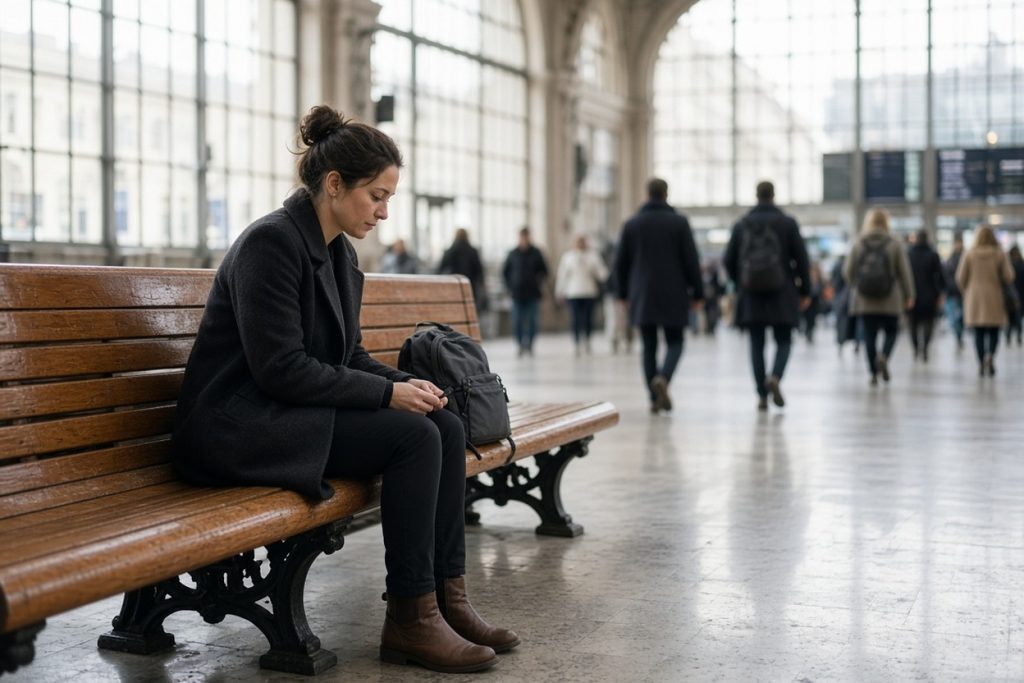
Illustrative scenario B, the cable with the restaurant list: A traveler is offered a small drive “so you have the good lunch spots” during a first coffee near a conference hall. No public pin beyond the cafe has been agreed. In the composite, the drive stays on the other person’s side of the table. Lunch, if it happens, is named out loud. The State Department’s instruction not to attach unknown storage is the reason. The list was optional.
Treat hotel Wi-Fi and a borrowed charger as optional
The State Department business page says not to expect privacy on Wi-Fi provided by hotels, airplanes, internet cafes, or public spaces. That sentence covers the network with the hotel’s name on it, which is also a clue to where you are staying. I do not join it to show a match a photo, and I do not share the password. CISA’s guidance on traveling with personal internet-enabled devices says to avoid open Wi-Fi for personal business, banking, and shopping at airports, coffee shops, and similar places. If you must check a bank or pay for something, CISA says to turn Wi-Fi off and use your cellular connection.
CISA also says to turn Bluetooth off when you are not using a headset or another accessory, because an open Bluetooth connection can be paired with. For the hour of a meetup I leave Bluetooth off unless I am using my own headset. CISA says not to connect a phone to a computer or a charging station you do not control, including an airport charging station, because a USB connection can let software on the other side interact with the phone. A match who offers a cable “so you do not die before dinner” is the same pattern. I carry the power bank I packed. If the battery is already low, I end the hour. I do not borrow a charger to stretch it.
A work phone and a personal phone are different objects even when they look alike. If the company issued the phone, the State Department’s instruction is to discuss protection with the employer before the trip. My advice, which is mine: do not install a new app on the work phone in order to coordinate a meetup, and do not log a personal account into a work browser on hotel Wi-Fi. Use the personal phone and the connection you tested, which is the same test the phone and data plan already asks for on landing.
Drinks, packages, and the blackmail warning
The State Department business page says not to get involved in illegal activities or make yourself vulnerable. The examples it gives are specific: avoid drinking too much, avoid buying illegal goods and services, and avoid accepting packages from strangers. It says that if you are arrested or detained, you may be put in prison or prevented from departing while the case is pending. A meetup is a poor place to test any of those lines. I do not accept a bag, a box, or an envelope to “hold for a minute.” I do not carry anything through a door that I did not pack.
Drinking is both a work-travel instruction and a meetup instruction. The State page says to avoid drinking too much so you do not make yourself vulnerable. The alcohol boundary plan is where I put the meetup version of that limit. The FCDO page on advice for women travelling abroad, updated on September 8, 2026, says drugs have been used in rape, that you will not normally be able to detect them, and that they also work in non-alcoholic drinks such as coffee and tea. It says they are normally colorless and tasteless and can make you unconscious and defenseless. It says not to leave drinks unattended and not to accept drinks from strangers. If you feel strange, sick, or drunk after a small amount, it says to tell a trusted friend who can get you to a safe place, or to phone local police, and to contact emergency services if you feel in danger. I follow that whether or not the drink is alcohol, and whether or not the trip is labeled a date.
The CDC chapter says healthcare professionals should include sexual-assault prevention counseling in the pre-travel visit, along with counseling on the risk of alcohol and other drugs that lower inhibition, and on contraception including emergency contraception. It also says STI incidence is increased up to three-fold in people who experience casual sex while traveling internationally, as a consequence of new sexual partnerships and unprotected intercourse, and that travelers should consider packing condoms from home. I am repeating the CDC’s statement, not offering a personal medical plan. If sex is something you might choose on this trip, or something that could happen when you did not plan it, have that conversation with a clinician before you fly. This article cannot prescribe, and it cannot examine you.
Blackmail is the sentence that makes a work trip different from a vacation date. The State Department says your job may make you a target of people who try to blackmail you or elicit information. The FBI says to beware if someone tries to isolate you from friends and family, or requests inappropriate photos or financial information that could later be used to extort you. I keep those as two sources, not one story. The State page is about your job as a target. The FBI page is about romance fraud and extortion. A request for a nude photo, a work file, or a “verification” payment can sit in either pattern. My rule is the same in both: do not send it, leave, and tell someone who is not the match.
Money is the FBI and FTC line, and I do not blur it. The FTC’s May 7, 2026 alert says not to send money to someone you have never met in person. The FTC’s February 12, 2026 alert says scammers may claim they are doing business overseas, may cancel every plan to meet, and may tell you to pay by wire, gift card, payment app, or cryptocurrency, because those routes are hard to reverse. The FBI page says never to send money to anyone you have only communicated with online or by phone. A work trip is a common costume in those stories, because “I am abroad for business” explains why someone cannot meet at home. If the person is standing in front of you, the money request is still a stop. If they are only on a screen, it is the same stop, earlier.
Pick a public pin that is not the conference and not the hotel
The FCDO solo page says to use only official, licensed, and reputable taxis, to avoid hitchhiking, and to avoid poorly lit areas if you are walking alone, particularly at night. It says to consider busy train carriages. I use those as the route rules, and I choose the pin so the route stays inside them. A staffed cafe, a museum lobby, or a station hall with other people works. A hotel room, a parked car, a quiet park after dark, or “come to the reception, I will tell you the room” does not.
Loving This Travel Dating Safety? Don't Explore It Alone.
Real Gallivanta members are planning trips to Travel Dating Safety right now. Join the community and turn your solo travel dreams into shared adventures.
Join Gallivanta FreeThe hotel bar is an easy default on work trips. [RED to confirm: whether Rico has personally seen the hotel bar come up most often on work trips.] It feels public because there is a bartender, and it is convenient because you are already upstairs. It is also attached to the building where you sleep, and your company may already have that address on the invoice. Walking a match from that bar to the elevator is a short distance and a large disclosure. I meet somewhere else, even if it is a ten-minute walk, and I leave on my own. The meeting-point guide is how I judge whether a pin is fair. The public-first plan is the version for arrival day, when you are tired and still holding a suitcase. A conference arrival is that day.
Colleagues are a second audience. A meetup inside the conference hotel, at the official reception, or at a dinner your team is attending is not private, and it is not fully public either. You can be seen by people who know your employer. My advice: keep the first hour off the event campus. If you only have a break between sessions, use it to eat, not to invent a date you cannot leave without walking back through the badge scanners together.
The exit strategy still applies. Name the end time when you name the start. When it arrives, stand up and go to the transport you already chose. You do not need a dramatic reason. “I have an early session” is true on most work trips, and it is enough.

Split what a trusted contact may know from what your company may know
The FCDO solo page says to leave an itinerary with someone at home and to agree how often you will be in contact. It also says to have a plan if the transfer does not show up, including the address of where you are staying, and to make sure you can reach money if you need it quickly. That person at home can hold the hotel, the public pin, the start, and the end. The match does not get that packet. The check-in protocol is the page for how the contact should react if you miss the window.
Your company is not that contact, unless your job requires a security report and you have read that requirement. The State Department says to report to the FBI and to your company’s security team any strange contacts or events where you suspect someone tried to solicit or steal sensitive business information. It also says to report suspicious surveillance to police or the U.S. embassy or consulate, and it points to its victims-of-crime information if you need help. An ordinary coffee is not that report. A request for files, credentials, a badge photo, or a package is. I would rather send a dull report than talk myself out of one.
I do not put the match in a group message with my trusted contact or with a coworker. That introduction hands over numbers and, on a work trip, sometimes a corporate directory. If I miss the end time, the contact follows the protocol we wrote. They do not need the match’s phone, and they do not need to call my office.
Expense reports are my advice, not a government rule I can cite as universal. A receipt from a meetup is a record. If your company audits card charges, a bar tab at 1 a.m. next to the hotel can describe your night more clearly than you meant. My advice: pay for your own coffee on a personal card when you can, and do not expense someone else’s drinks. If your policy says something stricter, the policy wins. I have not seen your policy, so I will not pretend to quote it.
Tighten the plan for women, LGBTQ+ travelers, and anyone carrying a work identity
The FCDO women page says all travelers face risks abroad, and that in some countries or cultures, women traveling alone or in female-only groups can face extra risks and obstacles. It says violence towards women and girls is a risk in many countries, and that the form depends on local context, laws, history, and culture. It tells you to research local culture and whether women traveling there have faced unwanted attention because of their gender, and to read the safety section of the country advice. The same page points readers to the FCDO’s advice for LGBT+ travelers. I link it because the women page lists it as a page to check. I am not summarizing that guide from memory.
The CDC chapter says pre-travel counseling should include focused counseling for lesbian, gay, bisexual, and other sexual minority travelers. Again, that is an instruction to clinicians. If that is your situation, ask for it at the visit. Do not take a blog as the visit.
On the meetup itself, the tighter version is practical. Do not confirm that you are traveling alone, that the company booked a room for one, or that your phone is a work device with the client list on it. “I keep first plans in public, and I leave on my own” is enough. The longer context for women is on dating safely as a solo female traveler and on the solo female travel pillar. This page does not replace either. It adds the work-trip facts those pages are not built around: the badge, the laptop, the employer, and the State Department’s blackmail warning.
A work identity can raise the stakes even when gender is not the issue. A visible employer, a security clearance, a journalist’s notebook, or a government badge can make eliciting information more valuable. The State Department says that plainly about jobs abroad. If your employer has a threat-management team, use that team rather than a blog when the trip is sensitive. I can tell you to keep the badge off the table. I cannot clear you for the trip.
If something happens, use the official path, not the match
If you are in immediate danger, contact local emergency services. The FCDO’s guidance for victims of rape and sexual assault abroad, updated on April 28, 2025, says travel advice pages contain emergency-service contacts in most countries, and that in the European Union you can phone 112. It says you can contact the nearest British embassy, high commission, or consulate, or the FCDO in London on +44 (0)20 7008 5000. It says the FCDO takes any report seriously, can help you understand local police and medical options, and cannot decide for you whether to report the crime. It says that in most countries you must report before you return to the UK if you want the crime investigated, and that in a very small number of countries being a victim of rape or sexual assault can itself be treated as illegal, so you should contact the FCDO if that worries you. It also says the assault was not your fault. I am not your lawyer and not your consular officer. Those sentences are the FCDO’s, and the page is the one to use if you are a British national who needs that help.
If you are a U.S. citizen, the business-travel page says to report suspicious activity to police or the U.S. embassy or consulate, and to report suspected theft of business information to the FBI and your company security team. The emergency and consular plan is where I tell you to save those numbers before you need them. Save them before the meetup, not during it.
The FTC says that if you suspect a romance scam, cut off contact, talk to someone you trust, and report it at ReportFraud.ftc.gov. Do that after you are safe. Paying “one last time” to unlock a photo or a file is the extortion the FBI warns about. I do not pay it.
Illustrative scenario C, the room number that was framed as noise: A traveler is told the hotel bar is too loud and that the only quiet place is upstairs, “and I only need the floor, not the whole story of your trip.” In the composite, the meetup ends in the lobby of a different building, the traveler leaves by the exit they chose earlier, and the trusted contact already has the end time. The floor number was the hotel. The volume was the excuse.
Work-trip red flags I treat as an ending
Leave or cancel when the conversation turns into access to your work, your room, or your money. Concrete versions:
- Pressure to meet in the room, the hotel bar, or a car, before a public pin exists
- A request to photograph your badge, your laptop screen, or a conference pass
- A USB drive, a cable, or a QR code you did not choose
- Questions about the client, the deal, the security team, or who else is traveling with you
- A request for money, a gift card, a wire, a crypto transfer, or an “investment” from the trip
- A request for intimate photos, or a threat to send photos to your employer
- Anger when you will not leave the app, will not drink more, or will not skip your morning session
- A plan that only works if your phone is in their bag or your laptop is on the table
One awkward question can be a miss. A pattern after a clear answer is the signal. The travel dating safety overview is the wider frame. This list is the work-trip slice of it.
Scripts that keep the work trip intact
These are lines I would send. They are not official wording. Adapt the place. Keep the boundary.
- The badge: “I don’t share my badge or my company on a first meet. The station cafe at 6 works, and I’ll get there on my own.”
- The hotel bar: “I don’t meet at the hotel. If you want a public coffee nearby, name a cafe and a time. I’ll leave by 7.”
- The laptop: “I don’t bring my work computer, and I don’t open files. If the point is coffee, the cafe is enough.”
- The cable: “I’ve got my own battery. I don’t plug in anything I didn’t bring.”
- The money ask: “I don’t send money, gift cards, or crypto. If this is about meeting, the public pin is the whole plan.”
- The early session: “I have a morning session, so I’m heading out now. This was good. If we both want another hour, we can pick a public place tomorrow.”
If the reply is guilt, a lecture about trust, or a new reason you must come upstairs, the script has done its job. You already have the ending.
Business travel dating action summary
Run this before you fly, and again before you leave the room.
- Read the destination advice for your own passport, including the work and visa rules. If you are a U.S. citizen, read the State Department business-travel page and enroll in STEP.
- Ask your employer how devices should be protected. Patch them, and plan to change passwords before and after the trip, as that page describes.
- Book the first night before you land. Tell one trusted person the property, the pin, the start, and the end. Leave the match out of that message.
- Pick a staffed public pin that is not the hotel and not the conference floor. Arrive and leave on your own, by a route that fits the FCDO transport cautions.
- Take the badge off. Do not mention the client. Do not bring the work laptop to the meetup.
- Use your own data. Skip hotel Wi-Fi for anything sensitive. Do not attach a cable or a drive you did not bring. Keep Bluetooth off unless you are using your own headset.
- Watch your drink, including coffee. Stop at the limit you set on the alcohol plan. Do not accept a package.
- Do not send money, gift cards, crypto, intimate photos, or files. If someone asks, end the conversation and tell a person who is not the match.
- If you suspect someone tried to steal business information, report it to the FBI and your company security team, which is what the State Department tells business travelers to do.
- If you are in danger, contact local emergency services first. British nationals can use the FCDO path linked above. U.S. citizens can contact the embassy or consulate. Then use the check-in protocol you already wrote.
Then go to the hour, or skip it and sleep. A work trip can include a good conversation. It does not have to include your room key. That is the whole plan.
Sources, facts, and review boundaries
This guide is practical planning for people who might meet someone while they are in a city for work. It is not legal advice, employment advice, medical advice, visa advice, or a guarantee of safety. Entry rules, criminal law, company policy, and hotel networks vary, and they change. The State Department says conditions in any destination may change at any time. Verify the country page, your visa, and your employer’s rules yourself.
The photographs in this package are original images made for this Gallivanta article. They are not stock photos, and they do not show a real meetup, a real company, or a real traveler.
I separate reporting, composites, and product mentions on the editorial standards page and the why trust us page. Illustrative scenarios in this article are labeled composites. They are not things that happened to me, and they are not case reports.
If you want the product side, how Gallivanta helps travelers meet explains how the app introduces people, and the Gallivanta privacy page covers what the app keeps. Neither link is a signup pitch. The plan above works with any app, and it starts with the official pages below.
Official pages I used for the factual claims above, checked for this draft on October 28, 2026:
- U.S. Department of State: Business travel and work abroad
- U.S. Department of State: Smart Traveler Enrollment Program
- U.S. Department of State: Travel Advisories
- CISA: Holiday traveling with personal internet-enabled devices
- CDC Yellow Book 2026: Sex and travel
- FCDO: Solo and independent travel (updated June 12, 2025)
- FCDO: Advice for women travelling abroad (updated September 8, 2026)
- FCDO: Lesbian, gay, bisexual and transgender foreign travel advice
- FCDO: Victim of rape and sexual assault abroad (updated April 28, 2025)
- FBI: Romance scams
- U.S. Federal Trade Commission: Why can’t that new love interest meet in person? (February 12, 2026)
- U.S. Federal Trade Commission: New trends in reports of imposter scams (May 7, 2026)
If you are in immediate danger, contact local emergency services. Embassy and company-security lines matter after that call, or when the problem is a device, a file, or a crime you need help reporting. The FTC takes reports at ReportFraud.ftc.gov.
Editorial review date: October 28, 2026.
FAQ: business travel dating
Is it safe to use a dating app on a business trip?
It can be, if the app is only the introduction. An app can show you that someone else is in the same city. It is not the plan. A first meetup on a work trip still needs a public place, a start time, and an end time, with your hotel, badge, and laptop out of it. The State Department’s business travel page is about protecting you and your company information. Whether people call it a dating app or a hookup app, I do not treat any app as a substitute for that page.
Is the hotel bar a good first meeting place?
It is a weak default. The bar is in the building where you sleep, and a work trip often means your company already has that address. The FCDO says you are most vulnerable when you first arrive, and it says not to leave a key where someone can note your room number. Meet at a different staffed public place, and leave on your own.
Can I use hotel Wi-Fi or someone else’s charger?
The State Department says not to expect privacy on Wi-Fi from hotels, airplanes, internet cafes, or public spaces. CISA says to avoid open Wi-Fi for banking and other personal business, and to use cellular data instead. CISA also says not to connect your phone to a computer or charging station you do not control. Use your own data and your own battery.
What if they ask for money or a gift card?
Do not send it. The FTC says not to send money to someone you have never met in person, and its February 12, 2026 alert says scammers push wires, gift cards, payment apps, and cryptocurrency because those payments are hard to reverse. The FBI says never to send money to anyone you have only communicated with online or by phone. End the conversation.
Does my company need to know about the meetup?
Not for an ordinary coffee. The State Department says to discuss device protection with your employer before you travel, and to report to the FBI and your company security team if you suspect someone tried to solicit or steal sensitive business information. A request for files, a badge photo, or a login is that report. Read your own company rules. I do not have them.
What if I feel unsafe?
Contact local emergency services. The FCDO says that in the European Union you can phone 112, and that British nationals can contact an embassy or the FCDO in London on +44 (0)20 7008 5000. U.S. citizens should report suspicious activity to police or the U.S. embassy or consulate, which is what the business travel page says. If you suspect theft of business information, also tell the FBI and your company security team. A blog cannot make those calls.
Ready to Meet Your Next Travel Date?
You've got the destination, the vibe, and the courage to go solo. Now all you need is someone who gets it. Join Gallivanta and meet fellow travelers who believe the best chapters start with a one-way ticket.
Join Gallivanta FreeSources linked in the article | Reviewed October 28, 2026